Alerts

-
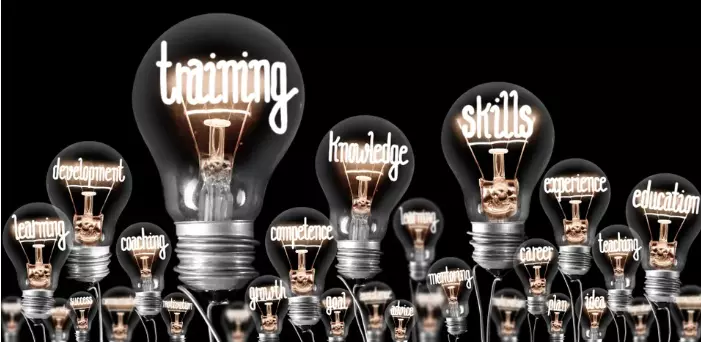
For decades, talent management has been a backward-looking exercise. Organizations have traditionally evaluated people based on their academic credentials, their employment history, and the number of years they have spent climbing a particular career ladder. Questions like “What degree does this employee hold?” and “Which roles have they occupied previously?” have long served as the primary filters for hiring and promotion decisions.
Artificial intelligence is now upending that conventional approach. As AI tools rewrite job descriptions, automate routine tasks, and fundamentally reorganize the division of labor between people and machines, employers are being forced to confront a far more relevant question: What can this person actually do?
This shift is making both the traditional job application and the four-year degree increasingly obsolete as proxies for capability. In their place, a new practice is emerging that focuses on what workers can contribute right now, regardless of how they acquired those abilities.
Tigran Sloyan, co-founder and CEO of CodeSignal, is a leading advocate of this approach, which he calls “skillspotting.” The concept involves surfacing the skills your people already possess and using that visibility to unlock new possibilities for your organization.
“It’s about moving beyond rigid job descriptions to see your workforce as something more fluid,” Sloyan explained.
Rather than treating employees as fixed assets defined by their job titles, skillspotting encourages leaders to view their workforce as a dynamic collection of evolving capabilities. A person hired for one function may have developed adjacent competencies that could be valuable elsewhere in the business.
The practice is gaining traction through a broader movement toward skills-first hiring, internal mobility, and skills-based workforce planning. This approach asks two critical questions simultaneously:
The second question has become especially important as AI transforms the nature of work itself. Employees are no longer limited to the boundaries of their official job descriptions when they have powerful tools at their disposal.
“In the AI era, employees are practicing and growing new skills far beyond the requirements of their jobs,” Sloyan points out.
He offers concrete examples of this phenomenon. A salesperson might be building an AI agent to streamline their own efficiency. An engineer could develop a growing interest in accessibility design. In both cases, the employee is acquiring valuable, transferable skills through self-directed learning and experimentation on the job.
Sloyan acknowledges that these are often skills companies do not even know they have. Because employees learn them organically while working, they rarely appear in formal performance reviews, HR systems, or job application materials.
The organizations that recognize and harness these hidden capabilities will gain a significant competitive advantage. “The organizations that get this right will fill roles more effectively, build better teams, spin up tiger teams for emerging projects and stay agile as the work itself keeps changing,” Sloyan said.
In practice, skillspotting transforms workforce planning from a static process into a dynamic one. Instead of looking outward every time a new challenge emerges, companies can first look inward to identify the people who are already prepared to meet it. This not only reduces hiring costs but also improves retention, engagement, and organizational agility in a rapidly evolving business environment.
Artificial intelligence is fundamentally altering the composition of jobs, and the pace of this change is outstripping the stability of traditional job titles. According to the World Economic Forum, an estimated 39% of workers’ core skills are expected to shift by 2030, driven by technological advancements and broader economic pressures. The same research projects that labor-market disruption will create roughly 170 million new roles while displacing 92 million existing ones within that same timeframe.
These figures signal a critical shift for employers. The old approach of hiring for a static set of credentials no longer suffices when the underlying tasks are in constant flux. Organizations can no longer simply replace outgoing employees with new hires who mirror the qualifications of the past. Instead, they must identify individuals who possess the adaptability to evolve with the work. This reality is a key reason why internal mobility has moved to the forefront of talent strategy.
Data from LinkedIn’s 2025 Workplace Learning Report highlights this growing emphasis. Among organizations identified as “career-development champions,” 55% stated that internal mobility is a higher priority for the coming year, compared to 48% of other respondents. Furthermore, LinkedIn’s 2026 Talent Velocity research suggests that leveraging skills data allows talent to move across an organization based on demonstrated capability rather than rigid hierarchy.
This is where “skillspotting” enters the picture. It represents the human element of this data-driven shift. Skillspotting is the practice of recognizing the marketing assistant who has a natural gift for interpreting data sets. It is noticing the accountant who excels at breaking down complex financial concepts for clients. It is observing the administrative employee who has unofficially become the department’s go-to AI troubleshooter, or the customer-service representative who consistently de-escalates tense situations and shows signs of untapped leadership potential.
Job titles often fail to reveal these capabilities. The most reliable indicator is not a person’s stated role, but their demonstrated behavior.
The traditional workplace was structured around fixed job descriptions. The emerging workplace, however, is increasingly organized around the skills an individual brings to the table. In the conventional model, an employee might define themselves by a single label, such as “I’m a project manager.” Skillspotting challenges and deconstructs that identity.
Consider what that project manager actually does on a daily basis. She may coordinate cross-functional teams, mediate conflicts, analyze risk, communicate with executive leadership, negotiate deadlines, leverage AI-powered tools, manage departmental budgets, and keep team members focused during periods of uncertainty.
When examined this way, a single job title begins to unravel into a portfolio of eight or ten distinct, transferable skills. Some of these abilities—like data analysis or technical proficiency—might be highly sought after in other departments. Others, such as conflict resolution or executive communication, are valuable across the entire organization. This distinction is crucial because companies are increasingly seeking a blend of technical expertise and distinctly human capabilities. The World Economic Forum notes that employers will place a premium on human-centered skills like judgment, problem-solving, and collaboration, even as technological proficiency becomes more widespread.
Ultimately, the employee of the future may not be the person who fits neatly into a single, pre-defined role. Instead, the greatest value may lie with the individual whose portfolio of capabilities can be assessed, adapted, and redeployed to meet the organization’s evolving needs time and time again.
The implications for career advancement could be significant. Traditional promotion paths typically reward linear progression: an analyst becomes a senior analyst, a manager becomes a senior manager, and a director moves up to vice president.
Skillspotting introduces the possibility of moving sideways before moving upward. Someone in operations might transition into customer experience. A salesperson with strong mentoring abilities could move into learning and development. An HR employee who develops deep proficiency with AI might shift into workforce technology. This shift changes the fundamental question managers ask when a position opens.
Instead of asking, “Who has already done this job?” they can ask, “Who has demonstrated the abilities required to succeed at it?” SHRM describes skills-based hiring in similar terms—matching talent to work based on proven technical and soft skills rather than relying primarily on degrees and previous titles.
The business benefits may be substantial. SHRM reports that skills-first practices can reduce cost-per-hire by as much as 30% and lower turnover by more than 40%, according to figures cited by the SHRM Foundation.
These transferable human capabilities are becoming increasingly important as technology absorbs more routine work.
Who picks up unfamiliar systems quickly? In an environment where skills are constantly evolving, the capacity to learn may prove more valuable than possessing a single fixed body of knowledge.
AI can generate recommendations, but employees still need to determine whether those recommendations make sense. Watch for people who know when to challenge an answer, recognize missing context, and anticipate unintended consequences.
Notice who can take complexity and make it understandable. As AI increases the volume of information flowing through organizations, clarity becomes more valuable—not less.
Pay attention to employees who do not simply report problems but define them, identify patterns, and propose workable solutions.
Look for people colleagues naturally seek out. Informal influence can reveal leadership ability long before a leadership title is ever awarded.
“Skillspotting” isn’t only something employers should do. Employees can skillspot themselves. Many workers underestimate their capabilities because they confuse their job description with their skill set.
Ask yourself: What do people routinely come to me for? What problems do I solve faster than others? What have I learned during the past year that wasn't originally part of my job? When has someone said, “You're really good at that”? Which assignments energize me instead of draining me?
Those answers may reveal more about your future career than your current title. Keep a running inventory of accomplishments and the skills behind them. Don't write, “Helped launch a new project.” Identify what you actually demonstrated: stakeholder management, persuasive communication, project planning, conflict resolution, data interpretation or AI fluency.
That language can become increasingly important in resumes, LinkedIn profiles, performance reviews and promotion conversations as organizations move toward skills-first employment.
The resume isn’t disappearing tomorrow. Neither are degrees, titles or experience. But their monopoly on determining career potential is weakening. As AI changes what jobs contain, organizations will increasingly need to understand employees at a more granular level—not simply what jobs they have held, but what capabilities they possess.
That’s why “skillspotting” could become one of the most important management habits of the AI era. The best candidates for your next critical position may not be applying for it. They may already be sitting three departments away, demonstrating exactly the skills you need. Someone just has to spot them.










Comment