Alerts

-
5 minutes, 0 seconds
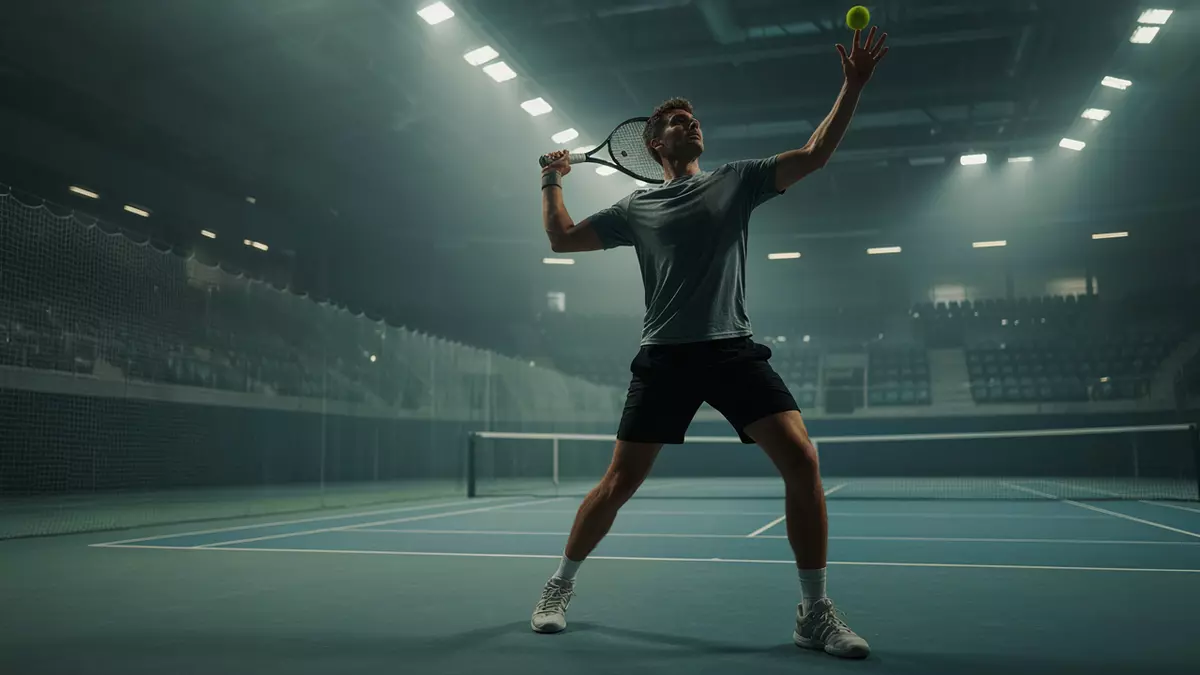
A reliable tennis serve is built through repetition, balance, timing, and confidence. Unlike many tennis skills, the serve gives you complete control over the start of every point, which makes it one of the most valuable shots to practice. The good news is that you do not always need a coach or practice partner to improve it.
With the right routine, practicing your tennis serve on your own can help you develop a smoother motion, better contact, improved placement, and greater consistency. Whether you are a beginner learning the fundamentals or an experienced player refining technique, these simple serve practice drills can make your training sessions more productive.
Before worrying about power, develop a dependable ball toss. An inconsistent toss can force your body to adjust at the last second, making an otherwise sound serve difficult to repeat.
Stand in your normal serving position with your racquet held comfortably in your dominant hand. Use your non-dominant hand to toss the ball upward without hitting it. Your goal is to make the ball rise to approximately the height where you would normally make contact.
Practice tossing the ball and catching it with the same hand. Focus on:
Try 15–20 repetitions before hitting any serves. If the ball repeatedly drifts too far behind, to either side, or directly over your head, reset your motion rather than compensating with your swing.
The trophy position is an important checkpoint in the serving motion. Learning to reach this position consistently can help improve rhythm and reduce unnecessary movement.
Start in your serving stance and slowly move through the early stages of the serve. As the ball rises, bring your racquet arm into a comfortable loaded position while your tossing arm points upward.
Pause for a moment when you reach the trophy position. Check that your body feels balanced and that your knees are comfortably bent rather than excessively crouched.
Repeat the movement slowly 10–15 times. Then gradually increase the speed while maintaining the same basic structure.
This is one of the most useful tennis serve drills for players who rush their motion. Slowing down allows you to understand where your body should be before adding speed.
You can practice the entire serving motion without even using a ball. This is called a shadow serve, and it is an excellent way to improve coordination.
Stand behind the baseline with your racquet and rehearse the complete movement at about half speed. Concentrate on the sequence:
stance → toss → trophy position → upward swing → contact position → follow-through
Do not worry about hitting an imaginary ball hard. Instead, make the motion smooth and connected.
Perform 10 slow repetitions, followed by 10 at normal speed. Pay attention to whether your legs, trunk, shoulder, arm, and racquet are working together rather than separately.
Shadow serves are particularly helpful during warm-ups or when you want to reinforce technique without creating excessive fatigue.
Once your motion feels comfortable, start hitting actual serves at approximately 50–60% of your maximum effort.
The goal is not speed. The goal is to produce a repeatable serve that lands in the correct service box.
Choose a large target area and attempt 20 serves while focusing on clean contact and balance. After every few attempts, ask yourself:
If you can consistently control a half-speed serve, gradually increase your pace. This approach is often more productive than trying to hit every serve as hard as possible.
A strong serve is not only about speed. Placement can make your serve much more difficult to return.
For solo practice, choose three simple targets: the wide area of the service box, the middle or body area, and the T area near the center line.
You do not need perfect accuracy. Simply give yourself a clear objective before each serve.
For example, hit five serves toward the wide target, five toward the T, and five toward the body. Keep track of how many land close to your intended area.
As your control improves, make the targets smaller.
This type of serve practice drill teaches you to serve with intention instead of simply trying to get the ball into the box.
End your practice session with a simple consistency test. Pick a target and give yourself a specific number of serves, such as 20.
Your objective is to make a high percentage of serves while maintaining good technique. If you double-fault or lose control, do not immediately increase your effort. Instead, return your attention to your toss, rhythm, and contact point.
You can also create different challenges as you improve. For example:
Record your results from session to session. Seeing your consistency improve can make solo practice more motivating.
Effective practicing your tennis serve does not require an elaborate training setup. A few focused drills can help you improve the individual pieces of the motion before bringing everything together.
Start with your toss, develop a stable trophy position, rehearse the movement with shadow serves, and then progress to controlled hitting and target practice. Most importantly, prioritize quality over quantity. Hundreds of rushed serves will not necessarily produce better results, but focused repetitions can gradually build a dependable serving motion.
Give yourself time to develop. A consistent serve comes from repeating sound fundamentals until they become natural. With regular tennis serve drills, players of different ages and skill levels can build greater control, confidence, and consistency on the court.

8.6K articles

6.2K articles

2.8K articles

1.6K articles








Comment