Alerts

-
9 minutes, 39 seconds
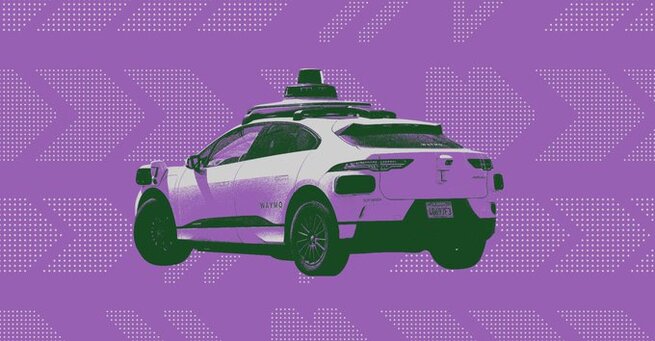
The debate over self-driving cars has shifted dramatically in 2025, with companies now racing to sell fully autonomous vehicles directly to everyday consumers. Many people searching online want to know whether privately owned self-driving cars are actually safe, how soon they’ll arrive, and why companies like Waymo, Tesla, and GM are pushing this vision so aggressively. Within the first few months of the year, a little-known startup called Tensor reignited the conversation, promising to become the first to sell autonomous vehicles at scale. And suddenly, the question became unavoidable: if we can hail a robotaxi, why not own one too?
That curiosity is exactly what’s driving industry momentum. But as automakers push toward private ownership, the reality is far more complicated. The technology is powerful but imperfect, the legal landscape remains murky, and consumers are left wondering whether the convenience is worth the risk. The shift from shared robotaxis to personal AVs marks a new and contentious chapter—one that could reshape everything from traffic to regulation to trust in automation itself.
For Silicon Valley, privately owned self-driving cars are the natural evolution of the robotaxi era. After billions invested in sensors, training data, and onboard computing, companies need a way to scale beyond limited pilot zones. Waymo, Tesla, Lucid, and GM all see personal AVs as the path to mass adoption—and massive revenue.
Tensor’s bold promise earlier this year, even without its track record, underscored that industry mindset. While many brushed the announcement aside as vaporware, the idea wasn’t new. Executives have been hinting for years that once robotaxis proved the concept, ownership would be their endgame. And the logic makes sense on paper: if people trust autonomous rides enough to hail them, wouldn’t they eventually want the convenience of having one parked in their driveway?
But the leap from fleet vehicles to personal cars comes with risks that companies have yet to solve. And consumers know it.
Trust is the biggest hurdle. Robotaxis operate in tightly mapped geofenced zones with strict oversight, predictable environments, and constant remote monitoring. A privately owned self-driving car has far fewer guardrails—and much more margin for disaster.
Recent incidents illustrate how fragile the technology can be. Waymo’s vehicle infamously drove through an active police scene, a mistake that became more unsettling when people imagined it happening with their own car. The prospect of a personal AV making a bad decision, misinterpreting a road hazard, or reacting unpredictably creates new anxiety around liability and safety.
And unlike fleet-managed robotaxis, a consumer AV wouldn’t necessarily have a team of remote workers ready to step in during a crisis. If ownership is the future, the industry must answer a simple but alarming question: what happens when something goes wrong and there’s no one behind the wheel?
For years, experts dismissed privately owned autonomous vehicles as unrealistic. The hardware alone—lidar, radar, cameras, high-power compute stacks—once cost hundreds of thousands of dollars per vehicle. Fleet models made sense because they spread those costs across thousands of rides, turning high-tech hardware into a long-term investment rather than an upfront burden.
But now, the equation is changing. The price of lidar has plummeted, onboard compute is becoming more energy-efficient, and manufacturers have found ways to integrate sensors more seamlessly into production lines. Tesla continues betting on a vision-only approach, while Waymo and GM Cruise have doubled down on multi-sensor redundancy. Regardless of philosophy, the trend is clear: costs are falling fast enough that private ownership may soon be feasible.
This shifts the conversation from “Is it possible?” to “Is it practical?”—and both consumers and regulators are scrambling to keep up.
Even as the technology improves, autonomous vehicles still depend on strict operational boundaries. Robotaxis today operate in carefully mapped cities under specific lighting and weather conditions. They avoid snow, heavy rain, and complex rural environments. They need digital maps that are constantly updated and verified.
But would consumers accept a car they can’t drive everywhere? Owners expect freedom—road trips, long commutes, and the ability to use their vehicle when and where they choose. If a privately owned self-driving car requires constant internet connectivity or can only navigate select neighborhoods, that limitation could be a dealbreaker.
The technology may be advancing quickly, but full autonomy everywhere, all the time, remains years away.
Regulation is miles behind innovation. While cities have built frameworks for robotaxis—permits, geofencing rules, local oversight—there’s no unified national standard for privately owned autonomous vehicles. That creates a legal gray zone around accident responsibility, insurance pricing, data collection, and even software updates.
If a privately owned AV injures a pedestrian, who pays? The owner? The automaker? The software provider? The answer varies by state, and none of the current policies were designed for everyday consumers owning driverless cars. Until lawmakers catch up, uncertainty will continue to stall adoption.
Surveys consistently show that while people are curious about autonomous technology, most remain hesitant to trust it. They love the idea of skipping their commute, avoiding traffic, or letting a car handle nighttime drives. But they also worry about loss of control, system failures, ethical decision-making, and data privacy.
Robotaxis give people a controlled taste of autonomy without the responsibility of ownership. Transitioning to personal AVs requires more confidence than consumers currently have—and the industry knows it.
Despite all the barriers, the push for ownership continues because the potential upside is massive. A future where millions of households own self-driving cars would reshape transportation, logistics, and urban planning. Car interiors could become offices, entertainment pods, or sleeping spaces. Cities could redesign streets for autonomous flow. Automakers could shift from selling hardware to selling continuous software subscriptions.
To Big Tech, robotaxis were merely the trial run. Private AVs are the real prize.
The short answer: not yet—but the industry won’t stop pushing.
The momentum is undeniable. Hardware is cheaper, software is smarter, and tech giants are more determined than ever to bring self-driving cars into garages instead of just fleets. But the questions surrounding safety, regulation, cost, and consumer trust remain enormous.
Whether people actually want to own driverless cars is still unclear. But the companies building them are betting heavily that once the technology matures, the demand will follow.










Comment