Alerts

-
7 minutes, 7 seconds
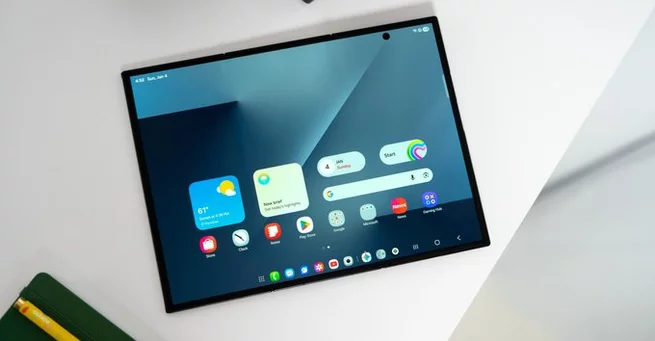
Samsung Trifold price is officially confirmed, and it lands just shy of the $3,000 mark. Priced at $2,899, the Galaxy Z Trifold launches this Friday with 512GB of storage and a design that constantly blurs the line between phone and tablet. For anyone searching how much the Samsung Trifold costs or when the Samsung Trifold launches, the answer is simple and slightly jaw-dropping. This is Samsung’s most ambitious foldable yet, and also its most expensive consumer phone to date.
The launch comes after months of speculation and early previews, especially following the device’s limited debut in Korea last year. While the sticker shock is real, Samsung appears confident that its most experimental form factor can command a luxury-tier price.
At its core, the Samsung Trifold is designed to replace multiple devices. Folded once, it behaves like a tall smartphone. Unfolded twice, it transforms into a compact tablet built for multitasking, reading, and media consumption. Samsung is clearly pitching this as a “three-in-one” device rather than a traditional phone.
The 512GB storage configuration is currently the only option available at launch, reinforcing the premium positioning. Samsung has optimized the software to adapt dynamically as the screen unfolds, allowing apps to resize and reflow without interruption. This constant transformation is the phone’s main selling point, and also the reason it feels like a glimpse into the future of mobile hardware.
Still, for many buyers, the question remains whether innovation alone is enough to justify the cost.
The Samsung Trifold price reflects more than just branding. Triple-folding displays are significantly harder to manufacture than standard foldable screens, with tighter tolerances and more potential failure points. Each hinge must withstand thousands of folds while keeping the display aligned and crease-free.
Samsung has also spent heavily on durability improvements, reinforcing the chassis and refining the hinge mechanism to handle daily use. These engineering challenges drive up production costs, and Samsung is clearly passing that cost on to early adopters. In that sense, the Trifold feels less like a mass-market phone and more like a limited, cutting-edge showcase.
It also helps explain why Samsung moved from teaser to retail availability in roughly a year, an unusually fast timeline for such a complex device.
Spending close to $3,000 on a phone sounds extreme, but context matters. High-end smartphones have steadily climbed in price, with fully loaded flagship models already pushing past $2,000. Samsung is betting that a device offering three screen modes can stretch that boundary even further.
Unlike conventional slab-style phones, the Trifold isn’t just about better cameras or faster processors. It’s about changing how people use a phone altogether. Reading documents, editing photos, or running multiple apps side by side feels more natural on the expanded display.
That said, the Trifold won’t appeal to everyone. Users who prefer simplicity or pocket-friendly designs may find the constant unfolding more novelty than necessity.
Another factor influencing the Samsung Trifold price conversation is availability. While the phone is officially launching this week, distribution remains limited in several regions. Buyers outside supported markets may need to import the device, adding taxes, shipping fees, and potential warranty complications on top of the already steep price.
This limited rollout reinforces the idea that Samsung is targeting enthusiasts and early adopters rather than mainstream buyers. Owning a Trifold is as much about being first as it is about functionality.
For Samsung, this controlled release also reduces risk while allowing the company to gather real-world feedback before expanding further.
The Samsung Trifold isn’t just a product, it’s a statement. Samsung is signaling that foldables are no longer experiments but a core part of its long-term vision. Triple-fold designs open the door to new app experiences, productivity workflows, and entirely new usage patterns.
If the Trifold succeeds, even at low volumes, it could pave the way for more affordable versions in the coming years. Early foldables were once luxury devices too, and prices eventually came down as technology matured.
For now, the Trifold exists at the edge of what’s possible, both technologically and financially.
There’s no getting around the fact that the Samsung Trifold price will limit its audience. At $2,899, this is a phone for those who value experimentation, screen real estate, and being on the cutting edge above all else. It’s not designed to compete on value, but on vision.
Samsung knows most people won’t buy this phone, and that’s okay. The Trifold’s real job is to show what’s next, even if only a few can afford it today. Whether that future becomes mainstream will depend on how quickly Samsung can turn this bold idea into something more accessible.









Comment