
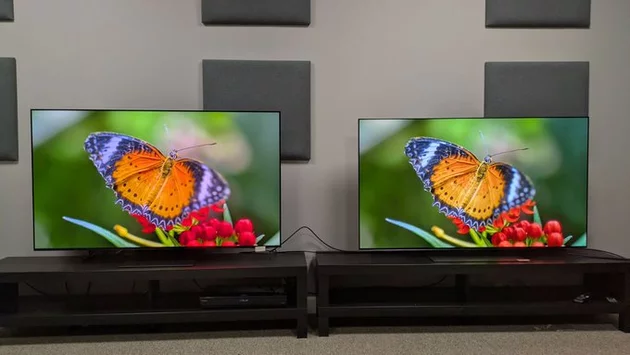
Samsung OLED Brightness Breakthrough Explained
Samsung OLED brightness breakthrough has become a hot topic after new details emerged about how its latest panels achieve dramatic brightness gains. Many people searching right now want clear answers to three questions: what makes Samsung’s new OLED TVs brighter, how this differs from traditional OLED technology, and whether these improvements finally fix OLED’s long-standing weaknesses. While Samsung’s approach genuinely pushes OLED brightness forward, it also highlights why one core issue still refuses to disappear.
OLED TVs remain some of the most sought-after displays available today. Their ability to produce perfect blacks, intense contrast, and vibrant colors makes them ideal for movies, gaming, and premium home setups. Yet brightness has always been the trade-off, especially when compared to mini-LED alternatives that dominate sunlit rooms.
Why Traditional OLED Has Always Struggled With BrightnessStandard OLED panels rely on self-emissive pixels that turn on and off individually. This design delivers unmatched black levels and contrast but limits how much light the panel can safely produce. Pushing OLED too hard risks heat buildup, faster pixel wear, and long-term image degradation.
WOLED panels, which use white OLED layers with color filters, have steadily improved year after year. Brightness gains are real, but incremental. Even with modern refinements, WOLED panels still trail behind mini-LED displays in full-screen brightness and daytime viewing performance.
This limitation created an opening for a new approach that could preserve OLED’s strengths while boosting luminance in a meaningful way.
How QD-OLED Changed the OLED Brightness ConversationQD-OLED panels introduced a different strategy by combining blue OLED light with quantum dots to create color. Instead of filtering white light, quantum dots convert blue light directly into red and green with far less energy loss. The result is higher brightness, stronger color volume, and improved efficiency.
Since its debut, QD-OLED has consistently delivered higher peak brightness than traditional WOLED panels. Each generation brings noticeable improvements, reinforcing Samsung’s claim that QD-OLED has more headroom for growth. That advantage has helped QD-OLED TVs stand out in high-end performance comparisons.
However, higher brightness alone does not automatically guarantee widespread adoption across the TV industry.
The “Secret Sauce” Behind Samsung’s Latest Brightness JumpThe latest Samsung OLED brightness breakthrough reportedly comes from refining how blue OLED layers are stacked and driven. By improving material efficiency and light output per pixel, Samsung has unlocked a claimed brightness increase of roughly 35 percent without proportionally increasing heat or power consumption.
This matters because blue OLED has historically been the weakest link in panel longevity. Enhancing blue efficiency allows higher brightness while preserving durability. Combined with refined quantum dot conversion, the panel can push brighter highlights while maintaining rich color accuracy.
From a technical standpoint, this is an impressive achievement. It proves that OLED brightness ceilings are not as fixed as once believed.
Why Brighter OLED Still Hasn’t Solved the Biggest ProblemDespite these gains, the biggest OLED problem remains unchanged: sustained brightness across large areas of the screen. While peak highlights can look stunning, full-screen brightness still falls behind competing display technologies.
This limitation becomes obvious during sports, news, or daytime viewing where large bright scenes dominate. Mini-LED TVs can maintain higher overall luminance without aggressive brightness limiting. OLED panels, even brighter ones, must still manage heat and power carefully.
As a result, brighter OLED does not automatically translate into a better experience for every viewing scenario. The trade-off between cinematic contrast and everyday brightness remains very real.
Why WOLED Still Dominates the MarketEven with QD-OLED’s performance advantages, WOLED continues to dominate production and adoption. Manufacturing scalability, cost efficiency, and widespread panel availability all favor WOLED technology. Many brands rely on WOLED because it fits a broader range of price points and screen sizes.
QD-OLED remains positioned as a premium option rather than a universal replacement. That status limits its reach, even as it continues winning performance awards and critical praise.
The market reality shows that technical superiority alone does not guarantee industry takeover.
What Samsung’s OLED Advances Mean for BuyersFor buyers focused on cinematic viewing, gaming, and contrast-rich content, Samsung’s brighter OLED panels represent genuine progress. Highlights pop more, colors remain vivid, and HDR performance continues to improve.
For buyers prioritizing bright rooms and all-day viewing, OLED’s core limitation still matters. No matter how advanced the panel becomes, brightness management will always shape how OLED behaves compared to other display types.
Samsung’s OLED brightness breakthrough pushes the technology forward, but it does not rewrite OLED’s fundamental trade-offs.
The OLED Battle Is Far From OverThe competition between WOLED, QD-OLED, and mini-LED is more interesting than ever. Each generation narrows gaps while exposing new limits. Samsung’s latest OLED advancements prove that innovation is far from slowing down, even if perfection remains out of reach.
OLED continues to evolve, impress, and challenge expectations. Yet for now, brighter OLED still means choosing which strengths matter most, not escaping compromise entirely.










Comment