Alerts

-
12 minutes, 4 seconds
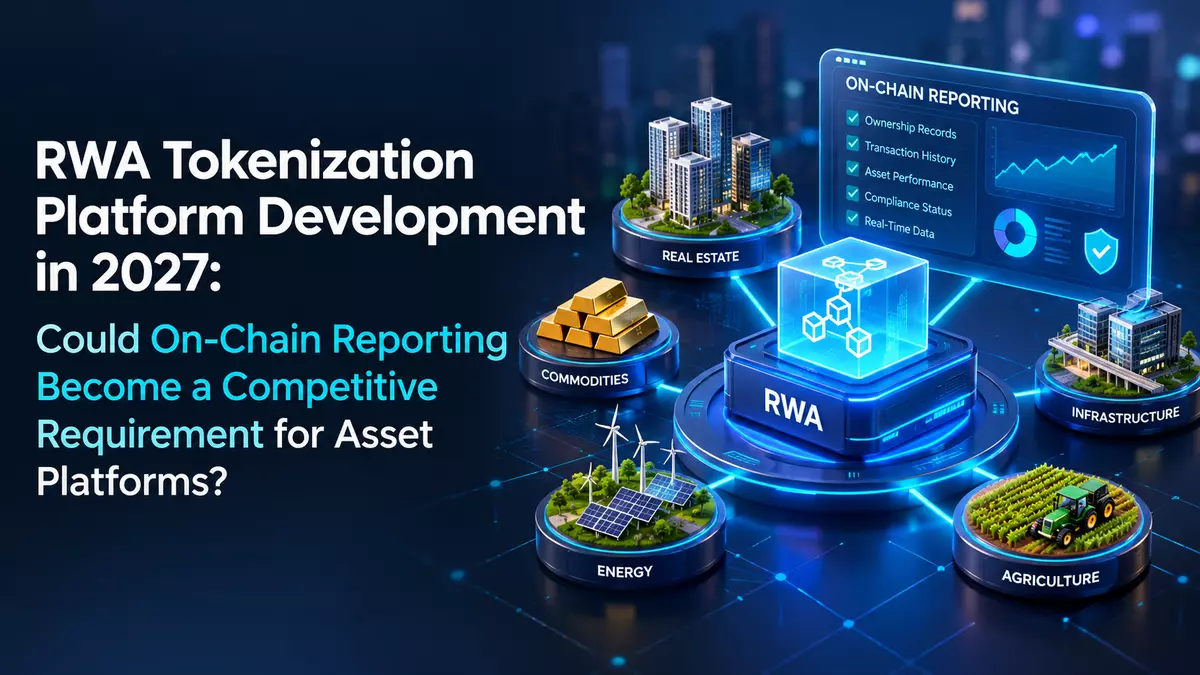
Real-world assets are moving into digital markets as financial institutions, asset managers, property firms, and other businesses examine blockchain-based ownership and settlement models. Real estate, private credit, commodities, funds, invoices, bonds, and infrastructure assets are among the categories being considered for tokenization. As this market develops, investors may expect more than digital ownership records. They may also want frequent access to information about asset performance, transactions, distributions, valuations, and compliance events.
This is where on-chain reporting could become increasingly important. In 2027, RWA tokenization platforms may need to provide reporting systems that connect asset information with blockchain records. Instead of relying only on periodic documents or separate reporting portals, platforms could present selected financial and operational information through verifiable blockchain records. This approach may give investors, issuers, administrators, and regulators a more consistent view of asset activity.
On-chain reporting refers to recording selected information or references to information on a blockchain so that authorized participants can verify when an event occurred and whether the record has been changed. The information does not always need to be stored entirely on-chain. In many cases, sensitive or large documents can remain in external systems while a hash, timestamp, transaction reference, or data summary is recorded on the blockchain.
For an RWA tokenization platform, reporting can cover several areas. These may include token supply, ownership changes, income distributions, asset valuations, repayment events, interest payments, collateral information, and compliance actions. The reporting system can connect these events with wallet addresses and smart contract activity.
This model could become particularly useful when several parties need access to the same information. Investors may want portfolio information, issuers may need operational records, and administrators may need transaction histories. A shared reporting layer can give each participant access to information according to their permissions.
The early stages of RWA tokenization have involved experimentation across several asset categories. As more platforms move toward larger transaction volumes and institutional participation, reporting requirements may become more demanding. Investors may compare platforms based not only on the assets they offer but also on how frequently and accurately they report asset-related events.
Traditional asset markets already depend on reporting processes for valuations, income, ownership, settlement, and compliance. Bringing assets onto blockchain does not remove these requirements. Instead, it creates an opportunity to connect some reporting activities with transaction records.
For an RWA tokenization development company, this means reporting may become part of platform planning rather than an additional feature added after token issuance. Platforms could be designed from the beginning to collect relevant information from asset administrators, custodians, valuation providers, payment systems, and compliance teams.
An RWA tokenization platform development project can include several reporting categories depending on the asset class. A property tokenization platform, for example, could report rental income distributions, ownership changes, valuation updates, maintenance events, and property-level financial summaries.
Private credit assets could involve repayment schedules, interest payments, outstanding balances, collateral updates, and loan status changes. For tokenized funds, reporting may include net asset value updates, subscription activity, redemption activity, distribution records, and portfolio-level information.
Commodities may require information about custody, quantity, storage location, certification, and ownership transfers. Bonds could include coupon payments, maturity information, repayment events, and holder records. Each asset category requires a different reporting model, which means RWA tokenization platforms may need flexible data structures rather than one reporting format for every asset.
A typical reporting process can begin when an external event takes place. For example, a property generates rental income. The property administrator records the income in an accounting system. A reporting service then verifies the relevant information before passing a data summary to the blockchain.
A smart contract can record the reporting event, timestamp, transaction reference, or distribution information. Investors can then verify that the event was recorded at a particular point in time. Where full documents are required, the platform can keep them in an external storage system while linking them to an on-chain record.
This method can reduce unnecessary blockchain storage while maintaining a verifiable history. It also allows platforms to keep confidential information away from public networks when required by privacy rules, contractual terms, or regulatory obligations.
Smart contracts can serve as an important reporting mechanism within RWA tokenization. They can automatically record predefined events when specific conditions are met. For example, a distribution contract could record the date and amount of a payment after funds are received and verified.
Smart contracts can also record token issuance, transfers, redemption, distribution, and restriction events. When reporting rules are connected with these transactions, participants can review an auditable history of token activity.
However, smart contracts cannot independently confirm every real-world event. They require reliable external data for information such as property valuations, rental payments, commodity prices, or loan repayments. This is where oracle services and verified data providers may become important in RWA token development.
Many RWA events happen outside blockchain networks. A blockchain cannot directly know whether a tenant has paid rent, whether a property has been revalued, or whether a borrower has made a repayment. External data providers therefore have an important role in connecting real-world events with blockchain records.
An RWA tokenization company may use oracle systems to bring verified information into smart contracts. The platform can define which data sources are accepted and how information is checked before it becomes part of a reporting record.
For sensitive financial assets, multiple data sources may be compared before an update is recorded. This can reduce the effect of incorrect or incomplete information. The exact process will depend on the asset type, jurisdiction, contractual structure, and reporting requirements.
Investors generally need information before making decisions about an asset. Tokenization can provide a digital ownership mechanism, but ownership records alone may not tell investors how an asset is performing.
On-chain reporting could provide a more regular view of relevant events. Investors may be able to see when income was distributed, when tokens changed hands, when a valuation was updated, or when a repayment occurred. This does not remove investment risk, but it can provide a more accessible record of selected activities.
For a real-world asset tokenization company, reporting could therefore become part of the investor experience. A platform that provides useful reporting may give participants a better understanding of what is happening with their tokenized holdings.
Compliance is another area where on-chain reporting could have an important role. RWA platforms may need to manage investor verification, transfer restrictions, transaction monitoring, ownership records, and other regulatory requirements.
A blockchain ledger can maintain a chronological record of approved transactions. When compliance checks are linked with token transfers, platforms can maintain records showing whether a transaction passed the required checks.
Auditors may also benefit from structured transaction histories. Rather than reviewing disconnected records from multiple systems, they can use blockchain records together with accounting documents, legal agreements, and external data sources. The blockchain record would form one part of the audit process rather than replacing conventional documentation.
On-chain reporting does not mean every piece of information should become publicly available. Financial information, investor identities, legal documents, and commercial agreements may require restricted access.
An RWA tokenization platform development company may therefore use permissioned networks, encrypted data systems, access controls, zero-knowledge techniques, or other privacy methods depending on the project. The platform can record proof that an event occurred without publishing the full underlying information.
For example, a platform could record a cryptographic reference to a valuation report while keeping the complete report available only to approved participants. This approach can provide evidence of the report's existence and integrity without publishing confidential details.
By 2027, reporting may become an important factor when businesses compare RWA tokenization platforms. The requirement may not be identical for every asset class or market, but investors and institutions could expect access to more frequent and structured information.
A platform offering token issuance without meaningful reporting may face questions about asset performance, distributions, valuations, and transaction history. Meanwhile, platforms with reporting dashboards, audit records, data verification processes, and permission-based access could provide a more complete operating environment.
This does not mean that every reporting function must be placed directly on-chain. A practical system may combine blockchain records, accounting software, custodial systems, data providers, and reporting dashboards. The value comes from how these systems work together and how easily participants can verify relevant information.
Businesses planning RWA tokenization development should consider reporting requirements during the initial platform design process. The first step is to identify which asset events need to be recorded, who needs access to them, and how frequently updates should occur.
The next step involves selecting appropriate data sources. Property values, payment information, ownership records, commodity data, and financial information may come from different providers. Each source needs defined verification rules.
Platforms should also establish reporting permissions. Investors may need access to portfolio information, while administrators may require detailed transaction records. Regulators or auditors may require another level of access. Separating these permissions can help protect sensitive information.
Finally, reporting should be connected with smart contracts, wallets, compliance systems, accounting tools, and dashboards. This can create a consistent information flow from real-world events to digital asset records.
The growth of reporting requirements could create new opportunities for businesses involved in RWA token development. Companies may develop platforms focused on specific asset categories while offering reporting systems suited to those markets.
A real estate platform could combine property management data with token ownership and distribution records. A private credit platform could connect loan servicing information with repayment events. A fund platform could provide token holder information alongside periodic valuation updates.
This creates room for specialized RWA tokenization platform development company offerings. Instead of treating tokenization as a simple token issuance process, businesses may provide complete systems covering asset onboarding, investor verification, token issuance, transactions, distributions, reporting, and administration.
The practical use of on-chain reporting will depend on data quality, legal requirements, network selection, privacy arrangements, and the quality of external data sources. Recording information on a blockchain does not automatically make the underlying information accurate.
For this reason, platforms need defined procedures for data validation and corrections. If an external valuation is later found to be incorrect, the platform should have a documented process for recording the correction while preserving the previous record.
Interoperability may also matter. RWA platforms could interact with multiple blockchains, banking systems, custodians, accounting platforms, and data providers. Reporting systems therefore need suitable interfaces and data standards so that information can move between different systems without unnecessary duplication.
RWA tokenization may gradually move from basic digital ownership toward broader financial infrastructure. As the number of tokenized assets increases, participants may expect better records covering ownership, payments, valuations, compliance, and asset activity.
On-chain reporting could become part of this development. It can provide a verifiable record of selected events while external systems continue to hold detailed documents and sensitive information. The result could be a reporting environment where blockchain records and traditional financial systems work together.
For an RWA tokenization company, this creates an opportunity to think beyond token issuance. Reporting, data verification, compliance records, investor dashboards, and asset servicing may become important parts of the overall platform experience. The platforms that address these requirements may be better prepared for the changing expectations of digital asset markets.
On-chain reporting could become an increasingly important requirement for RWA platforms in 2027 as investors, institutions, administrators, and regulators seek more accessible records of asset activity, ownership, payments, valuations, and compliance events. Rather than placing every document directly on a blockchain, platforms can combine smart contracts, verified external data, permission systems, accounting records, and blockchain references to create a practical reporting model. The approach can vary according to the asset class and jurisdiction, but reporting is likely to remain closely connected with the wider growth of RWA tokenization. Businesses planning RWA tokenization development may therefore benefit from considering reporting architecture during the early stages of platform planning. Blockchain App Factory provides RWA tokenization development services.
On-chain reporting involves recording selected asset events, transaction details, timestamps, proofs, or data references on a blockchain. It can help participants verify when particular events were recorded.
As tokenized asset markets grow, investors and institutions may seek more frequent information about ownership, payments, valuations, distributions, and compliance events. Reporting can provide a structured record of these activities.
No. Sensitive documents and large datasets can remain in external systems. A blockchain can store hashes, references, timestamps, transaction records, or summaries that point to the relevant information.
Oracles can bring verified information from external systems into blockchain networks. They may provide information about prices, valuations, payments, asset conditions, or other real-world events required by smart contracts.
It can provide chronological records of transactions and selected compliance events. However, blockchain records do not replace legal, regulatory, accounting, or audit procedures.
Real estate, private credit, commodities, bonds, funds, invoices, infrastructure, and other tokenized assets can use reporting systems. The data requirements differ according to each asset category.
Platforms can use permissioned networks, access controls, encrypted storage, restricted dashboards, and cryptographic references. These methods can limit access to sensitive information while maintaining verifiable records.
Businesses should consider asset data sources, reporting frequency, smart contracts, compliance requirements, investor permissions, privacy, blockchain selection, external systems, audit records, and data correction procedures.
Reporting could become an increasingly important consideration as institutional and investor expectations develop. The exact requirements will depend on the asset type, market, jurisdiction, and regulatory framework.
An RWA tokenization development company can assist businesses with platform architecture, token creation, smart contracts, asset onboarding, investor systems, reporting functions, compliance workflows, wallet integration, and other components required for a tokenized asset platform.


Comment