


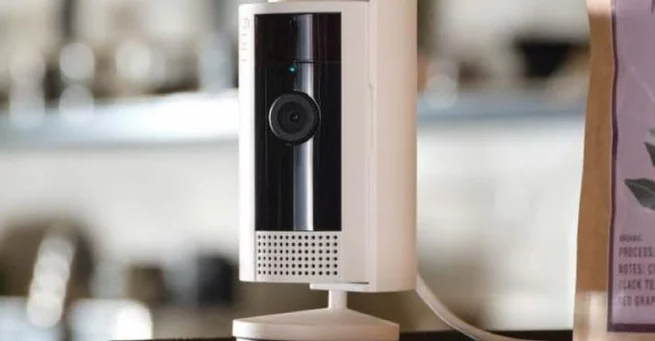
Ring Verify Raises New Questions About AI Video Trust
-
6 minutes, 17 seconds
Ring Verify launches with a promise of video authenticity
Ring Verify is now live, and many users are asking the same questions: Can it prove a video is real, and does it help spot AI-generated fakes? Within its first rollout, the answer is both yes and no. The new tool confirms whether a Ring video has remained untouched since download, but it cannot explain how a video was altered if it fails verification. That distinction matters as AI-made security footage lookalikes spread rapidly online. For homeowners and law enforcement, Ring Verify adds confidence, but it does not solve the broader problem of deceptive video content.
What Ring Verify actually checks in your videos
Ring Verify works by attaching a digital security seal to videos downloaded from Ring’s cloud. When a user uploads a file to the verification page, the system checks whether the footage matches the original version exactly. A verified result means the video has not been edited, filtered, trimmed, or compressed since it left Ring’s servers. Even a minor brightness adjustment will cause the verification to fail. This strict approach prioritizes integrity but leaves little room for normal file handling.
Why Ring Verify struggles with AI-generated fakes
The biggest misconception around Ring Verify is that it can identify AI-created videos. It cannot. If a clip was never recorded by a Ring device in the first place, the tool has nothing to confirm. Many AI-generated clips are designed to look like real security camera footage, complete with timestamps and grainy visuals. Ring Verify only validates original Ring recordings, not whether a video resembles one. That limitation means the tool offers no help when suspicious clips circulate outside the Ring ecosystem.
Edited videos fail without explanation
When Ring Verify cannot authenticate a video, it does not explain why. Users are simply told that the file no longer matches the original. The system cannot specify whether a clip was cropped, compressed, color-corrected, or otherwise modified. For users trying to prove authenticity in disputes or investigations, that lack of detail can be frustrating. The result is a binary outcome that favors certainty over transparency. Either the video is untouched, or it fails without context.
Older and encrypted videos face restrictions
Not every Ring video is eligible for verification. Clips downloaded before the feature launched in late 2025 cannot be authenticated. Videos recorded with end-to-end encryption enabled are also excluded, since Ring cannot access the data needed to generate a verification seal. Additionally, uploading a clip to a sharing platform often compresses the file automatically, breaking verification. These technical boundaries mean many legitimate Ring videos will never pass the test.
Built on emerging content authenticity standards
Ring Verify is built on widely recognized digital content authentication standards. These frameworks are designed to confirm origin and integrity rather than judge realism. That approach aligns with industry efforts to restore trust in digital media without analyzing content itself. Instead of guessing whether something looks fake, the system verifies whether it is exactly what the device recorded. This philosophy avoids false positives but limits usefulness in the fight against sophisticated AI deception.
Helpful for evidence, limited for everyday browsing
For homeowners sharing footage with neighbors, insurers, or authorities, Ring Verify adds a valuable layer of credibility. A verified video clearly shows it has not been tampered with. However, the tool does little for users scrolling through viral clips that claim to be security footage. Those videos often originate elsewhere or are heavily modified. Ring Verify is not designed for public fact-checking or content moderation. Its value lies in controlled, original-file scenarios.
Why AI video trust remains unresolved
Ring Verify highlights a larger truth about AI and media trust. Verifying authenticity is easier at the point of creation than after distribution. Once a video is edited, compressed, or reuploaded, technical proof becomes difficult. AI tools exploit that gap by mimicking familiar formats like security camera footage. While Ring Verify strengthens trust within its ecosystem, it does not address the broader information problem facing social feeds and messaging apps.
A step forward, not a full solution
Ring Verify represents progress in protecting original video integrity. It gives users a clear way to prove when footage is untouched and authentic. At the same time, its limitations reveal how far the industry still has to go. AI-generated fakes are evolving faster than verification tools can follow. For now, Ring Verify is best seen as a foundation, not a fix, in the ongoing effort to rebuild trust in what we see on screen.



Contact Information



Suggested Writers
-

2.5K articles
-

1.3K articles
-

34 articles
-

28 articles



Comment