
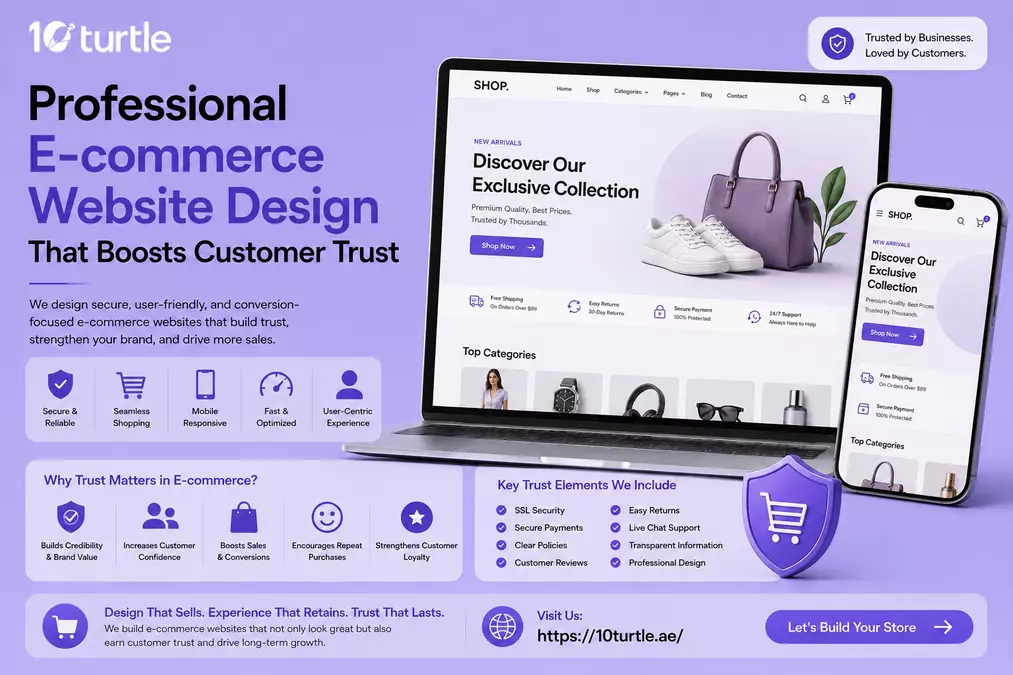
Professional E-commerce Website Design That Boosts Customer Trust
-
4 minutes, 37 seconds
In today's competitive online retail market, shoppers judge a brand within seconds of landing on its homepage. A clean layout, fast loading speed, and secure checkout process are no longer optional extras they are the baseline expectation. If you're searching for professional ecommerce website design services to grow your US-based online store, this guide breaks down exactly what builds real customer confidence, from trust badges to mobile-first navigation, so your visitors feel safe enough to actually click "buy."
Why Trust Is the Real Currency of Online Shopping
Every year, American consumers spend well over a trillion dollars shopping online, yet a huge share of visitors abandon their carts before completing a purchase. Most of the time, this isn't about price it's about doubt. Shoppers hesitate when a site looks outdated, when checkout feels risky, or when there's no clear way to contact a real human. A well-built online store removes that friction and replaces it with confidence.
This is where custom ecommerce web design becomes a business decision, not just a visual one. A professionally designed store signals credibility the same way a clean storefront or a polite salesperson would in a physical shop.
Core Elements of a Trustworthy Online Store
1. Clean, Fast, Mobile-Responsive Design
More than 70% of US shoppers now browse and buy from their phones. A mobile-friendly ecommerce website with quick load times (under 3 seconds) directly reduces bounce rates. Google also factors page speed into search rankings, so a fast site helps both conversions and SEO at the same time.
2. Secure Checkout and Payment Options
Visible SSL certificates, padlock icons, and recognizable payment logos (Visa, PayPal, Apple Pay, Shop Pay) reassure buyers that their card details are safe. American consumers, in particular, look for familiar payment gateways before entering sensitive information an unfamiliar or clunky checkout page is one of the fastest ways to lose a sale.
3. Transparent Return and Shipping Policies
Clear, easy-to-find shipping timelines and hassle-free return policies matter enormously in the US market, where buyers are used to services like free returns from major retailers. Burying this information in fine print damages trust; putting it front and center builds it.
4. Genuine Reviews and Social Proof
Verified customer reviews, star ratings, and user-generated photos act as digital word-of-mouth. Displaying real testimonials, complete with names or initials, feels far more authentic than generic marketing copy and it's one of the strongest conversion rate optimization tools available to small business ecommerce sites.
5. Professional Branding and Visual Consistency
Consistent fonts, colors, and imagery across every page tell visitors this is a legitimate, established business rather than a fly-by-night operation. Sloppy design, mismatched product photos, or broken links are red flags that send shoppers straight to a competitor.
6. Accessible Contact Information
A visible phone number, live chat option, or US-based support email reduces uncertainty. Shoppers want to know that if something goes wrong, someone will actually respond.
New Trend: AI-Powered Personalization in 2026
One of the newer shifts in ecommerce web development is the use of AI-driven personalization product recommendations, dynamic pricing displays, and chat-based support assistants that answer questions instantly. US retailers adopting this technology are seeing higher average order values because shoppers feel like the store "understands" their needs rather than showing generic catalog pages. Pairing this with accessibility compliance (ADA-friendly design) is also becoming a legal and reputational priority for American businesses, since lawsuits related to inaccessible websites have risen sharply over the past few years.
Small Business vs. Enterprise Ecommerce Design
Small businesses often assume professional design is only for large brands, but that's changing fast. Affordable small business ecommerce website design packages now include the same trust-building fundamentals SSL security, responsive layouts, and clear policies that bigger retailers use, just scaled to a smaller budget. The key difference isn't quality; it's the level of customization and the number of integrated tools (like advanced inventory or multi-warehouse shipping).
Practical Checklist Before You Launch
- Confirm SSL certificate is active and visible
- Test checkout on both desktop and mobile
- Add at least 5–10 genuine customer reviews per key product
- Include a real US business address and support contact
- Compress images for faster load speed
- Make return and refund policies easy to find
- Run an accessibility audit for ADA compliance
Conclusion
Building customer trust online isn't about flashy design tricks it's about removing doubt at every step of the buyer's journey. From secure payments to honest policies and consistent branding, every design choice either builds confidence or chips away at it. For US-based online retailers, investing in professional ecommerce website design isn't just about looking good; it's about converting visitors into loyal, repeat customers.
Frequently Asked Questions
Q1: What makes an ecommerce website trustworthy?
A trustworthy site combines secure checkout, fast loading speed, clear policies, real customer reviews, and professional, consistent branding.
Q2: How much does professional ecommerce website design cost in the USA?
Costs vary widely small business sites often range from $2,000 to $10,000, while custom enterprise builds can exceed $50,000 depending on features and integrations.
Q3: Does website design really affect sales?
Yes. Studies consistently show that poor design and slow load times directly increase cart abandonment, while clean, trustworthy design improves conversion rates.
Q4: Is mobile optimization necessary for ecommerce stores?
Absolutely. With the majority of US shoppers browsing on mobile devices, a non-responsive site risks losing a large portion of potential customers.
Q5: How can a small business afford professional design?
Many designers and platforms now offer scalable packages, so small businesses can access core trust-building features without enterprise-level budgets.


Contact Information

Suggested Writers
-

7.6K articles
-

2.5K articles
-

1.3K articles
-

34 articles




Comment