
-
5 minutes, 42 seconds
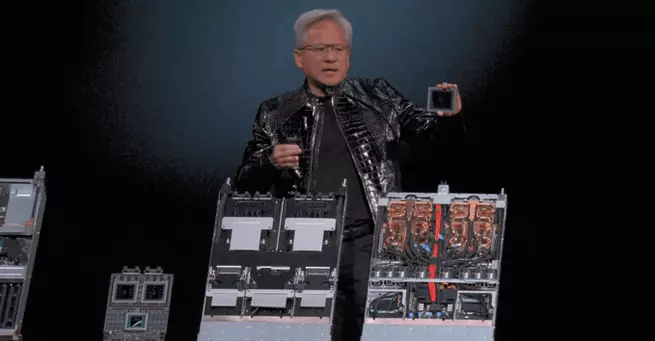
Nvidia has officially unveiled its next-generation Vera Rubin AI computing platform at CES 2026, answering one big question on everyone’s mind: what comes after Blackwell? The short answer is more power, faster training, and a clearer focus on large-scale AI workloads. According to Nvidia, the new Rubin GPU delivers five times more AI training compute than its Blackwell predecessor. That leap positions Vera Rubin as a cornerstone for future data centers, advanced AI models, and enterprise-scale deployments. The announcement came during CEO Jensen Huang’s CES keynote, one of the most anticipated moments of the show. Developers, cloud providers, and AI researchers immediately took notice. The launch reinforces Nvidia’s role as the pace-setter in AI hardware innovation.
At the heart of the platform sits the Rubin GPU, engineered specifically for next-generation AI training and inference. Nvidia says the chip dramatically increases throughput while improving energy efficiency, a growing concern as AI models scale. Compared to Blackwell, Rubin is designed to handle more parameters, faster iteration cycles, and heavier multimodal workloads. This means shorter training times for large language models and more responsive AI services in production. Nvidia also emphasized tighter hardware-software integration to extract maximum performance. The company’s CUDA and AI software stack remains central to the experience. Together, the hardware and software aim to remove bottlenecks that slow modern AI development.
The Vera Rubin AI computing platform is clearly built with data centers in mind. Nvidia positioned the platform as ideal for hyperscalers, research institutions, and enterprises racing to deploy generative AI. As organizations demand more compute for training and fine-tuning models, Rubin steps in as a scalable solution. Nvidia highlighted support for advanced networking and memory technologies to keep data flowing efficiently. These features are crucial for distributed AI training across massive clusters. The company also framed Rubin as future-ready, capable of supporting AI workloads that do not yet exist. That long-term vision appeals strongly to enterprise buyers making multi-year investments.
CES 2026 once again served as Nvidia’s global stage, with Jensen Huang using the keynote to set the tone for the AI industry. The Vera Rubin announcement wasn’t just about raw performance; it was about direction. Nvidia is signaling that AI growth will continue at an aggressive pace, and it intends to lead that charge. The company framed Rubin as a response to exploding demand for compute across industries. From autonomous systems to scientific research, Nvidia sees AI becoming more deeply embedded everywhere. The keynote presentation balanced technical depth with big-picture ambition. That combination helped the announcement resonate beyond just developers and engineers.
For the broader AI ecosystem, Vera Rubin represents both opportunity and pressure. Developers gain access to more powerful tools, enabling larger and more capable models. At the same time, competitors face a higher bar to match Nvidia’s pace of innovation. Cloud providers may leverage Rubin to differentiate AI services and attract enterprise customers. Startups and researchers could see faster experimentation cycles as compute constraints ease. Nvidia’s dominance also raises questions about dependency on a single hardware ecosystem. Still, the immediate reaction suggests excitement outweighs concern. Vera Rubin sets a new benchmark for AI computing as 2026 begins.
With the launch of Vera Rubin, Nvidia is making a clear statement about where AI computing is headed. The platform builds directly on Blackwell’s momentum while pushing performance to new extremes. Five times more AI training power is not an incremental update—it is a generational shift. Nvidia appears confident that demand will continue to justify such leaps. CES 2026 provided the perfect venue to showcase that confidence. As AI models grow larger and more complex, Rubin is positioned to power the next wave of breakthroughs. For Nvidia, this launch further cements its leadership in the AI hardware race.

2.5K articles

1.4K articles

34 articles

28 articles














Comment