Alerts

-
4 minutes, 54 seconds
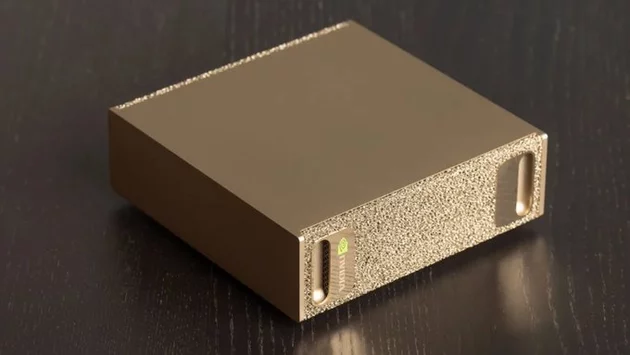
The Nvidia DGX Spark has finally landed, promising desktop-level AI performance in an impressively compact form. Designed to run larger AI models locally, the Spark brings a shared 128GB of LPDDR5X memory and native CUDA support to a mini PC that challenges typical desktop limitations. Early reviews suggest that while its performance is impressive, users must fully leverage its AI capabilities to justify the investment.
Windows is unsupported on the DGX Spark, restricting its software environment to Linux. This limitation may deter some traditional desktop users but positions the Spark as a specialized machine for AI researchers, developers, and enthusiasts ready to embrace Nvidia’s ecosystem.
The Nvidia DGX Spark stands out thanks to its GB10 Superchip, which integrates an Arm-based CPU with a Blackwell GPU into a single package. This combination enables the system to handle larger AI workloads locally without relying on expensive professional graphics cards.
Nvidia prioritized functionality over flashy aesthetics. The design focuses on density and airflow to maintain performance under heavy AI processing loads. Unlike standard desktops, modular expansion is limited, but this is intentional: the Spark is engineered as a turnkey AI workstation that maximizes efficiency in a small footprint.
One of the DGX Spark’s most notable features is its 128GB of shared LPDDR5X memory. This unified memory structure allows AI models that typically require multiple high-end GPUs to run on a single system. For developers working on large-scale machine learning projects, this capability is a game-changer.
Compared to Apple or AMD systems, which also offer large memory setups, the DGX Spark has the advantage of direct support for Nvidia’s software ecosystem. CUDA acceleration and optimized AI libraries ensure seamless execution of complex workloads that would otherwise demand distributed systems.
Early benchmarks reveal that the DGX Spark excels when fully utilized for AI tasks. Lightweight or non-AI workloads may underwhelm users expecting a versatile desktop experience. Reviewers note that this system shines for deep learning, neural network training, and data-heavy AI simulations.
For users ready to commit to AI development, the Spark delivers impressive speed and efficiency. The Arm CPU and Blackwell GPU pairing ensures tasks are handled without bottlenecks, while native CUDA support maximizes compatibility with Nvidia-optimized frameworks like PyTorch and TensorFlow.
Despite its strengths, the DGX Spark has clear limitations. Windows is unsupported, which may restrict certain workflows. Modular upgrades are minimal, and the system’s design favors specialized AI tasks over general-purpose computing.
However, for professionals who rely on Nvidia’s AI stack and need a compact workstation that punches above its weight, these trade-offs are manageable. The Spark is not a typical mini PC—it’s a dedicated AI powerhouse that requires full adoption of its intended use case to justify its cost.
The Nvidia DGX Spark is a compelling option for AI developers seeking desktop-level performance in a compact form factor. Its massive unified memory, Arm CPU and Blackwell GPU integration, and native CUDA support make it a strong contender for specialized AI workloads.
While it may not replace a general-purpose workstation for everyday computing, the DGX Spark delivers exceptional results when fully utilized. For anyone serious about AI development, this mini PC is a worthy investment—and a glimpse into the future of high-performance, compact AI computing.










Comment