Alerts

-
3 minutes, 55 seconds
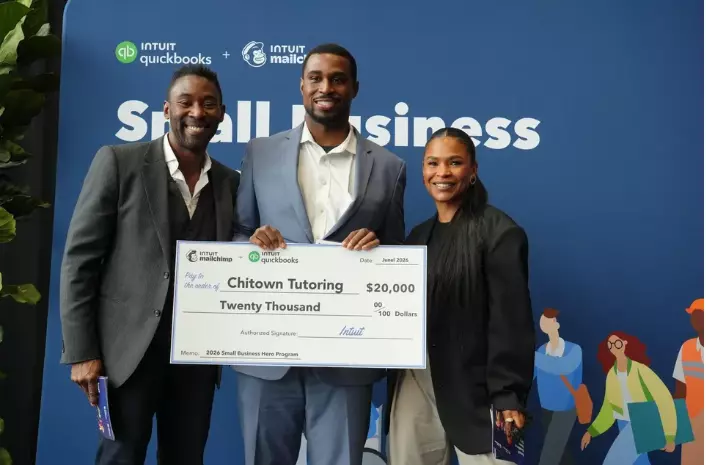
Nia Long handed out $20,000 checks to three small business owners. But the real story is what those founders endured while waiting for funding. This article breaks down the hidden costs of the funding gap and what it means for today's entrepreneurs.
Nia Long has a theory about why this generation of founders struggles. She doesn't soften it. "There has to be a period of planting, a period of harvest," she told me over Zoom. She described a business culture she sees as transactional—founders chasing quick results and skipping the unglamorous work that builds a lasting company. Her summary: "You are owed nothing."
She's right about one thing: social media shows the outcome and hides the labor. But the three founders who received those $20,000 checks tell a different story—one about patience, sacrifice, and a broken funding system.
Anthony Purcell has run Walking With Anthony for nearly a decade. He and his mother, Micki, have never taken a dollar from it. The nonprofit funds spinal cord injury rehabilitation—costs insurance never covers, often reaching millions in the first year alone. The Intuit grant will fund about 12 weeks of rehab for two people.
"Getting rehab immediately is the difference between a life of isolation or a life of independence," Micki said.
The organization started after Anthony's injury. He spent two years in depression. "I thought she was crazy," he said. "How can we start a charity helping other people when I'm suffering?"
Ten years. No salary. That's a planting season by any definition Long would recognize.
Stacy Bernstein co-founded All Better Co., a first aid brand in over 100 stores. She's bootstrapped. Her first outside money came from women writing checks between $1,500 and $50,000. Since then, the door has mostly stayed shut.
She called early-stage venture capitalists "just liars." They market themselves as early check writers, then set benchmarks a company under $1 million can't clear. "They don't write checks."
Her sharpest point: All Better Co. has an email list of over 100,000 people it can't afford to email regularly. Sending to that list would jump her provider bill from $400 a month to thousands. She owns the asset. She can't afford to operate it. The free year of Mailchimp from the grant may be worth more than the cash.
"I don't have a PR team," she said. "I am the PR team. I am the marketing team. I am the social media team."
Siri Omene built Chitown Tutoring in Chicago and didn't apply for the grant. A former professor nominated him. He'd been applying elsewhere for months, losing every time. When the finalist email arrived, he assumed it was fraud. He checked if the sender was actually from QuickBooks before believing it.
Intuit's Jennifer Garcia confirmed this happens often. The team sometimes has to chase winners down to convince them the money is real.
Founders have been conditioned by grant fraud to assume legitimate capital is a scam.
Call this the unfunded middle—the years between starting something real and becoming visible to institutions that write checks. It's not a motivation gap. It's a period where the work is happening, the impact is measurable, and no financing structure recognizes either one.
The data supports the founders:
Long is right that the work is invisible. But she has the direction backward. The work is invisible because nobody pays for it. The people doing it have no reason to broadcast a decade of unpaid effort with no outcome attached.
Here's the finding that stayed with me: Not one of the three winners applied on their own behalf. Anthony's nonprofit was submitted by the wife of a man they helped years earlier. Siri was nominated by his professor. Stacy was put forward by an educator who wasn't paid to do it.
The money found them because someone with access noticed. Everyone still in the unfunded middle is waiting on the same coincidence.










Comment