
-
5 minutes, 10 seconds
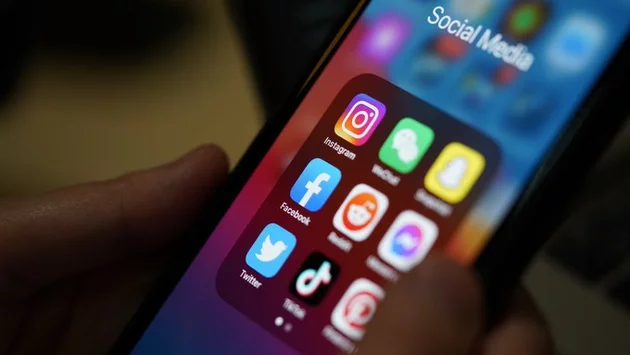
New York mental health warnings on social media are now law, raising a common question: what exactly must platforms do, and who does it protect? The new requirement forces social media companies to clearly warn users about features linked to addiction and emotional harm. Parents, teens, and educators have increasingly searched for answers about how social apps affect mental health. State leaders say the goal is transparency rather than outright bans. The law focuses on design choices, not content moderation. It places responsibility directly on tech companies. For users, this means alerts will become part of the scrolling experience.
Governor Kathy Hochul signed the Stop Addictive Feeds Exploitation (SAFE) for Kids Act after months of pressure from child safety advocates. The law targets algorithm-driven feeds, infinite scroll, autoplay videos, and push notifications. Like counts and similar engagement tools are also included. Lawmakers argue these features are intentionally designed to keep young users online longer. Research cited by the state links extended use to anxiety, depression, and sleep disruption. The act frames these tools as health risks rather than neutral technology. That framing marks a major shift in regulation.
Under the new rules, warning labels must be displayed prominently within the platform experience. Companies cannot hide alerts inside lengthy terms of service documents. The New York mental health commissioner will decide how often warnings appear and what language they use. This flexibility allows updates as research evolves. Platforms that fail to comply face civil penalties of $5,000 per violation. Regulators believe financial consequences are necessary to ensure compliance. For tech firms, this introduces a new layer of operational risk.
Governor Hochul compared the warning labels to those found on cigarettes and alcoholic beverages. In her statement, she emphasized the public’s right to understand digital risks. She argued that information overload and algorithmic pressure can quietly harm mental health. Transparency, she said, is a preventive tool. The comparison signals how seriously New York views social media’s influence. It also hints at future regulations beyond warnings. Public health language now dominates the conversation.
The SAFE for Kids Act closely follows New York’s Child Data Protection Act, which took effect in June. That earlier law restricts companies from collecting or selling data from users under 18. Together, the two laws form a broader youth protection strategy. One limits data exploitation, while the other addresses addictive design. State officials say this dual approach closes key loopholes. Critics argue enforcement will be challenging. Supporters counter that the framework is intentionally strict.
New York becomes the third U.S. state, after California and Minnesota, to require social media warnings. Momentum is also building at the local level. The Los Angeles Unified School District now bans student cellphone use during school hours. These policies reflect growing concern from educators and parents. States are no longer waiting for federal action. Each new rule increases pressure on platforms to adapt nationally. Industry resistance remains strong but fragmented.
Internationally, governments are moving even faster. Australia recently banned social media access for users under 16. Platforms there face fines reaching $32 million for non-compliance. Compared to that, New York’s approach may seem moderate. Still, warning labels mark a clear escalation. Together, these policies suggest a global shift in how youth tech use is regulated. For social media companies, the era of minimal oversight is ending.

2.5K articles

1.4K articles

34 articles

28 articles














Comment