
Mui Board Redefines Smart Home Control at CES 2026
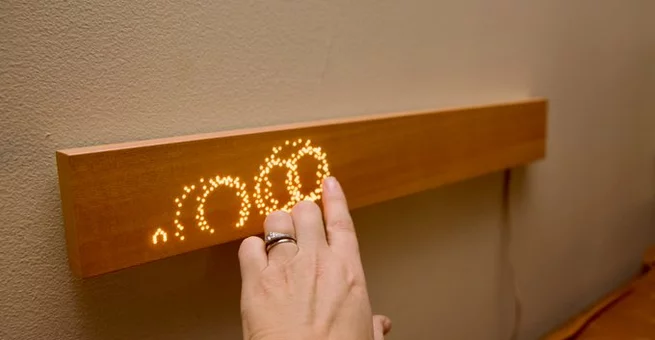
Mui Board is a new smart home controller unveiled at CES 2026 that answers a growing question: can smart homes work without constant screens? Designed as a slab of natural wood, the device blends into living spaces while quietly managing connected devices. Users searching for a minimalist smart home hub, a screen-free controller, or calm technology will find Mui Board positioned as an alternative to tablets and wall-mounted displays. Instead of shouting for attention, it stays invisible until touched. Subtle LED text appears only when needed, then fades back into the wood grain. The concept targets homeowners overwhelmed by notifications and glowing panels. At CES, Mui Board stood out precisely because it refused to look like tech.
A Wooden Smart Home Controller Built on Calm Tech
Mui Board is built around the philosophy of “calm tech,” where technology supports life without dominating it. The wooden surface hides LEDs that illuminate softly to show weather, time, or smart home controls. Touch gestures allow users to adjust lighting, music, or temperature without opening apps. Unlike traditional smart displays, there is no camera, no constant feed, and no aggressive alerts. The board is designed to be mounted on a wall like décor rather than electronics. This approach appeals to design-focused homeowners who want tech to disappear. Mui’s long development journey shows in the refined hardware and intentional limitations. The result feels more like furniture than a gadget.
How Mui Board Controls Your Smart Home
Mui Board works as a centralized smart home controller compatible with major platforms like Google Home and Alexa. Users can control lights, thermostats, speakers, and routines through simple touch interactions. Information appears only when summoned, helping reduce distraction throughout the day. The interface prioritizes glanceable data rather than deep menus. While it doesn’t replace voice assistants entirely, it complements them with a quieter option. For households tired of shouting commands, this tactile approach feels refreshing. The system focuses on essential actions instead of endless customization. That restraint is part of its identity.
Why Mui Board Is Drawing Attention at CES
At a show packed with AI screens and flashy demos, Mui Board attracted attention by doing less. Its natural wood finish contrasts sharply with glass-and-plastic competitors. Reviewers noted how it blends into living rooms instead of standing out. The device represents a shift toward emotional design and digital wellbeing. CES audiences responded to the idea of technology that respects personal space. Mui Board also reflects broader trends in mindful tech and sustainable materials. Its presence suggests a counter-movement to screen overload. That message resonated strongly on the CES show floor.
The Price of Minimalism and Design
Mui Board’s biggest drawback is its high price, which places it firmly in the premium category. Compared to tablets or smart displays, it offers fewer features at a significantly higher cost. However, Mui argues that craftsmanship, materials, and longevity justify the expense. The wood housing and specialized LED technology are not cheap to produce. For design-conscious buyers, the value lies in aesthetics and peace of mind. For mainstream consumers, the cost may be difficult to justify. This makes Mui Board more of a lifestyle product than a mass-market controller. It is clearly not trying to compete on price.
Is Mui Board Worth It for Smart Homes in 2026?
Mui Board is not designed for power users or those who love complex dashboards. Instead, it targets people who want their smart home to feel calm, intentional, and human. The device succeeds in offering a unique alternative to screens. Its slow, thoughtful interactions encourage more mindful use of technology. While the price limits accessibility, the concept feels timely in a screen-saturated world. Mui Board proves that innovation doesn’t always mean more features. Sometimes it means knowing what to remove. For the right home, it could be exactly the right kind of smart.










Comment