Alerts

-
3 minutes, 55 seconds
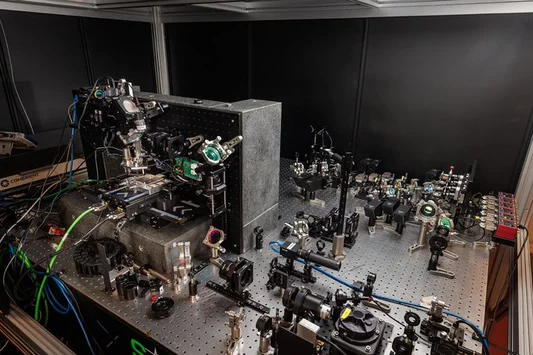
Microsoft has unveiled a striking new update on Project Silica, its ambitious program to store digital information in glass. The company claims its latest research demonstrates that borosilicate glass—similar to Pyrex—can preserve data for over 10,000 years. This could redefine long-term storage, offering a lifespan far beyond traditional HDDs, SSDs, or magnetic tapes.
Yet, while the promise is impressive, practical hurdles remain. Writing large amounts of data into these glass discs takes an extraordinary amount of time, raising questions about whether this technology can ever be truly mainstream.
The core concept behind Project Silica is storing information in three-dimensional patterns etched into glass using lasers. Each disc can theoretically hold terabytes of data, with the potential to survive extreme conditions such as heat, electromagnetic pulses, and even water exposure.
Microsoft's recent tests show borosilicate glass can reliably retain data for millennia. Unlike conventional storage that gradually decays, these glass discs remain largely unaffected by environmental changes. In theory, your digital archives could outlast entire civilizations.
Despite its remarkable durability, Project Silica faces significant practical limitations. Writing a single 4.8TB disc currently takes more than 18 days. That’s far too slow for everyday use, making it unrealistic for active data centers or consumer applications.
Even switching to cheaper borosilicate glass helps reduce costs but does nothing to speed up the data-writing process. While the storage medium is revolutionary, its practicality for mass adoption is still a major question mark.
Microsoft’s latest statements suggest the company is treating this update more as a research milestone than a near-term commercial product. The announcement highlights scientific progress but stops short of outlining a timeline for widespread deployment.
Industry experts believe Project Silica is likely to remain a niche solution, ideal for archiving critical data such as historical records, cultural archives, or scientific datasets. However, the slow write speeds mean it’s unlikely to replace existing enterprise or consumer storage solutions anytime soon.
The potential is undeniable. A storage medium capable of lasting 10,000 years could revolutionize how humanity preserves knowledge. Libraries, museums, and government agencies could store invaluable information without worrying about regular hardware upgrades or catastrophic failure.
Yet, the technology still needs to overcome its biggest challenge: speed. Until writing times improve, glass storage will remain an impressive lab experiment rather than a practical tool for businesses or everyday users.
Microsoft's Project Silica demonstrates how innovation in data storage is evolving. Even if widespread adoption is far off, the idea of preserving digital information across millennia sparks the imagination and hints at a future where human knowledge is virtually immortal.










Comment