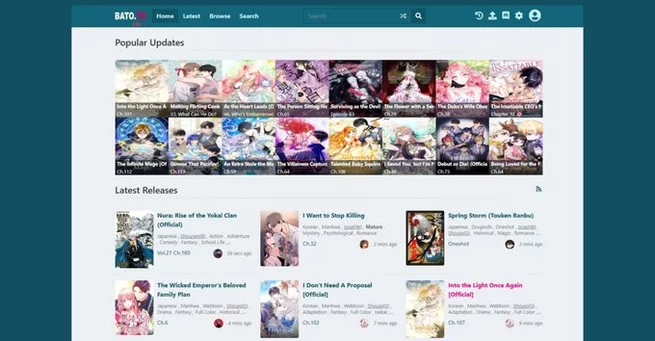
A major blow has been dealt to manga piracy communities worldwide as authorities shut down Bato.to, one of the largest illegal manga distribution networks. The takedown comes after a joint investigation by Japanese publishers and Chinese law enforcement, highlighting the growing crackdown on online piracy in the comic book industry. Fans and creators alike are now reacting to the end of a site that had become a staple for free manga access.
Authorities announced that an individual operating Bato.to and around 60 affiliated websites—including xbato.com and mangapark.io—has been arrested on suspicion of copyright infringement. The operator reportedly admitted to managing the network, which had become notorious for distributing "scanalations"—scanned and translated versions of manga and manhwa uploaded by online communities.
Bato.to, which launched in 2014, quickly grew into a hub for manga fans seeking access to the latest series outside official channels. At its peak, the network’s 60 sites drew massive traffic, recording an estimated 350 million visits in May 2025 alone. Bato.to itself reportedly generated over 400,000 yuan (roughly $57,000) each month from advertising revenue tied to its illegal content.
The site’s popularity stemmed from its vast library and fast release of scanlations, allowing readers worldwide to keep up with ongoing series. Many users relied on Bato.to for titles not easily available outside Japan or Korea, underscoring the global demand for manga. However, these conveniences came at a significant cost to creators and publishers, who lost revenue from unauthorized distribution.
Following the arrest on November 19, 2025, the operator was released on bail and is expected to face formal indictment. Authorities emphasized that this action is part of a broader effort by the Content Overseas Distribution Association (CODA) to protect intellectual property and combat the rapid growth of digital piracy networks. CODA has coordinated with international partners to identify and take down sites profiting from illicit content.
The case highlights the legal risks behind operating and profiting from piracy platforms. Beyond criminal charges, operators can face substantial fines and damage claims from publishers, reinforcing that even seemingly anonymous online ventures carry real-world consequences.
The shutdown of Bato.to has sparked mixed reactions across the manga community. Many fans lament the loss of a convenient platform, particularly for series not officially licensed in their region. Others celebrate the move, noting that piracy undermines the livelihoods of manga artists and publishers.
Industry insiders suggest that this crackdown may drive users toward legal alternatives, such as official digital manga platforms that offer subscription services or individual purchases. While these platforms often involve costs, they provide higher-quality translations and support the creators directly—helping ensure the long-term sustainability of the industry.
Bato.to’s closure underscores the persistent challenges of controlling online piracy. Despite the growth of official digital distribution, illegal networks remain attractive due to free access and speed. However, coordinated international enforcement efforts, combined with the expansion of legal streaming and distribution platforms, could gradually reduce the influence of such sites.
For manga enthusiasts, the Bato.to shutdown serves as a reminder of the legal and ethical implications of accessing unauthorized content. Supporting legitimate channels not only protects creators’ rights but also contributes to a thriving global manga ecosystem.
Manga Piracy Network Bato.to Shut Down After ... 0 0 0 16 2
2 photos

Access our platform effortlessly on-the-go through our user-friendly mobile apps.






Comment