Alerts

-
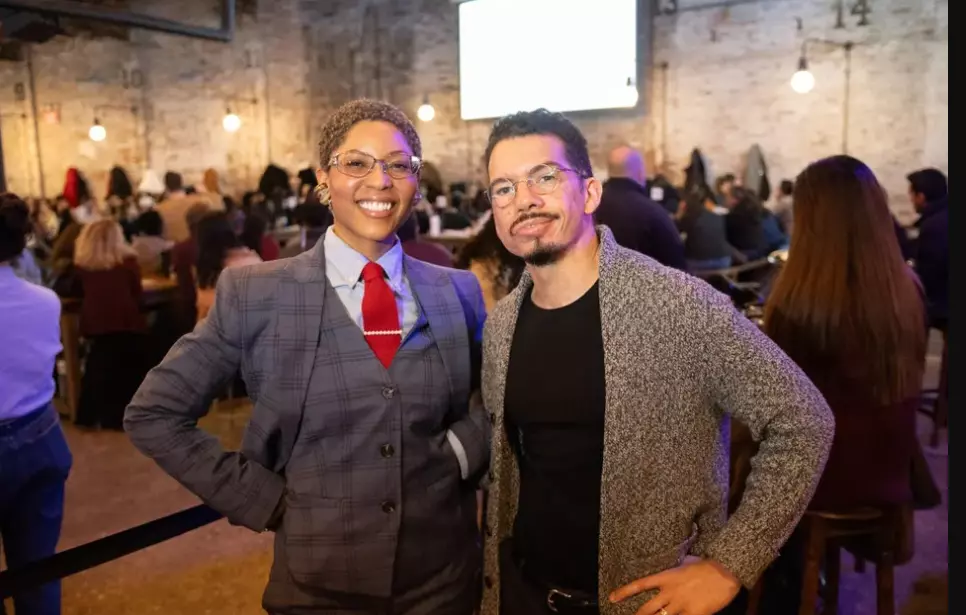
Imagine yourself at your favorite neighborhood bar in New York City. You are not there for the live band or the game on television. Instead, you are listening to a university professor break down the neuroscience of laughter while you sip a craft cocktail. Now, imagine that same scene unfolding in cities across the country on any given weeknight. This is the reality of Lectures on Tap, an event series that has transformed the casual bar experience into an accessible hub for higher learning.
What started as a single midweek lecture in a New York City bar has quickly grown into a cultural phenomenon. The growth is not accidental. It is the result of a clear vision from founders Tyrone and Felecia Freely, whose entrepreneurial journey offers a compelling look at how to identify a gap in the market and fill it with a product people did not even know they were missing.
The concept appears deceptively simple: take the intellectual rigor of a university lecture, strip away the pressure of grades and tuition, and serve it in the relaxed setting of a local pub. However, the execution requires a delicate balance of atmosphere, academic credibility, and entertainment. The Freelys managed to find that formula, and the response from the public has been overwhelming.
By removing the barriers typically associated with academia—cost, formal enrollment, and the fear of failure—Lectures on Tap attracts a demographic that might otherwise never step foot in a lecture hall. The bar setting lowers the stakes. It invites curiosity rather than requiring commitment. Attendees come for the drink and stay for the discourse.
Tyrone and Felecia Freely are not just event organizers; they are architects of a new social ritual. Their partnership pairs a deep understanding of community engagement with a sharp business acumen. They recognized that adults are hungry for intellectual stimulation that does not come with a syllabus or a final exam. The result is a platform where learning feels less like a chore and more like a social outing.
The success of the Freelys’ model lies in its consistency. They have created a safe space for intellectual curiosity, where asking questions is encouraged and the exchange of ideas is the main attraction. This approach has resonated deeply, turning first-time attendees into regulars who plan their social calendars around the lecture schedule.
The traction gained by Lectures on Tap is best understood through its growth metrics. Since the official launch in June 2024, the organization has achieved milestones that most startups can only dream of in their early years:
These figures, accumulated in under two years, are not just vanity metrics. They represent a genuine, unmet need in the social landscape. People are looking for alternatives to the standard happy hour. They want to connect with others on a deeper level, and they want to leave a night out feeling like they gained something beyond a buzz.
There is a distinct energy present at a Lectures on Tap event that is difficult to manufacture. As someone who has taken the stage as a speaker, the atmosphere is palpable. You look out at a room full of adults who are there voluntarily, eager to engage with a topic simply for the joy of learning. There are no required readings, no pop quizzes, and no pressure to perform. This freedom creates a unique dynamic between the speaker and the audience.
It is a space where laughter is loud, questions are thoughtful, and the conversation often spills out into the street long after the event has ended. This organic engagement is the clearest indicator that the format works. It cannot be replicated by simply putting a podium in a bar; it requires a curated approach to speaker selection and venue choice, which the Freelys have perfected.
The journey of Lectures on Tap serves as a masterclass in identifying a niche and scaling it. The Freelys did not invent the idea of drinking with friends, nor did they invent the lecture. What they did was merge the two in a way that respected both the audience and the subject matter. They understood that the delivery of the content matters just as much as the content itself.
Their success illustrates that sometimes the most innovative business ideas are not about creating something entirely new, but about creating a new context for something old. By treating education as a form of entertainment and treating the audience as participants rather than spectators, they have built a brand that is poised for continued expansion. The formula is simple: meet people where they are, give them something worth talking about, and they will keep coming back for more.
It is tempting to attribute the meteoric rise of Lectures on Tap to a handful of viral videos. After all, the company now sells out events almost instantly in every city it operates in. However, this level of success took thirteen years to materialize. The journey was not a sudden stroke of luck but a slow, deliberate accumulation of skills and experiences. Founders Ty and Felecia merged their passion for education with practical expertise in coding, event planning, and storytelling. This unique combination allowed them to deliver a distinctive experience to major urban markets. Yet, the path was paved with setbacks that proved to be invaluable learning opportunities.
The years leading up to their triumph were filled with ambitious projects that did not achieve commercial success. They developed mobile applications, launched various businesses, and navigated demanding corporate positions. Throughout this period, they held onto the goal of building something of their own. The specific details of these ventures reveal the texture of their persistence.
One of their earliest efforts was Shiitake, an AI-powered group chat application. This tool was designed to learn about user interests and generate personalized conversation starters. In retrospect, the concept was far ahead of its time. They also built a platform intended to connect student organizations within a shared digital environment. Neither of these projects achieved a breakthrough. Despite the lack of traction, each failure contributed a distinct tool to their arsenal. These lessons became the foundation upon which Lectures on Tap would later be built, making the execution look effortless.
“Sometimes life is so interesting, because it will give you all of these different tools, and you will have a toolbox. Then the last tool will come, and you will realize what you have been building this entire time.”
The origin of the business itself was remarkably humble. Ty was in his first semester at Columbia University when Felecia, who had already established herself as a content creator, attended a university lecture. She had grown her social media following from zero to one hundred thousand in just her first month. After filming a vlog of the event, she noticed friends texting her to ask when the next lecture would take place. The following morning, while Ty was sitting in class, she sent him a rapid series of messages outlining the concept.
The idea was simple: bring professors and experts into bars to deliver lectures. Ty immediately recognized the potential. Reflecting on the moment, he noted that it felt less daunting than their previous efforts. They had already built three versions of iOS apps that gained little traction. In comparison, this venture seemed straightforward and enjoyable. It offered a chance to connect with people and forge new friendships. He did not hesitate. He stepped back into his classroom and approached one of his professors on the spot. The professor was entirely enthusiastic about the prospect.
It is a familiar feeling for many entrepreneurs: the quiet doubt that perhaps this path is not for you, that the constant uphill climb is a sign to pivot toward something else. Ty and Felecia know this terrain well. They argue that the difference between giving up and breaking through often comes down to a stubborn refusal to stop innovating and a willingness to try the next idea with the belief that it might be the one. For them, pushing past that discouragement became their secret sauce. Looking back, the moment of greatest doubt was not an ending, but one of the most important decisions they ever made.
For Felecia, that moment arrived after she leveraged years of coding experience to land a senior software engineering role in corporate tech. What followed was the most intellectually stretching period of her career, and it provided the clearest possible confirmation that she needed autonomy to feel genuinely alive in her work. She was placed on a team above her stated qualifications and rose to meet the challenge. She read voraciously, stayed off social media for two years, and discovered capabilities that her earlier entrepreneurial, scrappy years had not yet revealed.
“I became, without knowing it, one of the best versions of myself because of that,” she recalls. “I feel like I really stretched my intellectual muscles, and that is when I really grew into more of the person that I am today. But you are in a corporate environment, and things are very determined for you. Your schedule is determined. The tasks you are working on are determined. I realized I actually need that autonomy. That is what I am supposed to do.”
Ty frames that same process of self-discovery with equal clarity. The years of trying and falling short did not register as failure in any final sense. Instead, they registered as information—valuable data points that transferred directly to Lectures on Tap when the time came.
“Failure does not mean ‘no’,” Ty explains. “It means ‘not this’, or ‘not yet’. You do gain things along the way even if you do not get your outcome. And everything that we gained along the way was instantly applied to this. We were able to take something from zero to a million dollar business in a year.”
In an era where much of what we consume is either AI-generated or mass-produced, genuine experiences that feel personal and thoughtfully designed are increasingly rare. Lectures on Tap has built its entire model around the opposite approach, placing the attendee at the heart of every decision. The commitment is absolute: the founders would rather refund an entire room than allow a single guest to leave disappointed. Attendees are not treated as ticket holders; they are treated as personal guests being hosted in the home of founders Ty and Felecia themselves.
This philosophy extends well beyond the event itself and into the rigorous preparation that happens behind the scenes. Every speaker is put through a mock lecture before they ever take the stage. If that rehearsal reveals that the talk is not ready, the event is cancelled outright. This holds true even when it means absorbing significant financial losses, including venue rental fees and paying staff for work they will no longer perform.
The founders are unequivocal about why they make this sacrifice. They have cancelled lectures on multiple occasions after a mock session a week before the scheduled date revealed that the content was not up to the standard they demand. In those situations, the employees are still paid and the venue fee is still covered. The reasoning is simple and consistent: they are protecting the brand and, more importantly, protecting the attendee experience. A subpar lecture is not a risk they are willing to take, regardless of the sunk costs.
This dedication is not driven by a bonus structure or a corporate incentive program. It is sustained by a genuine feedback loop that connects the founders directly with their audience. At an event in New York during their second year of operation, Ty posed a simple question to the room. He asked how many people in the audience were attending for the first time. Eighty percent of the hands in the room went up. In that same crowd, someone had made the trip all the way from Connecticut to be there.
That moment illustrates the organic growth and reputation that a personal, quality-first approach can build. It is a reminder that a loyal following is not manufactured through marketing tactics, but earned through consistently delivering on a promise of excellence. The willingness to cancel an event, absorb the costs, and prioritize the guest experience over the bottom line is what sets this model apart. It signals to every attendee that their time and their experience are the only metrics that truly matter.
The result is a brand built on trust. Every decision, from speaker selection to the decision to cancel a show, is filtered through the same lens: would this make a guest feel welcome and valued? By consistently answering yes, Lectures on Tap has created an environment where the audience knows they are the priority. And that is a feeling that no algorithm or assembly line can replicate.
That same personal approach carries directly into how Ty and Felecia build the team that represents their brand. When hiring, they do not simply look for candidates with the right resume. Instead, they search for the problem solver, the innovator, and the friendly face who makes guests feel welcome from the moment they walk through the door. The culture of Lectures on Tap has become a natural extension of the founders’ own personalities—warm, welcoming, and dedicated to doing things well—and it grew that way because their hiring process is just as intentional as everything else about the business.
Their method is refreshingly straightforward, yet remarkably effective. As Ty explains, the interview is essentially a personality test built around just three questions. From those answers, the founders can quickly determine a candidate’s instinctive response under pressure. He frames it simply: if there is a fire, are you the type of person who runs into it, or the type who retreats? This filter has allowed them to grow a national team of twenty-four people, all of whom share that same firefighter mentality.
The culture that emerged from that careful screening process has developed its own internal language. Interestingly, the founders say this ethos spread through the team organically long before it was ever given a formal name. New team members noticed the attitude in Ty and Felecia first, then adopted it as their own.
At the heart of that ethos is a simple principle: no ego. It is not about claiming credit for an idea or following orders simply because the founders said so. Instead, every member of the team is laser-focused on one shared objective—creating the best possible experience for the attendee. That shared commitment is so strong that team members feel empowered to challenge Ty and Felecia directly when they believe it will improve the outcome.
The result is a team the founders speak about with genuine pride. Ty and Felecia can be in Los Angeles while lecture nights run simultaneously in other cities, each one staffed by people who do not merely follow direction. These are individuals who carry the pursuit of excellence as an internal drive, taking ownership of their roles and delivering a consistently high-quality experience no matter where the event takes place.
This level of trust does not happen by accident. It is built through a hiring process that prioritizes character and instinct over credentials alone. By identifying people who naturally align with the brand’s values, the founders have created a team that is not only capable but genuinely invested in the mission. That alignment is what allows the business to scale without losing the personal touch that defines it.
For other business owners looking to grow their teams, the lesson is clear: hire for temperament and attitude first. Skills can be taught, but the instinct to step forward when challenges arise—the willingness to be a firefighter—is something a person either has or does not. Finding those people and giving them the freedom to excel is what turns a good team into a great one.
For many entrepreneurs, the prospect of sudden, overwhelming demand can be just as daunting as the threat of failure. When a product or experience gains unexpected traction, the immediate challenge shifts from building an audience to managing explosive growth. The question becomes: how do you replicate a successful formula across new markets without diluting the very essence that made it special? For Lectures on Tap, the answer lies in a meticulously crafted system of preparation and execution, a hallmark of the founders’ approach to every facet of their business.
This methodical mindset was put to the test when the decision was made to expand into four new cities within a single summer. The founders, Ty and Felecia, did not rely on virtual scouting or delegated oversight. Instead, they committed to a rigorous, hands-on process, personally flying to each new location three separate times. The first visit was dedicated to scouting potential venues and bars in person, ensuring each space met their exacting standards. The second trip was for the official launch of the series in that city. The third and final visit was reserved for training the newly assembled local team. This structured approach translated to a demanding schedule: four cities, three trips each, amounting to twelve weeks of travel over the course of one summer.
This same principle of considered restraint guides their strategy regarding outside investment, despite receiving numerous inquiries from potential investors. The founders have deliberately chosen to maintain their independence, prioritizing the organic and sustainable growth they have cultivated. Their business model is built on a revenue-sharing structure, where team members are compensated based on the income they generate. They view bringing on shareholders as a potential threat to their core mission, a move that could dilute their focus and compromise the attendee experience they hold paramount. As they put it, they are so dedicated to that experience that they are sometimes willing to forgo profit to preserve it.
Looking toward the future, the founders have ambitious plans for continued expansion. Their roadmap for 2026 includes launching in ten additional cities: Washington D.C., Philadelphia, Seattle, Atlanta, Dallas, Austin, Nashville, San Diego, Miami, and Phoenix. Beyond this geographical growth, their vision extends to creating a flagship Lectures on Tap venue and developing a potential Netflix series built from the year’s most compelling lectures. They also plan to diversify their programming, moving beyond the traditional lecture night to include events like spelling bees and debates, all built upon the same foundational idea of making intellectual engagement feel like a vibrant and social night out.
The narrative of Lectures on Tap is, at its heart, a story about two individuals who transformed their own curiosity into a thriving enterprise. Over thirteen years, they patiently accumulated the skills and absorbed the lessons that would eventually make a simple Tuesday night lecture in a New York bar feel like the most natural concept in the world. Their journey serves as a compelling case study in entrepreneurship, demonstrating that success is not just about a great idea, but about the systems, patience, and unwavering focus required to bring it to scale. It’s a story that is, fittingly, best appreciated in the environment where it all began: at a bar, over a drink, surrounded by strangers who are about to become part of a community.










Comment