
Alerts
-
5 minutes, 25 seconds
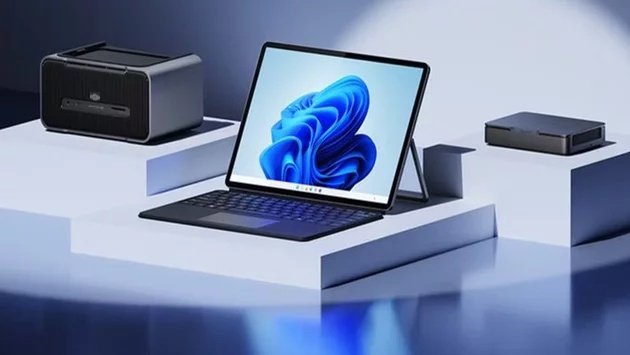
Khadas Mind Pro mini PC is turning heads at CES 2026, answering a question many PC buyers are asking right now: how much desktop power can truly fit into a tiny box? The new system packs an RTX 5060 Ti, up to 64GB of RAM, and a 2TB NVMe SSD into just 0.43 liters. That spec list rivals full-size gaming towers, yet the footprint is smaller than most external GPUs. Pre-orders open January 27, 2026, though Khadas has not yet revealed pricing. For creators, developers, and power users, this launch signals a major leap for mini PCs. Compact computing no longer means compromise. Curiosity is justified, and the hardware details explain why.
At the center of the announcement is the Khadas Mind Pro mini PC itself, a modular system designed to blur the line between desktop and portable computing. Despite its tiny enclosure, it supports an unspecified but high-performance Intel processor paired with serious memory and storage options. The real shock comes from how efficiently everything is packed, with thermal design clearly prioritized. This is not Khadas’ first attempt at high-powered compact hardware, as earlier Mind 2 and Mind 2S models already proved the company’s engineering ambition. Still, the Mind Pro represents a generational leap. Few mini PCs can even approach this level of internal hardware density. The result feels almost impossible on paper.
Graphics performance comes from the optional Mind Graphics 2 Dock, which houses an RTX 5060 Ti with 16GB of GDDR7 memory. Rather than forcing the GPU inside the core unit, Khadas keeps things modular for better thermals and flexibility. This approach allows users to scale performance based on workload, from everyday productivity to GPU-heavy rendering or gaming. The dock connects seamlessly, transforming the mini PC into a workstation-class system. Compared to external GPU setups, the integration feels purpose-built and cleaner. It also future-proofs the platform to some extent. For a mini PC, this is a bold and practical design choice.
The Mind Graphics 2 Dock is not just about raw GPU power, as it also expands connectivity well beyond typical compact systems. Users get two HDMI 2.1a ports, DisplayPort 1.4b, multiple USB Type-A and Type-C ports, a memory card reader, and 2.5Gb Ethernet. This makes the Khadas Mind Pro mini PC viable as a central desktop hub rather than a secondary device. Multi-monitor setups are clearly supported, appealing to professionals and streamers alike. Cable clutter is reduced thanks to the dock’s all-in-one approach. For many buyers, these ports are as important as the GPU itself. It feels designed for real-world workflows, not just spec-sheet bragging.
Khadas also introduced the Mind xPlay display, which effectively converts the Mind Pro into a portable workstation or laptop alternative. This modular display snaps into the ecosystem, offering flexibility for users who move between desks or travel frequently. Instead of carrying a traditional laptop, users can bring the Mind Pro and attach it where needed. This concept challenges conventional PC categories by mixing desktop power with portable convenience. It is especially appealing to digital nomads and hybrid workers. The idea may not replace laptops outright, but it expands how mini PCs are used. Portability becomes optional rather than mandatory.
The Khadas Mind Pro mini PC reflects a broader trend toward modular, high-density computing. As GPUs grow more powerful and efficient, companies are rethinking how systems are built and upgraded. Khadas is positioning itself as an innovator rather than a follower, especially among niche PC enthusiasts. Pricing remains the big unknown, and it will likely determine how disruptive this product becomes. Even so, the engineering achievement alone sets a new benchmark. Mini PCs are no longer just office tools or media boxes. With launches like this, they are becoming serious desktop replacements.








Comment