
Alerts
-
5 minutes, 5 seconds
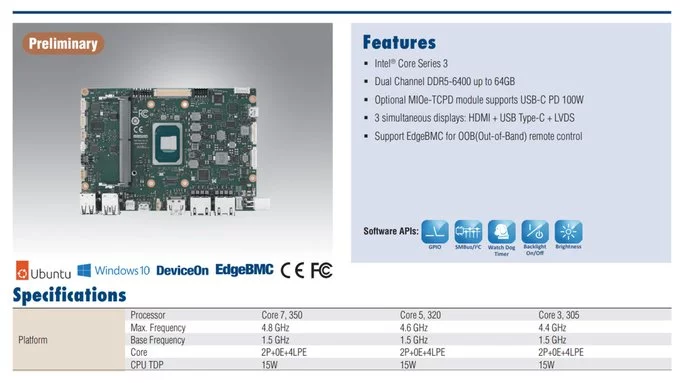
Intel Wildcat CPUs are generating major attention after new leaks revealed detailed specifications, including core configuration, clock expectations, and ultra-low power targets. If you're wondering what Intel's Wildcat chips are, when they will launch, or why they matter for edge computing and embedded systems, the latest leak provides strong clues. These processors appear designed for compact, power-efficient devices rather than traditional desktops or laptops. With up to six cores and a 15W thermal design power, they could reshape low-power computing in 2026.
Recent leaks surrounding Intel Wildcat CPUs suggest a new direction for the company’s low-power processor lineup, aimed at efficient computing rather than high-performance workloads. The details indicate multiple variants designed for embedded systems, where energy efficiency and compact design matter more than raw speed. Analysts believe this could position Intel strongly in the growing edge computing market, especially for industrial and IoT applications.
Leaked specifications indicate that Intel Wildcat CPUs will feature up to six cores distributed across a hybrid architecture approach, blending efficiency-focused and performance-optimized cores. This configuration is designed to balance workload distribution in low-power environments. The architecture choice reflects Intel’s broader strategy of improving efficiency while maintaining responsiveness for lightweight multitasking. Each variant is expected to prioritize thermal constraints over peak performance, making them suitable for compact devices.
One of the most notable aspects of Intel Wildcat CPUs is their extremely low thermal design power, capped at just 15W. This level of efficiency suggests a strong emphasis on battery-powered devices and always-on systems that require minimal energy consumption. Compared to traditional desktop processors, this represents a significant shift in design philosophy. The focus on power efficiency also allows for passive cooling solutions in some implementations, reducing hardware complexity and cost.
Industry observers believe Intel Wildcat CPUs are primarily targeted at embedded systems, where reliability and energy efficiency are more critical than raw processing power. These chips could be used in industrial automation, smart sensors, networking hardware, and compact edge computing devices. Their low power envelope makes them ideal for environments where heat dissipation is limited or where devices must run continuously without active cooling. This positions them as a strong candidate for next-generation Internet of Things infrastructure.
Looking ahead Intel Wildcat CPUs could reshape expectations for low-power computing in 2026. If the leaked specifications prove accurate developers and manufacturers may gain access to highly efficient processors that enable new classes of compact devices. This could accelerate innovation in edge computing and embedded design allowing more intelligent systems to operate closer to data sources. Ultimately the emergence of Intel Wildcat CPUs signals a broader industry shift toward ultra-efficient computing architectures prioritizing energy savings without sacrificing essential performance for everyday embedded applications and industrial systems while also supporting the rapid expansion of edge intelligence across global infrastructure networks that demand low power consumption efficient thermal management and scalable deployment in constrained environments such as factories transportation systems remote monitoring stations and IoT ecosystems as manufacturers increasingly prioritize efficiency over raw performance in order to meet sustainability goals and reduce operational costs they also reflect Intel’s continued investment in low power chip design that supports next generation computing platforms while enabling broader adoption of intelligent edge devices across consumer and enterprise markets worldwide ultimately positioning Intel Wildcat CPUs as a key player in the future of efficient computing while reinforcing its strategy for edge innovation and next generation hardware development across industries globally.










Comment