
-
4 minutes, 29 seconds
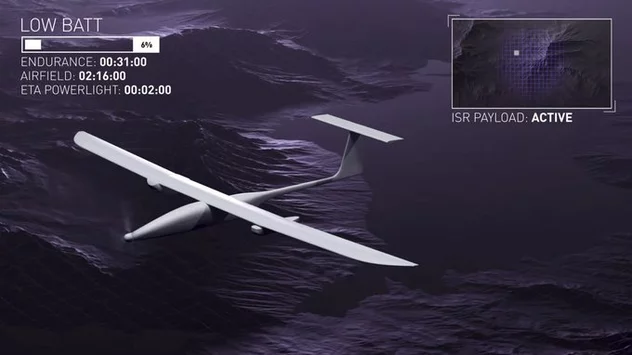
Drones may soon stay airborne for hours without ever touching the ground. PowerLight Technologies is pushing the boundaries of drone endurance with a novel laser-based wireless power system capable of delivering kilowatt-class energy over distances nearing 2 kilometers. This breakthrough aims to eliminate the downtime associated with traditional battery charging and could revolutionize both commercial and defense drone operations.
The technology, developed under the Power TRansmitted Over Laser to UAS (PTOLU) program and partly funded by United States Central Command, moves laser power beaming from controlled lab experiments to real-world integrated flight systems. The system could redefine how drones are powered, offering a glimpse into a future where a “wireless power line” keeps unmanned aircraft flying indefinitely.
At the heart of the innovation is an autonomous ground-based transmitter that can precisely track drones in flight. Unlike conventional wireless charging, which requires close proximity, this system uses a directed laser beam to send energy directly to a drone’s lightweight receiver. The result is a continuous power supply without the limitations of landing or battery swapping.
Tom Nugent, CTO and co-founder of PowerLight Technologies, described the system as “much more than point-to-point power transfer using a laser; we are building an intelligent mesh energy network capability.” This approach allows multiple drones to be powered simultaneously, creating a networked airborne energy grid rather than a single, isolated connection.
The project has progressed from testing individual components to full system integration, marking a critical step toward operational deployment. Early demonstrations have shown the laser system can sustain high-powered energy transmission over nearly 2 kilometers, all while keeping the drones stable and fully operational.
Industry experts see this as a pivotal moment for unmanned aircraft systems. Extended flight times could expand the possibilities for aerial surveying, delivery services, surveillance, and emergency response missions. The ability to recharge mid-flight removes a major bottleneck in drone operations and opens the door for new applications that were previously impractical.
Traditional drone operations rely heavily on pre-charged batteries or ground-based recharging stations. PowerLight’s wireless laser approach eliminates these restrictions, allowing drones to remain airborne for far longer periods. The lightweight onboard receiver means drones do not have to carry heavy batteries, improving efficiency and payload capacity.
Additionally, the system’s autonomous tracking ensures precision delivery of energy, even in dynamic flight conditions. This combination of mobility, safety, and sustained power creates a flexible solution for both commercial and military operations, making drone missions faster, safer, and more cost-effective.
PowerLight’s innovation is more than a technical milestone—it signals a broader shift in how drones could operate worldwide. Aerial networks that recharge on the move could become standard, enabling 24/7 drone operations for logistics, environmental monitoring, and national security missions.
With full system testing already underway, the era of truly infinite flight is approaching. As laser-based energy transmission moves from experimental labs to real-world airspace, drones may soon operate without the constant interruption of landing for power, unlocking a new horizon of airborne possibilities.

2.5K articles

1.3K articles

34 articles

28 articles














Comment