Alerts

-
6 minutes, 10 seconds
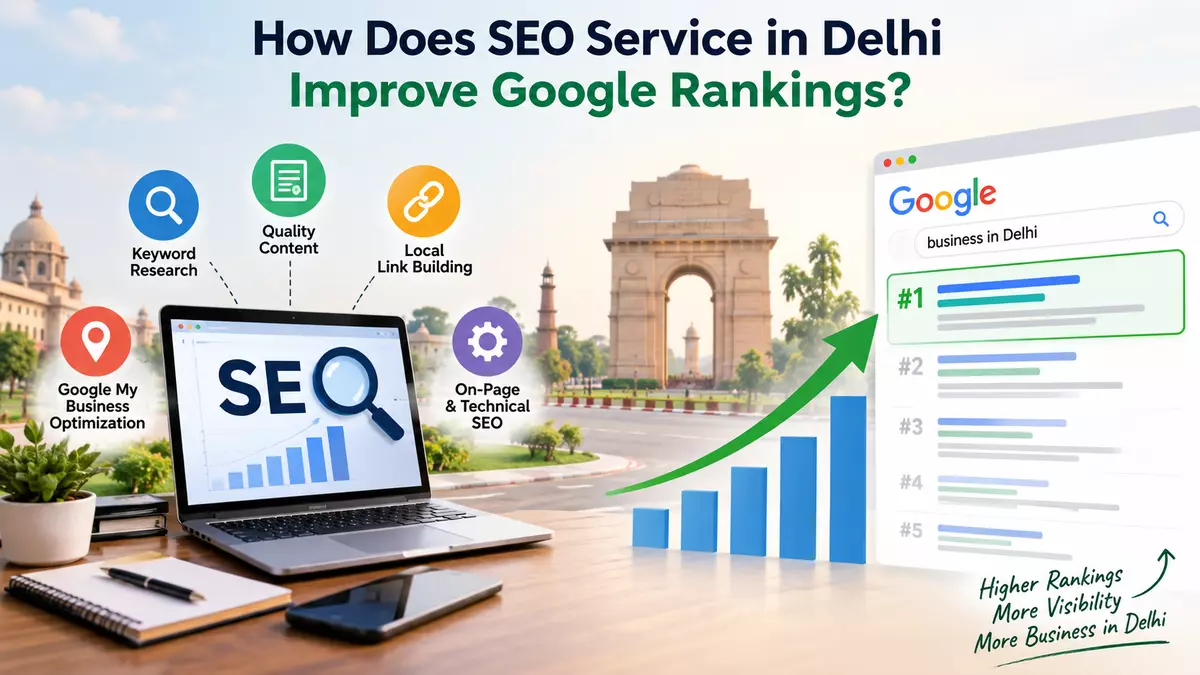
Getting a website online is easy. Getting the right people to actually find it? Well, that’s where things get interesting. A professional SEO Service in Delhi helps businesses improve their visibility by making their websites easier for search engines to understand and more useful for the people searching. Rather than chasing rankings with shortcuts, modern SEO focuses on technical performance, search intent, relevant content, local visibility, and trust signals that can support sustainable organic growth.
Search engines don’t rank a website simply because it looks attractive. They need to crawl its pages, understand what each page offers, assess its usefulness, and determine whether it deserves visibility for a particular query.
A professional SEO Service in Delhi starts by figuring out what may be holding a website back. Perhaps important pages aren’t indexed correctly. Maybe the content doesn’t match what people actually search for. Or, quite simply, competitors may provide clearer and more comprehensive information.
Once these gaps are identified, improvements can be prioritized instead of making random changes and hoping something sticks.
There isn’t one universal starting point. A local service business, an e-commerce store, and a large corporate website can have very different SEO challenges.
That said, an initial audit commonly examines:
Website crawlability and indexability
Page structure and internal links
Search intent and keyword targeting
Page titles and descriptions
Content quality and relevance
Mobile usability
Core Web Vitals and page experience
Duplicate or outdated pages
Local search presence
Backlink profile and website authority
The findings create a practical roadmap. High-impact problems can then be addressed before time is spent on smaller tweaks.
Think of technical SEO as the plumbing behind a house. Visitors might never notice it when everything works, but problems become obvious when it doesn’t.
Search engines need to access and interpret important pages efficiently. Issues such as broken internal links, incorrect redirects, accidental noindex directives, poor site architecture, or duplicate URLs can make that harder.
Technical work may therefore involve improving crawl paths, reviewing XML sitemaps, fixing broken links, implementing appropriate canonical tags, checking structured data, and improving site performance.
Speed matters too, but there’s a catch: simply chasing a perfect performance score isn’t the goal. The broader aim is to create a fast, stable, usable website while ensuring search engines can properly access its content.
Keywords tell you what people type. Search intent helps explain what they actually want.
Suppose someone searches for a service and lands on a page filled with vague company information but no explanation of services, process, pricing factors, location, or next steps. They may leave because the page hasn’t answered the questions behind their search.
Good optimization closes that gap.
Before improving a page, SEO professionals can study the search results and determine whether users are primarily looking for information, comparing providers, researching costs, or trying to purchase a service.
The page can then be built around that purpose rather than awkwardly squeezing keywords into every other sentence.
Google has repeatedly emphasized creating helpful, reliable, people-first content. In practice, that means pages should offer genuine value rather than exist merely to target a phrase.
Useful content may answer:
What does the service involve?
Who is it suitable for?
How does the process work?
What factors affect the cost?
What problems can it solve?
What should customers consider before choosing?
What should they expect after getting started?
This also creates opportunities to cover closely related concepts naturally.
A strong content strategy isn't about publishing hundreds of thin articles. Sometimes updating an old page, combining overlapping content, or expanding an incomplete service page makes considerably more sense.
Internal links often don't get much attention, yet they're an important part of website structure.
Imagine publishing an excellent guide and leaving it buried several clicks away with almost no links pointing towards it. Search engines and visitors may have a harder time discovering its importance.
Contextual internal links can connect service pages, supporting articles, location pages, case studies, and other useful resources.
They also help visitors move naturally through the website. Someone reading an informational article, for instance, can easily reach the relevant service page when they're ready to learn more.
For businesses serving customers in a particular area, traditional organic optimization is only part of the picture.
Local SEO can include maintaining accurate business information, improving relevant location pages, managing a Google Business Profile, responding appropriately to customer reviews, adding suitable business categories, and keeping information consistent across trusted directories.
The objective isn't to stuff neighbourhood names onto every page. Instead, businesses should make their actual service areas and local relevance clear.
For companies comparing the Best SEO Service in Delhi, local expertise can be particularly useful when their customers search using location-based terms.
Great content alone doesn't automatically make a website authoritative.
Links and mentions from relevant, reputable websites can help search engines discover content and understand relationships across the web. However, quality matters far more than collecting links for the sake of hitting a monthly number.
Sustainable authority-building might involve:
Creating genuinely useful resources
Digital PR and expert contributions
Relevant industry publications
Original research or data
Useful tools and assets
Legitimate business citations
Buying large volumes of low-quality links or participating in manipulative link schemes can create unnecessary risk. Slow and steady is usually the wiser road.
SEO isn't a set-it-and-forget-it exercise.
Search behaviour changes. Competitors update their sites. Businesses introduce new services. Search engines also continually improve how they retrieve and present information.
Performance should therefore be monitored through relevant data.
Google Search Console can reveal impressions, clicks, queries, indexing issues, and page-level search performance. Analytics platforms can add context around website engagement and conversions.
The important part is knowing what those numbers mean. More traffic sounds great, but traffic that never turns into meaningful business activity may not be particularly valuable.
There's no universal countdown clock.
Results can vary according to website history, competition, technical condition, content quality, available resources, market demand, and the scale of work required.
A technically healthy website with existing authority may respond differently from a brand-new domain entering a fiercely competitive market.
That's why promises such as "guaranteed #1 rankings in 30 days" deserve caution. No legitimate provider controls Google's organic rankings.
A sensible strategy focuses instead on measurable progress: fixing technical barriers, improving relevant pages, expanding useful content, earning credible authority, and tracking organic conversions.
Improving Google rankings isn't about finding a secret trick. It's the result of many connected improvements working together.
Technical health helps search engines access the site. Search-intent research guides page creation. Helpful content answers real questions. Internal linking establishes relationships between pages. Local optimization strengthens geographic relevance, while credible authority signals can help a website compete in tougher search results.
Most importantly, SEO should serve the person behind the search not merely the algorithm. When a website becomes easier to discover, understand, navigate, and trust, stronger organic visibility has a much better foundation for long-term growth.





Comment