Alerts

-
10 minutes, 32 seconds
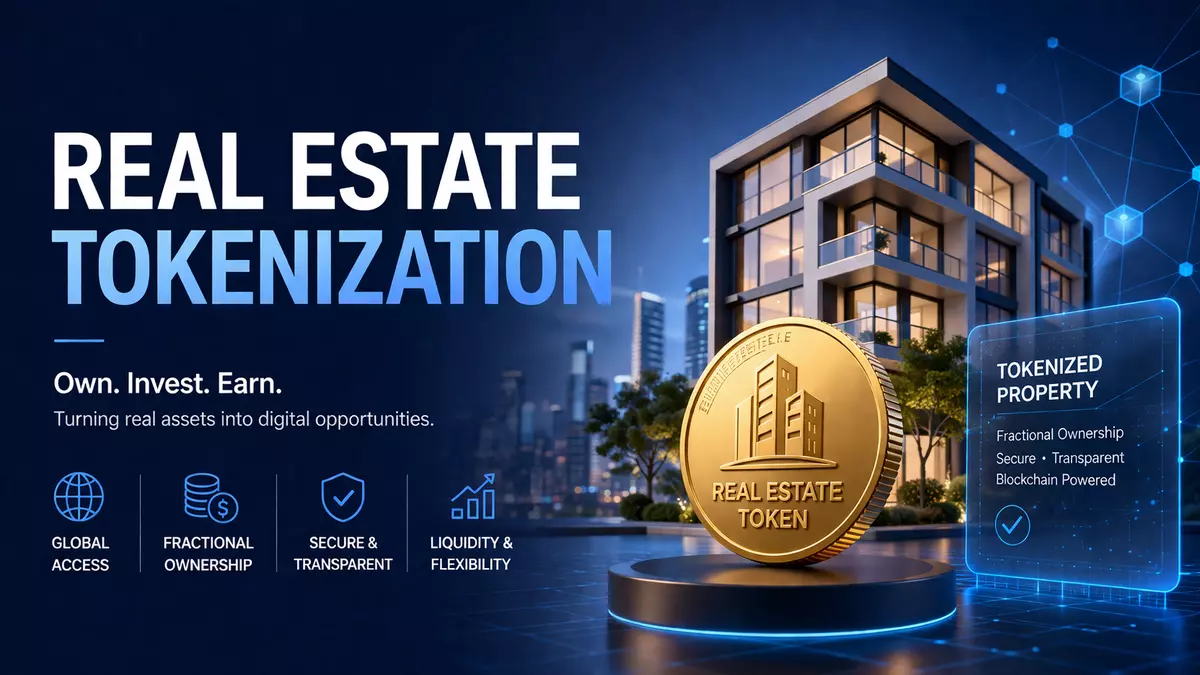
The global economy is undergoing a structural transformation driven by digitalization, decentralization, and the rapid evolution of blockchain-based systems. Emerging digital economies built on decentralized finance (DeFi), digital identities, smart contracts, and tokenized assets are reshaping how value is created, exchanged, and stored. Within this evolving landscape, real estate tokenization is playing a pivotal role by bridging the gap between physical assets and digital financial ecosystems.
Traditionally, real estate has existed outside the fluid dynamics of digital markets due to its illiquid nature, high transaction costs, and reliance on localized systems. Tokenization changes this paradigm by converting property assets into blockchain-based digital tokens, making them compatible with the infrastructure of digital economies. This integration is not just about digitization; it represents a convergence of tangible assets with programmable financial systems, enabling new forms of ownership, liquidity, and economic interaction.
Emerging digital economies are characterized by decentralized networks where financial activities occur without centralized intermediaries. These ecosystems rely on blockchain technology to facilitate peer-to-peer transactions, automated financial services, and transparent data management.
Key components of digital economies include:
Decentralized Finance (DeFi): Financial services such as lending, borrowing, and trading conducted on blockchain networks
Digital Identity Systems: Blockchain-based identity verification enabling secure and compliant participation
Tokenized Assets: Representation of physical or digital assets as tradable tokens
Smart Contracts: Self-executing agreements that automate transactions and governance
These components create an interconnected environment where assets can move seamlessly across platforms and applications. Real estate tokenization integrates into this framework by transforming property into a digitally native asset class.
Real estate tokenization involves representing ownership or financial rights associated with a property as digital tokens on a blockchain. These tokens can be programmed, traded, and integrated into broader financial systems.
Unlike traditional property ownership, which is bound by legal documentation and manual processes, tokenized real estate operates within a digital infrastructure that supports automation, transparency, and interoperability. This makes it inherently compatible with emerging digital economies.
Real estate tokenization integrates with digital economies through several foundational mechanisms that enable seamless interaction between physical assets and digital systems.
One of the most significant integration points is the ability of tokenized real estate assets to interact with DeFi protocols. In traditional systems, real estate cannot. participate in financial activities such as lending or collateralization without complex legal arrangements.
Tokenized assets, however, can be used within DeFi ecosystems as:
Collateral for loans, enabling liquidity without asset liquidation
Yield-generating instruments, where rental income contributes to returns
Tradable assets on decentralized exchanges
This interoperability allows real estate to function similarly to other digital assets, expanding its role within financial systems and increasing its utility beyond passive ownership.
Digital economies thrive on liquidity and continuous market activity. Tokenized real estate assets can be listed on digital marketplaces, enabling real-time trading and price discovery. These marketplaces operate globally, allowing investors from different regions to access property investments without traditional barriers. The integration of liquidity mechanisms ensures that real estate assets can move efficiently within digital ecosystems, aligning them with the fast-paced nature of digital markets.
Smart contracts are central to both tokenization and digital economies. They enable the automation of processes such as:
Rental income distribution
Ownership transfers
Compliance enforcement
Governance voting
By embedding these functions into tokenized assets, real estate becomes programmable. This programmability allows assets to interact dynamically with other digital systems, creating a seamless flow of value and information.
For example, rental income can be automatically distributed to token holders or reinvested into other digital assets within the ecosystem.
Participation in digital economies requires secure and verifiable identity systems. Real estate tokenization platforms integrate digital identity frameworks to ensure compliance with regulatory requirements such as Know Your Customer (KYC) and Anti-Money Laundering (AML).
These systems enable:
Secure onboarding of global investors
Verification of ownership rights
Compliance with jurisdiction-specific regulations
By aligning with digital identity standards, tokenized real estate can operate within regulated digital economies while maintaining accessibility and security.
Traditional real estate investment is often constrained by cross-border complexities, including currency conversion, legal restrictions, and intermediary involvement. Tokenization simplifies these processes by enabling digital transactions on blockchain networks. Investors can participate in property markets across different countries using digital wallets, with transactions recorded and verified on the blockchain. This integration facilitates global capital flows and enhances the efficiency of international investments.
In emerging digital economies, various financial instruments are being tokenized, including equities, bonds, and commodities. Real estate tokenization aligns with this trend by enabling integration with other tokenized assets.
This creates opportunities for:
Portfolio diversification across multiple asset classes
Bundled investment products combining real estate with other assets
Index-based tokenized funds
Such integration enhances the versatility of real estate as part of a broader digital investment ecosystem.
Digital economies rely heavily on data-driven decision-making. Tokenized real estate assets can integrate operational and financial data into blockchain systems, providing real-time insights into asset performance.
Investors can access information such as:
Occupancy rates
Rental income trends
Maintenance costs
Market demand indicators
This data integration supports more informed investment decisions and aligns real estate with the analytical capabilities of digital economies.
For investors, integration with digital economies provides:
Access to global property markets
Enhanced liquidity and flexibility
Opportunities to leverage real estate within DeFi ecosystems
Improved transparency and data access
These benefits enable more dynamic and diversified investment strategies.
For asset owners, tokenization offers:
Access to global capital pools
Faster fundraising and project financing
Innovative revenue models
Increased market visibility
Integration with digital economies also allows developers to align projects with evolving financial ecosystems.
For the broader financial system, real estate tokenization contributes to:
Expansion of tokenized asset markets
Increased interoperability between asset classes
Enhanced efficiency in capital allocation
Greater inclusivity in investment opportunities
This integration strengthens the overall structure of digital economies.
Despite its potential, integrating real estate tokenization with digital economies presents several challenges:
Different jurisdictions have varying regulations for both real estate and digital assets. Harmonizing these frameworks is essential for seamless integration.
Ensuring compatibility between different blockchain platforms and digital systems remains a key challenge.
Digital economies are still evolving, and widespread adoption of tokenized real estate depends on market readiness and infrastructure development.
Managing risks associated with asset valuation, market volatility, and technological vulnerabilities is critical for long-term sustainability.
The integration of real estate tokenization with emerging digital economies is expected to deepen as technology and regulatory frameworks evolve. Future developments may include:
Fully integrated digital property markets
Advanced DeFi applications for real estate assets
Tokenized urban development projects
Real-time global investment networks
These advancements will further blur the boundaries between physical and digital assets, creating a unified economic environment.
Real estate tokenization is playing a transformative role in integrating physical property assets with emerging digital economies. By enabling interoperability with DeFi, enhancing liquidity, automating processes through smart contracts, and facilitating global participation, tokenization bridges the gap between traditional real estate and digital financial systems.
This integration redefines how property is perceived and utilized, transforming it from a static, localized asset into a dynamic, globally accessible component of digital economies. While challenges remain, the convergence of real estate and digital ecosystems represents a significant step toward a more interconnected and efficient financial future.



Comment