
Alerts
-
3 minutes, 59 seconds
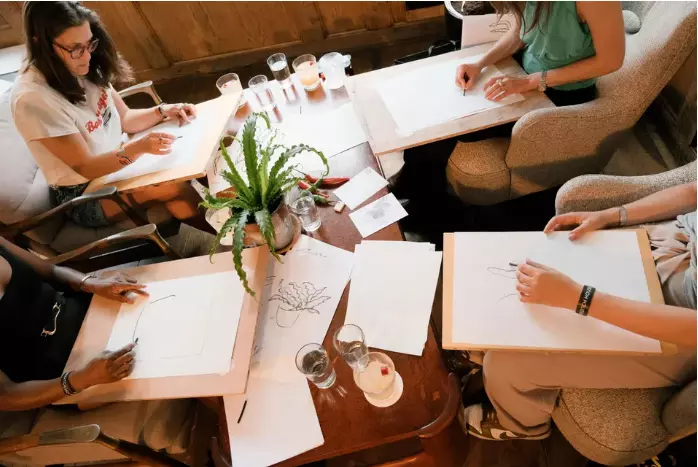
As artificial intelligence takes on more workplace tasks, relying on it for everything—from developing ideas to replying to emails—may create a dependency known as cognitive debt. The concern is that if AI removes the effort from our work, we may stop practicing human skills such as critical thinking and creativity. Our brains change in response to what we ask them to do, so opportunities to use those skills matter.
A study by MIT measured participants’ brain activity while they used LLMs to write an essay. It found that “LLM users consistently underperformed at neural, linguistic, and behavioral levels.” Crafting offers a hands-on way to keep making decisions, solving problems, and trying again.
Research also links hands-on craft and art activities with increased neuroplasticity and emotional regulation. This connection, known as the hand-brain-emotion axis, may even help ease anxiety disorders. Making is not simply about producing an object: working step by step with your hands can provide a way to engage creatively while supporting wellbeing.
Making is not simply a break from work: as Well-Crafted founder Alexandra Lunn explains, it gives the brain valuable practice. “When we work with our hands, we’re still solving problems, making decisions, getting things wrong and trying again.” That step-by-step process exercises human skills that can be neglected when work becomes frictionless.
Crafting can also support physical and mental wellbeing. Alongside benefits such as joint mobility and dexterity, working with your hands offers time away from screens. A scientific study found that art making significantly lowered cortisol, the main stress hormone. Lunn describes crafting as a chance to slow down, connect and enjoy the creative process—relaxing while taking on small problems one step at a time.
In workplace workshops, those benefits can extend beyond the individual. Lunn reports that making together can lead to higher self-esteem, renewed motivation at work and more cohesive teams. The shared activity creates space to connect and be creatively challenged outside the usual work headspace. Participants can leave feeling inspired and relaxed, while the experience helps build team morale and strengthen relationships. These effects make hands-on making a meaningful way for workplaces to support wellbeing as well as connection.
For senior creative designer Jason Tse, a bookmark-making workshop offered a welcome change from a job spent almost entirely behind a laptop. “It felt great to reconnect with what I actually love about design: being able to physically hold material and create something tangible.” He and a coworker were the last to leave, still cutting and gluing. With no screens in sight, the creative break let him step away from his desk and follow his intuition. Tse said it released “some much-needed dopamine” and that he came back refreshed and ready to take on whatever came his way. The workshop also gave him a chance to meet coworkers he would not normally interact with.
Liz Bell, director of absolute project management and president of the British Institute of Interior Design, organized a Polish cutting workshop for her team. She wanted a relaxing, creative afternoon that would get people out of work headspace, while inviting collaborators helped nurture working relationships. Bell said the team felt more connected afterward. People left inspired and relaxed with artwork they had made, and the session helped build team morale. She also saw benefits for employee engagement and motivation: people were enthused to work and grateful for the company’s investment in their well-being. Even team members who lacked confidence in their crafting abilities felt supported and positive about what they made.
Alexandra Lunn suggests using simple, hands-on activities to create space for fresh thinking and focused work. These approaches don’t require crafting expertise; the emphasis is on making time for the process.










Comment