
Alerts
-
7 minutes, 24 seconds
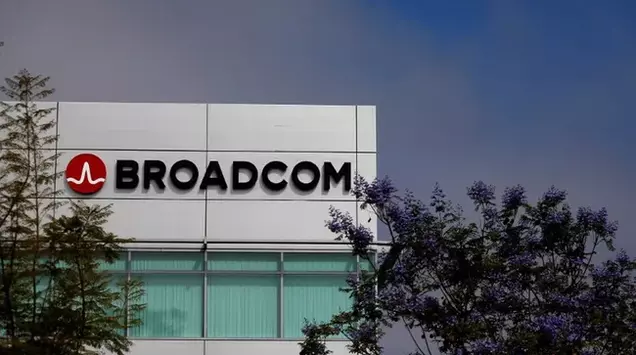
Broadcom’s rise to the top of the global technology industry wasn’t sudden, flashy, or built overnight. Curiosity around how Broadcom became a trillion-dollar company often leads back more than six decades, long before the name itself carried any weight. What began as a modest semiconductor division inside Hewlett-Packard in the early 1960s gradually transformed through spin-offs, mergers, and bold acquisitions into one of the most influential technology companies on the planet. Today’s Broadcom blends cutting-edge chip design with enterprise software and cloud infrastructure, reshaping how modern data centers and networks operate.
Few people recognize the name HP Associates, yet it represents the true starting point of Broadcom’s story. Founded in 1961 as Hewlett-Packard’s semiconductor products division, HP Associates focused on developing early microwave and solid-state technologies. At a time when Silicon Valley was still finding its identity, HP Associates quietly contributed to innovations that would later underpin modern computing and communications. The division operated with engineering discipline and long-term vision, traits that would echo throughout Broadcom’s future.
As the semiconductor market evolved, HP Associates demonstrated that specialized chip design could be both technically advanced and commercially viable. That success planted the seed for future independence, even if few observers at the time could have predicted the scale of what was coming.
Corporate restructuring during the late 1990s reshaped many legacy tech companies, and Hewlett-Packard was no exception. HP Associates eventually spun out and evolved through a series of ownership changes, helping detach the semiconductor business from its original parent. This separation allowed the unit to move faster, compete more aggressively, and pursue partnerships beyond HP’s ecosystem.
That flexibility proved critical as networking, broadband, and wireless technologies exploded. Freed from its original corporate structure, the business could focus on high-growth markets like Ethernet switching, broadband access chips, and enterprise networking hardware. The stage was set for a new identity to emerge.
Broadcom, as a brand and independent entity, began taking shape in the early 2000s, positioning itself squarely at the heart of global connectivity. Rather than chasing consumer electronics alone, Broadcom targeted the infrastructure powering the internet itself. Its chips found homes in routers, switches, smartphones, and data centers, quietly becoming essential to everyday digital life.
This strategy paid off by prioritizing high-margin, mission-critical components over trend-driven consumer products. Broadcom’s reputation grew among enterprise customers who valued reliability, performance, and long-term supply commitments. While less visible than consumer tech giants, Broadcom steadily became indispensable behind the scenes.
Growth at Broadcom has rarely been organic alone. Instead, carefully calculated acquisitions became a defining feature of its expansion strategy. Over the years, the company absorbed competitors and complementary businesses, expanding both its product portfolio and market reach.
Major deals allowed Broadcom to strengthen its presence in networking silicon, storage controllers, and wireless communications. Each acquisition followed a clear pattern: focus on profitable segments, reduce redundancy, and integrate products tightly. This disciplined approach differentiated Broadcom from rivals who often struggled with post-merger complexity.
Broadcom’s acquisition of VMware marked a turning point that surprised much of the tech industry. Known primarily as a semiconductor giant, Broadcom suddenly stepped firmly into enterprise software and cloud infrastructure. The deal was controversial, drawing criticism from customers concerned about pricing, licensing changes, and long-term support.
Despite the backlash, the move signaled Broadcom’s ambition to diversify beyond chips. VMware gave the company deep exposure to virtualization, hybrid cloud environments, and enterprise IT operations. Broadcom effectively positioned itself as a foundational player in both the hardware and software layers of modern computing.
Post-VMware, Broadcom no longer fits neatly into the label of “chipmaker.” The company now operates as a full-stack infrastructure provider, spanning silicon, networking, cloud software, and enterprise platforms. This diversification reduces dependence on semiconductor cycles while increasing recurring software revenue.
Data centers, hyperscalers, and large enterprises increasingly rely on Broadcom technology at multiple levels of their infrastructure. That integration strengthens customer lock-in and enhances long-term financial stability, even during downturns in the chip market.
Late 2024 marked a historic moment as Broadcom joined the exclusive trillion-dollar market capitalization club. Investor confidence reflected more than short-term earnings; it highlighted belief in Broadcom’s long-term strategy, operational discipline, and diversified revenue streams.
Strong demand for AI-related networking chips, combined with predictable software income from VMware, reassured markets that Broadcom could thrive across multiple tech cycles. The milestone underscored how far the company had traveled from its origins inside Hewlett-Packard.
Understanding Broadcom’s history explains why the company behaves differently from many of its peers. Its conservative financial approach, focus on essential infrastructure, and preference for high-value customers stem directly from decades of evolution. Broadcom didn’t chase hype; it built quietly, consistently, and strategically.
From a little-known HP division to a global tech titan shaping the future of cloud computing and connectivity, Broadcom’s journey stands as one of the most remarkable transformations in Silicon Valley history.










Comment