Alerts

-
7 minutes, 11 seconds
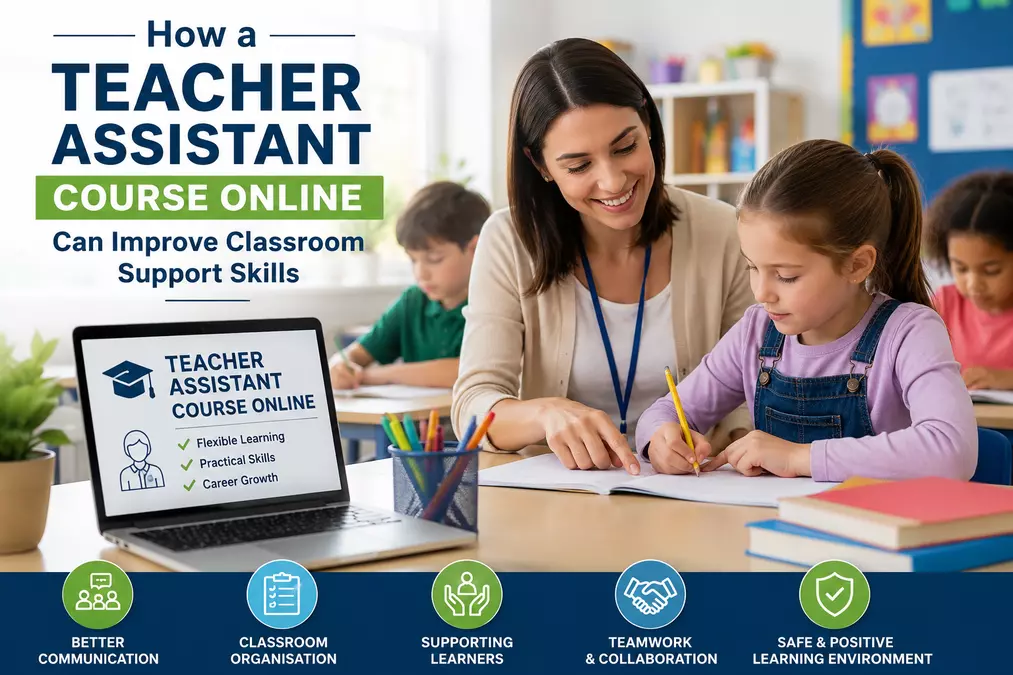
Modern classrooms require more than subject knowledge. Teachers often manage lesson planning, assessment, behaviour, resources, and individual learning needs at the same time. A teacher assistant course online can help aspiring support staff develop the knowledge and confidence needed to contribute effectively. Through online teacher assistant training, learners can explore classroom organisation, communication, safeguarding, learner support, and teamwork while studying around their existing commitments. These skills can make classroom support more structured and responsive.
The responsibilities of teaching assistants have developed considerably. Their work may involve supporting pupils during activities, preparing resources, assisting with group exercises, encouraging participation, and helping teachers maintain an organised learning environment.
A well-designed teacher assistant course online introduces learners to the responsibilities associated with classroom support. This can help them understand how their role fits within the wider education team. Rather than simply completing individual tasks, support staff need to understand how their actions can contribute to pupils' learning and the smooth operation of lessons.
Current training programmes may cover areas such as communication, safeguarding, child development, professional conduct, and the school environment. For example, Level 3 training can focus on supporting teaching and learning, developing positive relationships, and helping children and young people build independence and self-esteem.
Communication is one of the most important abilities in classroom support. Teaching assistants communicate with teachers, pupils, other support staff, and sometimes parents or education professionals. Clear communication can help prevent misunderstandings and ensure that pupils receive consistent guidance.
Teaching assistant professional courses can help learners understand how to communicate appropriately in different classroom situations. This may include active listening, giving clear instructions, asking suitable questions, and knowing when to pass information to the teacher.
Good communication also involves understanding non-verbal signals. A pupil who appears distracted, frustrated, or uncomfortable may require a different approach. Developing awareness of these signals can help support staff respond calmly and appropriately.
Organisation has a direct effect on classroom efficiency. Teachers may need to prepare learning materials, manage activities, monitor progress, and maintain lesson schedules. A capable teaching assistant can support these processes by taking responsibility for appropriate practical tasks.
Teaching support courses can introduce learners to resource preparation, classroom routines, activity organisation, and time management. These skills can be applied when preparing worksheets, arranging materials, supporting group work, or helping pupils transition between activities.
Small organisational improvements can have a noticeable effect. If resources are ready before an activity begins, pupils can spend more time learning rather than waiting. Similarly, understanding classroom routines can help support staff contribute without unnecessarily interrupting the teacher.
Every classroom contains pupils with different abilities, personalities, confidence levels, and learning preferences. Some learners may need additional encouragement, while others may require more individual attention during specific activities.
Courses for teaching assistants can help learners understand the importance of adapting support to individual circumstances. A teaching assistant does not replace the teacher or specialist professional, but appropriate support can help pupils participate more confidently in classroom activities.
An inclusive approach can involve encouraging participation, providing appropriate assistance, helping pupils understand instructions, and creating a respectful atmosphere. Training can give aspiring support staff a stronger understanding of why patience, flexibility, and empathy matter when working with children and young people.
Confidence is particularly important for individuals entering education for the first time. A new teaching assistant may initially be unsure about how to approach pupils, assist during activities, or communicate with classroom staff.
A structured teacher assistant course online can provide an introduction to common responsibilities and professional expectations before learners enter a school environment. This preparation can help reduce uncertainty and encourage a more professional approach.
Online learning can also develop independent study and time-management habits. Learners must organise their coursework, complete assignments, review materials, and meet deadlines. These habits can be useful in educational workplaces, where reliability and preparation are important.
Many online programmes also provide access to tutor support. For instance, UK Open College describes its teaching assistant courses as flexible online programmes with tutor support and different qualification pathways, ranging from introductory options to higher-level and specialist courses.
Teaching assistants are part of a wider educational team. Effective classroom support depends on understanding professional boundaries and working according to the teacher's instructions.
Classroom assistant courses can help learners understand how support staff can contribute to lessons without taking over the teacher's responsibilities. This may involve preparing resources, supervising appropriate activities, helping individual pupils, or sharing relevant observations with the teacher.
Teamwork also requires flexibility. A lesson may not always go exactly as planned, and support staff may need to adjust their approach according to classroom circumstances. Understanding the importance of cooperation can make it easier to respond constructively.
Working with children requires an understanding of professional responsibilities. Safeguarding, confidentiality, appropriate behaviour, and professional boundaries are all important areas for people considering classroom support roles.
Teacher assistant training can introduce learners to these responsibilities and help them recognise why professional conduct matters. Understanding safeguarding principles can also help aspiring teaching assistants appreciate the importance of following school policies and reporting concerns through appropriate channels.
Training can therefore provide more than task-based knowledge. It can help learners develop a professional mindset that supports responsible decision-making in educational environments.
One of the main benefits of an online route is flexibility. Learners may be able to study from home and organise their coursework around employment, family responsibilities, or other commitments. UK Open College, for example, states that its online teaching assistant courses can be studied at the learner's own pace, with course access and support provided remotely.
This flexibility can make professional development more accessible to people who cannot attend regular classroom-based training. It can also allow learners to revisit course materials when they need to strengthen their understanding of a particular subject.
The importance of structured classroom preparation is also discussed in the article “Why Teaching Asst Courses Matter in Today’s Education Environment.” That article highlights the changing responsibilities of teaching assistants, including classroom organisation, communication, inclusive learning, teamwork, and adapting support to different educational environments.
This connection is useful because classroom support skills are not isolated abilities. Organisation, communication, adaptability, and professional awareness work together to create effective support for both teachers and pupils.
The modern classroom can present a wide range of situations, making adaptability an essential quality for support staff. A teaching assistant may work with different age groups, learning needs, classroom activities, and teaching approaches.
A teacher assistant course online can provide a foundation for understanding these varied responsibilities. While training cannot replace practical classroom experience, it can help learners develop relevant knowledge before entering an educational setting.
Professional development can also continue after initial training. As responsibilities and educational practices evolve, teaching assistants may benefit from additional learning in areas such as special educational needs, behaviour support, child development, or higher-level classroom responsibilities.
Effective classroom support depends on preparation, communication, organisation, patience, teamwork, and an understanding of individual learner needs. A teacher assistant course online can help aspiring support staff build these foundations while providing the flexibility associated with distance learning.
By developing practical knowledge and professional awareness, learners can become better prepared to support teachers and pupils. For anyone considering a future in education, structured training can be a valuable starting point for building classroom confidence and developing skills that remain relevant across different educational environments.
It can help develop communication, classroom organisation, teamwork, learner support, safeguarding awareness, time management, and professional conduct skills.
Yes. Many online programmes offer introductory and entry-level options designed for people who are new to classroom support. Some courses do not require previous qualifications, although entry requirements can vary.
Yes. Training may cover areas such as preparing resources, supporting activities, understanding routines, managing time, and helping pupils transition between different parts of a lesson.
Teaching assistants regularly communicate with teachers and pupils. Clear, respectful communication can help ensure instructions are understood and classroom support remains consistent.
It can provide relevant knowledge and qualifications that support professional development. Depending on previous experience and the qualification completed, learners may progress toward higher-level or specialist teaching assistant roles.





Comment