Alerts

-
4 minutes, 38 seconds
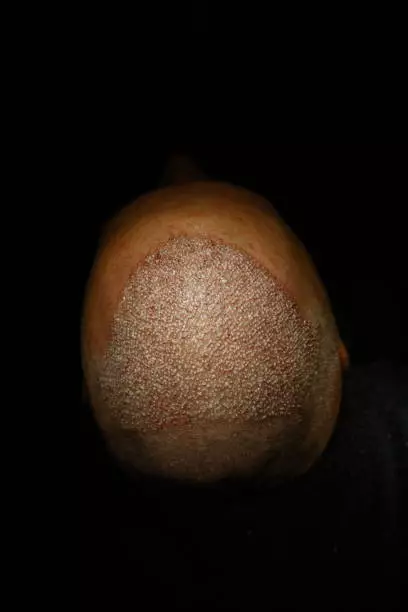
Mild to moderate hair loss can be easier to overlook than advanced baldness, but early changes in the hairline or density can still affect facial appearance. Hair Transplant in Al Ain may be considered when hair loss is sufficiently stable and the patient has suitable donor follicles for targeted restoration.
The important point is that early hair loss does not automatically mean surgery is necessary. A proper assessment should determine whether transplantation is appropriate or whether another approach should be considered first.
Hair loss may initially appear as small changes at the temples or frontal corners. The central hairline can remain relatively intact while the sides gradually move backward.
This stage may be subtle, particularly when the hair is styled forward.
Some patients experience thinning rather than obvious recession. The scalp becomes more visible under bright light, after washing, or when the hair is wet.
The crown and mid-scalp can also show reduced density before a clearly defined bald area develops.
A patient may have mild loss today but experience greater recession or thinning later. A treatment plan should therefore consider the possibility of progression rather than treating the current appearance in isolation.
This is particularly important when considering frontal transplantation.
Depending on the diagnosis, a clinician may discuss non-surgical options designed to help manage ongoing native hair loss.
A transplant adds follicles to selected areas but does not prevent untreated native follicles from continuing to thin.
A relatively stable pattern can make surgical planning more predictable. If hair loss is rapidly progressing, the clinician may recommend further assessment before transplantation.
The donor area needs enough suitable follicles to support the planned restoration without excessive extraction.
Important factors include:
Some patients do not need broad scalp coverage. Their concern may be limited to temple recession, an uneven frontal edge, or reduced density in a small area.
Targeted graft placement can address these concerns while limiting unnecessary donor extraction.
Crown restoration requires different planning because the area has a circular growth pattern. The clinician must account for the natural whorl and determine whether enough grafts are available to create useful visual improvement.
FUE involves individual follicular-unit extraction and can be suitable when a controlled number of grafts is required for localized restoration.
The extraction pattern should remain conservative, especially when the patient may need future treatment.
DHI can offer detailed control during graft implantation. It may be considered when precise positioning is important, particularly around existing native hairs.
The technique should be selected according to the patient's anatomy and goals rather than simply because hair loss is mild.
Patients considering hair restoration in Al Ain can discuss which approach fits their individual pattern.
Not necessarily. Suitability depends on the cause, stability of the loss, donor supply, age-related considerations, and restoration goals. Some patients may be better served by monitoring or non-surgical treatment first.
No. Transplantation adds follicles to selected areas but does not stop future loss of untreated native hair.
In selected cases, yes. If the recession is localized and the donor area is suitable, treatment can focus on the temples rather than the entire scalp.
A mild-loss case may benefit from a conservative strategy:
Using fewer grafts does not mean compromising planning. It can be a deliberate way to protect future options.
Trying to make a mildly thinning area extremely dense can use more donor follicles than necessary.
Instead, grafts can be distributed to create a visual improvement that blends with the patient's existing hair.
This approach may be especially useful when native hair is still present throughout the recipient area.
Mild procedures may involve a relatively focused treatment area, but recovery still varies between patients.
Temporary redness, swelling, crusting, or tenderness can occur. Transplanted hairs may also shed temporarily before entering a new growth phase.
Patients should follow their individual aftercare instructions rather than comparing their recovery timeline with someone else's.
A consultation may identify situations where transplantation should be postponed or reconsidered.
Examples include:
A careful assessment protects both the current appearance and the patient's future donor resources.
Mild to moderate hair loss can sometimes be addressed with focused graft placement rather than extensive transplantation. The decision should be based on hair-loss stability, donor quality, facial proportions, and long-term planning.
For patients considering Hair Transplant in Al Ain, Tajmeels Clinic can assess the pattern of hair loss and develop a personalized restoration strategy based on the patient's current needs and future goals.




Comment