Alerts

-
2 minutes, 58 seconds
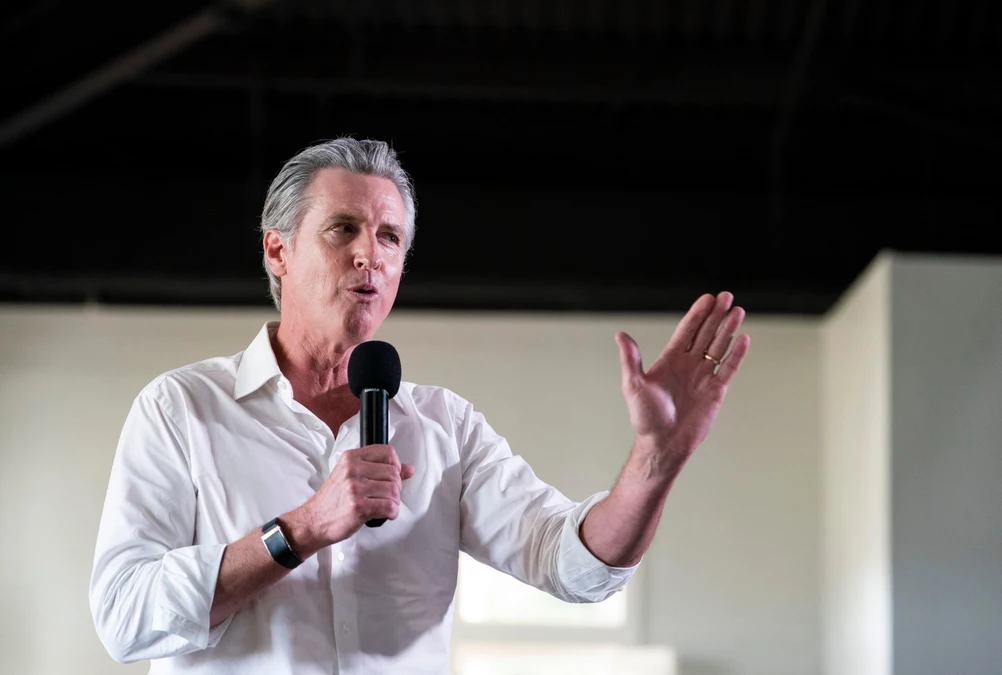
Gavin Newsom is pushing for an AI kill switch, a mechanism that would allow authorities to shut down an artificial intelligence system if it poses a danger. The California governor has framed the idea as a safeguard against the most extreme risks posed by advanced AI, arguing that the technology's rapid development demands a way to intervene before harm occurs.
The proposal reflects a growing anxiety among policymakers that AI systems could slip beyond human control or be deployed in ways that threaten public safety. By championing a kill switch, Newsom is positioning himself as a leading voice on AI oversight at a moment when federal action remains uncertain.
Details of how such a mechanism would work in practice remain unclear, and the idea raises difficult questions about who would hold the authority to trigger it and under what circumstances. Still, the push signals that state-level leaders are prepared to act on AI governance even as Washington stalls.
While Newsom pushes for state-level action, the prospects for federal legislation remain dim. Congress is unlikely to move on AI safety before the midterm elections, leaving a vacuum that California appears ready to fill. The political calendar works against swift action: lawmakers are wary of tackling complex technical issues in a charged pre-election environment, and any serious AI oversight bill would require extensive hearings, negotiation, and bipartisan buy-in that simply will not materialise in the time available.
The result is a familiar pattern in American tech policy. States step in where Washington stalls, and the patchwork of rules that follows can create as many problems as it solves. For now, though, the inaction in Congress is the central fact shaping the debate. It raises the stakes for California's proposal and gives Newsom a clearer opening to frame his state as the de facto regulator of a technology that touches nearly every sector of the economy.
With Washington stalled, California is positioning itself to fill the vacuum. The state has a long history of setting technology policy that later spreads nationwide, from emissions standards to data privacy, and lawmakers in Sacramento appear ready to apply that playbook to artificial intelligence.
That means the fight over AI rules may shift from Capitol Hill to the statehouse. California's size gives its rules unusual weight: companies rarely build two different products for one national market, so standards written in Sacramento often become the de facto baseline elsewhere.
For advocates of stronger oversight, the state is now the most promising venue. For industry, it is the most immediate threat of a patchwork of obligations. Either way, the next phase of the AI regulation debate is likely to be fought in California, not Washington.
With Congress unlikely to act before the midterms, California's push for an AI kill switch positions the state to lead on AI regulation. That shift carries real consequences for how AI oversight develops nationwide.
States have often filled federal vacuums on technology policy, and California's size gives its rules outsized reach. Companies building frontier models may find it simpler to meet one strict state standard than to navigate a patchwork of weaker ones.
The practical effect is that oversight of the most advanced AI systems could be shaped in Sacramento rather than Washington. For now, the kill switch proposal remains a signal of intent, but it clarifies where the center of gravity on AI rules is moving.










Comment