
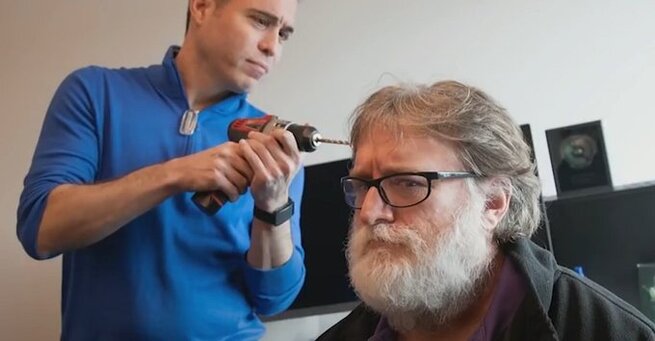
Gabe Newell’s Brain Chip Startup Challenges Neuralink
-
4 minutes, 59 seconds
Gabe Newell’s Brain-Computer Interface Startup to Launch Its First Brain Chip in 2025
Is Gabe Newell making a Neuralink competitor? Yes — and it’s arriving sooner than you think. Valve CEO Gabe Newell, renowned for leading innovations in gaming through Half-Life, Steam, and VR, is now steering a brain-computer interface (BCI) startup called Starfish Neuroscience. The company plans to release its first brain chip by late 2025, marking a bold entry into the neural technology space and directly challenging Elon Musk’s Neuralink.
Unlike Neuralink’s large and complex full implants, Starfish is taking a radically different approach: small, wireless-powered chips that can interface with multiple regions of the brain at once. This disruptive strategy could significantly reduce surgical risks, energy requirements, and barriers to adoption for medical and future consumer use.
Starfish Neuroscience: A Stealthy Tech Startup with Big Plans
Founded quietly in 2019, Starfish Neuroscience was spun off from Valve after Newell and his team explored the potential of brain interfaces for gaming and therapeutic use. The startup has now come out of stealth, revealing technical specifications for its upcoming chip in a new blog post. While it’s not yet a full BCI implant, the device is a key step toward recording and stimulating brain activity.
The custom electrophysiology chip boasts:
-
Ultra-low power consumption (just 1.1 milliwatts)
-
Compact 2x4mm size for minimal invasiveness
-
32 electrode sites, with 16 recording channels
-
Digital onboard processing and spike detection
-
Wireless compatibility with low-bandwidth interfaces
In comparison, Neuralink’s N1 chip uses more power (around 6mW), includes a battery that requires wireless charging, and connects to the brain via 64 threads. While Neuralink already has implants in human subjects, Starfish’s less invasive, modular approach could offer a safer, scalable alternative, especially for clinical applications like treating Parkinson’s or depression.
High-Tech, High-Impact: Multiple Implants, Tumor Targeting & Mental Health
What sets Starfish apart isn’t just its minimalist chip design—it’s the broader vision. The company’s chip is designed to be used in multiple areas of the brain simultaneously, which researchers believe is key to treating disorders involving inter-regional dysfunction, such as Parkinson’s disease, bipolar disorder, and more.
Additionally, Starfish is developing:
-
A precision hyperthermia system for destroying brain tumors via heat
-
A robot-guided transcranial magnetic stimulation (TMS) platform for non-invasive brain modulation—potentially aiding in mental health treatment
These high-tech initiatives suggest that Starfish Neuroscience is not just a gaming offshoot, but a serious contender in the future of neural healthcare and therapeutic technology.
Could Valve’s Brain Tech Make Its Way into Gaming?
Although Starfish is independent from Valve, Newell’s past comments and early Valve research into neurogaming and biological feedback systems suggest possible future integrations. Imagine VR gaming that responds to your thoughts or emotional state—brain-computer interfaces could redefine immersive entertainment as we know it.
For now, though, the focus is clearly on health and medical collaboration. Starfish is currently seeking research partners and collaborators, especially those interested in pushing the boundaries of wireless, multi-site brain interfacing.
The Bottom Line
As brain chip technology advances, Gabe Newell’s Starfish Neuroscience emerges as a lean, ambitious competitor to Neuralink. With a focus on low-power, multi-site implants and clinical applications ranging from neurological disease treatment to non-invasive mental health therapies, the company is positioning itself at the forefront of next-generation brain-computer interfaces.
If you’re following the evolution of AI, neuroscience, neurotechnology, or simply the future of human-computer interaction, this is one startup to watch closely in 2025.



Contact Information





Suggested Writers
-

2.5K articles
-

1.3K articles
-

34 articles
-

28 articles



Comment