Alerts

-
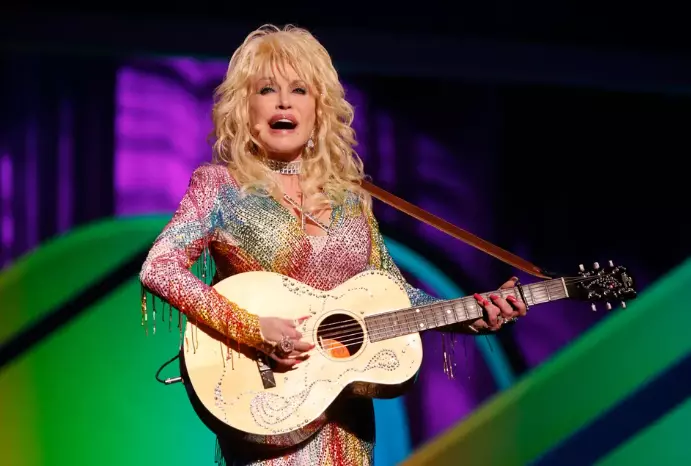
Dolly Parton didn't minimize the traits that made her stand out. She amplified them. Her hair grew bigger, her outfits became bolder, and her personality became more unmistakably her own. Many people approach personal branding by asking, "How should I fit in?" Dolly asked a far more powerful question: "What makes me unmistakably me?"
The lesson here is profound. Your strongest personal brand often comes from turning up the volume on the authentic qualities that differentiate you, not sanding them down to blend in. Personal branding is about standing out from everyone else who does what you do. Dolly Parton mastered that principle over a career spanning more than six decades.
Consider the paradox at the heart of her appeal. Few celebrities look less "natural" than Dolly Parton with her big blonde wigs, rhinestones, elaborate makeup, and outrageous clothes. Yet few public figures feel more authentic to their audiences. That contrast reveals an essential truth about personal branding: authenticity isn't about looking natural or fitting in. It's about being true to yourself, whatever that looks like.
Behind the visual spectacle was remarkable self-awareness. Dolly knew exactly where she came from. She spoke openly about growing up poor in Tennessee as one of 12 children in a house without running water. Those roots were never an embarrassing chapter she edited out as her success grew. Instead, they remained woven into her music, her stories, and her identity throughout her entire life.
She understood what she valued, what she was good at, what she wanted to reveal, and what she wanted to keep private. Although she maintained a larger-than-life persona in her professional life, she also made herself vulnerable. She shared her challenges and successes directly, with honesty and without judgment, creating a genuine connection with her audience that superficial self-promotion could never achieve.
The personal branding lesson here is clear: great branding starts with self-awareness, not self-promotion. Before you can show the world who you are, you need to know who you are. That means understanding your background, your values, your strengths, and your story, and then letting those elements guide how you present yourself.
You could recognize Dolly from her silhouette alone. When people asked if her famous features were real, she would respond with her signature wit: "They're real expensive." But her consistency went far beyond her appearance. Warmth, humor, optimism, kindness, Southern roots, self-deprecation, ambition, and generosity, these qualities kept showing up in everything she did for six decades.
Yet consistency never meant standing still. She evolved continuously, moving from country singer to songwriter, actor, entrepreneur, philanthropist, and ultimately, a cultural icon. Each new chapter built on the core of who she already was, expanding her influence while never abandoning the qualities that made her recognizable in the first place.
The personal branding lesson from this stage of her journey is essential: consistency doesn't mean staying the same. It means maintaining a recognizable core while continuing to evolve so you remain relevant and demonstrate your growth. When you stay true to your fundamental values while embracing new opportunities and challenges, you create a brand that people recognize, trust, and want to follow over the long term.
Dolly Parton’s rise to iconic status wasn’t accidental, but it wasn’t without its share of doubters. Throughout her career, many people underestimated her because of her appearance, her accent, her gender, and her carefully crafted public persona. Interestingly, she was perfectly content to let them hold those misconceptions. She understood a crucial truth about success: being underestimated can actually work in your favor when you possess an unshakable understanding of who you are.
While the public focused on the jokes and the glittering image, Dolly was building a legacy as a formidable songwriter and savvy businesswoman. She has written more than 3,000 songs, retained ownership of valuable intellectual property, and built a diverse portfolio of successful ventures, including the renowned Dollywood theme park. Her success was never defined by the noise around her, but by the quiet, consistent work she put in behind the scenes.
The personal branding lesson: You don’t have to correct every misconception or respond to every critic. When you stay true to your values and your vision, your actions will eventually make the correction for you. Let your results speak louder than the opinions of others.
One of Dolly Parton’s most endearing qualities is her ability to laugh at herself before anyone else gets the chance. She has never shied away from openly joking about her appearance or acknowledging exactly what people see when they look at her. This level of self-awareness made her incredibly approachable rather than defensive or guarded. By embracing the conversation on her own terms, she disarmed her critics and invited her audience in.
But her connection with people goes much deeper than a quick joke. Her songwriting reveals a profound sense of vulnerability, touching on themes of poverty, heartbreak, jealousy, love, family, ambition, and loss. If you listen closely to the lyrics of many of her songs, you hear the voice of someone who is real, grounded, and deeply in touch with the human experience. She didn’t just sing about emotions; she shared her own.
The personal branding lesson: People don’t connect with perfection; they connect with humanity. When you allow yourself to be vulnerable and authentic, you build a brand that feels genuine and relatable. For Dolly, being real was never a strategy—it was her secret sauce.
For Dolly Parton, generosity isn’t a tagline or a marketing slogan attached to her brand—it is her behavior. Her actions have consistently demonstrated her values in ways that words never could. Through her Imagination Library, she has distributed hundreds of millions of books to children around the world. She has also supported a wide range of causes, from disaster relief efforts to critical medical research.
Rather than merely announcing what she stands for, Dolly has spent decades showing it. Her commitment to kindness is reflected in her perspective on judging others. She has said, “You’re taught not to judge, and you’re supposed to love your neighbor like yourself.” This philosophy isn’t just something she preaches; it’s a principle she practices on a massive scale.
The personal branding lesson: Your values only become part of your personal brand when other people can see tangible evidence of them. Personal branding isn’t about declaring what you stand for in a mission statement. It’s about giving people enough proof to figure it out for themselves. It’s about being willing to make your values visible through your choices and actions, regardless of what others may think.
The ultimate measure of a personal brand is its ability to outlive the individual. Dolly Parton has masterfully created a universe of entities that stand on their own merit. Her catalog of songs, the sprawling success of Dollywood, the global reach of the Imagination Library, and her profound influence on countless artists all exist independently of her day-to-day involvement. Her businesses, her philanthropy, and even her instantly recognizable visual identity are all pillars of a legacy that will endure.
Dolly has created things that could continue to thrive without her. This is the highest achievement in personal branding: you start by becoming known for something specific, and you end by leaving something lasting behind. She is building a foundation that will speak for her for generations to come, ensuring that her influence is felt long after she takes her final bow. And that is exactly what she is doing.
Dolly Parton spent a lifetime constructing one of the most meticulously curated images in popular culture—yet her enduring appeal lies in the fact that the woman behind the glitter was always genuine. Her career offers a masterclass in personal branding, demonstrating that a highly polished exterior does not have to compromise the authenticity of the person within.
A well-known anecdote from the set of Nine to Five, often recounted by her co-star Jane Fonda, perfectly illustrates this balance. During filming, Fonda, Lily Tomlin, and Parton shared an apartment. In the early mornings, Fonda and Tomlin would shuffle to the kitchen for coffee in their sleepwear, bare-faced and relaxed. Parton, however, would emerge from her room fully dressed in an outfit covered in sequins, complete with a wig and full makeup.
On the surface, this seems like a stark contrast in vulnerability. But as Fonda’s story highlights, the key distinction was that while the wigs, eyelashes, and nails were unapologetically artificial, Dolly herself was not. She was never pretending to be someone she wasn't. The glamour was not a mask to hide behind; it was an extension of her own identity and a deliberate, creative choice.
This is the core paradox of her brand: the image was manufactured, but the authenticity was real. She was transparent about the effort involved in her presentation, never pretending that her look was natural or effortless. This honesty disarmed critics and endeared her to fans. It was a performance, but one that was entirely true to the person performing it.
This is precisely why millions of people who never had the chance to meet her felt a profound, personal connection to her. They weren't connecting with the sequins or the wig; they were connecting with the genuine warmth, wit, and kindness that radiated from beneath them. Her authenticity was the bridge that turned a carefully crafted public persona into a relationship with her audience.
In today's digital landscape, where artificial intelligence can generate a convincing personal brand in seconds, Parton's legacy is more relevant than ever. Anyone can use AI to create a polished website, write insightful articles, or generate a professional headshot. These tools have made it easier than ever to manufacture the appearance of expertise and personality.
However, Dolly Parton’s life and career provide a powerful counterpoint to this trend. She proves that while you can easily manufacture an image, you cannot manufacture authenticity. In a world of filters and deepfakes, audiences have become incredibly adept at detecting what is fake. They are hungry for the real thing—for people, brands, and personalities they can trust.
The lesson for anyone looking to build their own personal brand is clear: invest as much in your genuine skills, values, and story as you do in your external presentation. Your image should be a reflection of your true self, not a replacement for it. When your outer brand aligns with your inner character, you build a foundation of trust that no amount of technology can replicate.
Ultimately, Dolly Parton’s success was not built on the perfection of her image, but on the reality of her character. She demonstrated that the most powerful personal brand is one where the persona you present to the world is an authentic expression of the person you truly are.
William Arruda is a keynote speaker, bestselling author, and personal branding pioneer. Join his complimentary Maven Lightning Lesson, Personal Branding: Tell your compelling story.










Comment