Alerts

-
5 minutes, 3 seconds
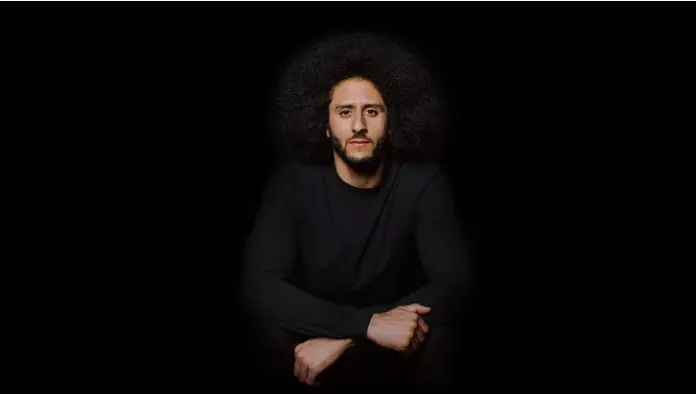
September 1 marked ten years since former San Francisco 49ers quarterback Colin Kaepernick began kneeling during the national anthem to protest racial injustice and police brutality against Black people and other racial minorities. His decision to use his platform for activism ultimately ended his NFL career. Kaepernick has said his advocacy caused the league to blackball him, though NFL commissioner Roger Goodell has disputed that claim. Kaepernick played his last NFL game in 2017.
Ahead of the release of his new book, The Perilous Fight, Kaepernick sat down to discuss why he wrote the memoir, how he found the courage to take a stand, and what advice he would offer to others inspired by his actions.
"Part of the catalyst [to writing this book] was the questions I've gotten over the years," Kaepernick said. "No question. Everything from things that are simple and a little more obvious as far as like, 'why did you protest?' and 'what got you to that point?' To things much more nuanced and detailed like 'what was happening behind the scenes?' 'How are you navigating that?' 'What advice would you give to other people if they're thinking about going out and taking action?' I had more and more people approaching me with questions around what insights I had...it felt like it was the right time to go out and be able to share that in much more depth."
"We are also in a political climate and moment within our country that I think this work is more important than ever," Kaepernick explained. "And I think all of those elements have ultimately led to me writing the memoir and wanting to share those insights to hopefully give space for us to move forward and be able to organize better and also hopefully give people power and agency and get them to realize the level of power and agency that they have to create change within society."
Kaepernick shared how he had the courage to start kneeling. "Some of that comes from life experiences and training. Also looking at our heroes, people who have done this before, whether that is Malcolm or Martin or Garvey, Huey, Angela, you can look at Ali...there's a list of heroes that have taken action under much more dire circumstances than the moment that I started protesting. So, if they're willing to go to those lengths and willing to put themselves in harm's way, it should be much easier for us to take action in that way."
"The other part I think is also changing the perspective around risk," Kaepernick shared. "Often, what is more typical is we frame risk around what we have to lose or what we stand to lose. I would say we also have to look at it from what is the risk of us not taking action? The risk of not taking action is more of us are killed. More of us are going to die and we are going to see that at the hands of police, specifically. And getting to a perspective and looking at things through that lens makes it much easier to say, if I go out and protest and I help save one life, that is worth it."
Despite prior support Kaepernick had received from rap mogul Jay-Z, many were flummoxed by Jay-Z's decision to partner with the NFL in 2019, given everything that transpired between the NFL and Kaepernick in the years prior. At a July 2026 concert at Yankee Stadium, the rapper mentioned Kaepernick in a freestyle, stating, "Buddy took a check, I ain't even mad at him, but along with that check you have to sign a non-disparagement. I'm the one they can't control."
Sports journalist Jemele Hill refuted these claims on her podcast, "Spolitics," indicating that they were untrue, and explained that Kaepernick, along with his colleague Eric Reid, filed a workplace grievance against the NFL, "accusing them of colluding to keep them out of football." Hill, who was an executive producer for Kaepernick's documentary series, explained that although the NFL and Kaepernick agreed to a settlement, Kaepernick "never signed a non-disparagement agreement."
Kaepernick remains unfazed by the naysayers. When asked how he had the bravery to fight against such a powerful corporation like the NFL, while receiving subtle jabs from powerful public figures, Kaepernick shared, "We have to stay focused on the goal and we can't just look at the obstacles or potential barriers in front of us, because if we do that, ultimately, we're not going to do anything. We are just going to accept the status quo. If that's a place that people are comfortable in, that is their decision, but that's not a place that I'm comfortable operating in."
"From an early age, [my parents] always taught me, regardless of the status of someone or the position of someone or the skills that they may have, everybody is valued and should be treated equally," Kaepernick shared. "I think that plays out when we look at corporations, when we look at institutions. They're made up of people and those people are going to make decisions. They're also people that are able to be influenced. And while it may feel like you are one individual, it is individuals who ultimately come together that create change."
Kaepernick reiterated the importance of community when trying to push back against harmful and oppressive systems. "We have to build stronger community and coalitions. We have to organize around it. We can't look at things as like, 'hey, this is a solo mission and we're just going to go in by myself. I have phenomenal people to support me in doing this and collaborating with me. And that, ultimately, is what gives you some of the confidence going through it. You know you're not walking through it alone."










Comment