
-
6 minutes, 11 seconds
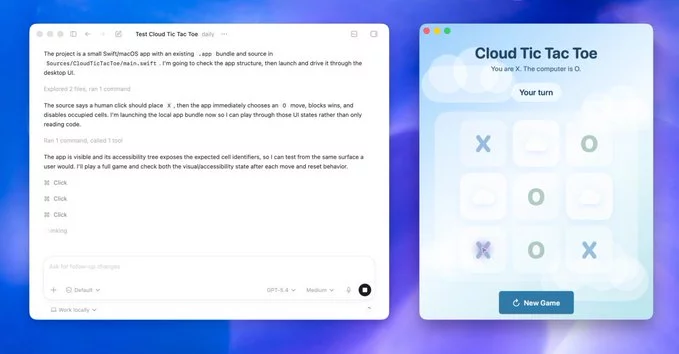
Codex update news is dominating developer conversations right now, especially for those comparing AI coding assistants. The latest upgrade introduces a powerful new capability: Codex can now interact directly with macOS applications. This means developers can automate tasks, run workflows, and even control software environments without constant manual input. If you’ve been wondering how Codex stacks up against competing tools, this update signals a clear shift toward deeper system-level integration and autonomy.
The update positions Codex as more than just a coding assistant—it’s evolving into a full workflow companion. With the ability to navigate apps independently, Codex reduces friction in development pipelines and saves valuable time. For developers juggling multiple tools, this could reshape daily workflows.
One of the most significant aspects of the Codex update is its ability to use macOS apps autonomously. Instead of relying solely on code prompts, Codex can now open applications, execute tasks, and manage processes across a user’s system. This effectively bridges the gap between AI-generated code and real-world execution.
For example, Codex can potentially compile code, test applications, and even interact with development environments without step-by-step instructions. This level of independence introduces a new layer of efficiency, especially for repetitive or multi-step tasks. Developers who rely heavily on macOS tools will likely see immediate benefits in productivity and workflow automation.
This feature also highlights a broader trend in AI development—moving from passive assistants to active agents. Codex is no longer just responding; it’s acting.
The Codex update is widely seen as a direct response to the growing popularity of Claude Code. Both tools aim to streamline development, but their approaches are starting to diverge. While Claude Code has gained attention for its conversational coding capabilities, Codex is now leaning into deeper system integration.
This strategic move could give Codex an edge in environments where automation and execution matter as much as code generation. Developers who prioritize end-to-end workflows may find Codex’s new capabilities more aligned with their needs. At the same time, competition between these tools is accelerating innovation, which ultimately benefits users.
Rather than simply improving code suggestions, the focus is shifting toward complete task ownership. Codex’s latest update makes it clear that the future of AI coding tools lies in autonomy, not just assistance.
For developers, the Codex update introduces both opportunities and new considerations. On one hand, increased automation can dramatically reduce time spent on repetitive tasks. On the other, it requires trust in AI systems to perform actions accurately and securely.
Teams may need to rethink how they integrate AI into their workflows. Instead of using AI as a helper, developers might begin treating tools like Codex as collaborators capable of handling entire segments of a project. This shift could redefine roles, especially in fast-paced development environments.
There’s also a learning curve involved. Understanding how to guide and supervise an autonomous AI system will become an essential skill. Developers who adapt quickly are likely to gain a competitive advantage.
The Codex update reflects a larger industry trend toward autonomous AI systems. As tools gain the ability to interact with operating systems and applications, they become more powerful—and more complex. This evolution raises important questions about control, safety, and reliability.
At the same time, it opens the door to entirely new possibilities. Imagine AI systems managing entire development cycles, from writing code to deployment and testing. Codex’s new capabilities are a step in that direction.
This shift is not just about competition between tools—it’s about redefining how humans and AI collaborate. As Codex continues to evolve, developers can expect even deeper integrations and smarter automation features.
The latest Codex update is more than just a feature release—it’s a statement about where AI coding tools are headed. By enabling macOS app control, Codex is moving beyond traditional boundaries and challenging competitors head-on.
For developers, this means more power, more efficiency, and new ways to build and manage projects. As the competition intensifies, one thing is clear: AI is no longer just assisting developers—it’s starting to work alongside them in entirely new ways.

2.5K articles

1.3K articles

34 articles

28 articles














Comment