Alerts

-
7 minutes, 19 seconds
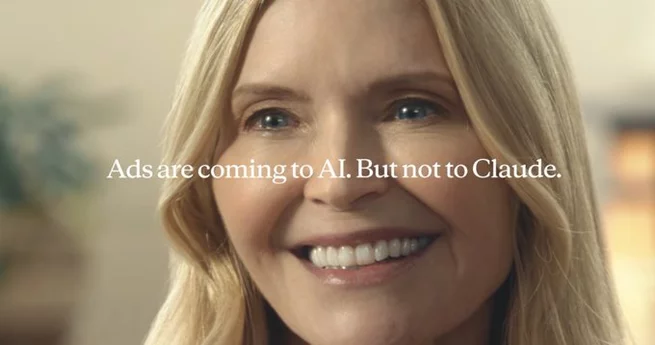
Claude will remain ad-free. That is the clear promise Anthropic is making as questions grow around whether AI chatbots will soon be flooded with sponsored links and paid recommendations. Users searching for answers about ads in Claude, how AI companies make money, and whether chatbot responses can stay unbiased now have a definitive response. Anthropic says its AI assistant will not display ads, include sponsored results, or shape answers based on advertiser interests, setting up a sharp contrast with competitors preparing to introduce advertising into conversational AI.
The announcement lands at a moment when trust, transparency, and monetization are becoming central debates in artificial intelligence. As chatbots move deeper into work, education, and personal decision-making, how they are funded matters more than ever.
Anthropic frames the decision as a values-driven choice rather than a short-term business calculation. According to the company, advertising would fundamentally conflict with Claude’s role as a helpful, reliable assistant acting solely in the user’s interest. Ads, even subtle ones, introduce incentives that can distort answers in ways users may never notice.
The company points to scenarios where neutrality is critical. Health-related questions, productivity advice, or sensitive personal topics demand responses that are clear, honest, and free from commercial pressure. Even the perception that an answer might be influenced by sponsorship could weaken trust. For Anthropic, avoiding that risk entirely is the safest path.
Claude is also positioned as a tool for focused work. Interruptions, sponsored prompts, or product placements could break concentration and reduce usefulness, especially for professionals relying on AI throughout the day.
The declaration that Claude will remain ad-free highlights a widening divide in how AI platforms plan to generate revenue. Some companies see advertising as a natural extension of search-based business models. Others argue that conversational AI is fundamentally different from traditional search or social feeds.
Unlike a list of links, an AI response feels authoritative. When users ask a question, they often assume the answer reflects the system’s best understanding, not a paid placement. Critics of AI advertising warn that blending ads into dialogue could blur ethical lines and make it harder for users to distinguish guidance from promotion.
Anthropic’s stance suggests a belief that long-term trust may be more valuable than short-term ad revenue, especially as AI systems become more embedded in daily decision-making.
To reinforce its message, Anthropic is backing the announcement with a high-profile Super Bowl commercial. The ad humorously depicts human-like AI assistants awkwardly dropping advertisements in the middle of otherwise helpful conversations. The joke lands because it mirrors a real fear many users share: that AI advice could soon come with unwanted sales pitches.
The campaign leans into humor, but the underlying message is serious. By publicly mocking ad-supported AI, Anthropic is not just making a product promise. It is staking out a brand identity centered on user trust, clarity, and independence from advertiser influence.
This marketing move also raises the stakes. Taking such a visible stand makes any future change far more noticeable and potentially controversial.
Despite the strong language, Anthropic stops short of calling the policy permanent. The company notes that if circumstances ever required revisiting the ad-free approach, it would be transparent about why. That caveat may sound cautious, but it reflects the realities of operating in a fast-moving AI market with enormous infrastructure costs.
Training and running large AI models is expensive. While subscriptions, enterprise licensing, and partnerships can offset costs, long-term sustainability remains an open question across the industry. Anthropic’s statement acknowledges that business models may evolve, even as it commits to its current position.
Still, by explicitly addressing the possibility, the company signals awareness of the trust implications and sets expectations around openness if changes occur.
For users, the takeaway is straightforward. Claude will remain ad-free, with no sponsored answers, no paid recommendations, and no hidden commercial influence shaping conversations. That clarity may appeal to professionals, students, and organizations that prioritize neutrality and focus.
It also gives users a new lens for evaluating AI tools. Beyond performance and features, funding models are becoming part of the decision-making process. An ad-free assistant suggests fewer conflicts of interest, while ad-supported systems may trade lower upfront costs for greater commercial integration.
As AI becomes more personal and more powerful, those trade-offs will matter.
Anthropic’s announcement is about more than one chatbot. It reflects a broader debate about what kind of relationship users should have with AI systems. Should they feel like neutral helpers, or like platforms optimized for monetization?
By declaring that Claude will remain ad-free, Anthropic is betting that trust, clarity, and user alignment will be decisive advantages in the long run. Whether that bet pays off will depend on how users respond as advertising becomes more common elsewhere in AI.
For now, the message is clear. In a rapidly commercializing AI landscape, Claude is positioning itself as a rare quiet space—focused, uninterrupted, and free from ads.








Comment