
-
2 minutes, 59 seconds
China Proposes Global Body to Govern Artificial Intelligence
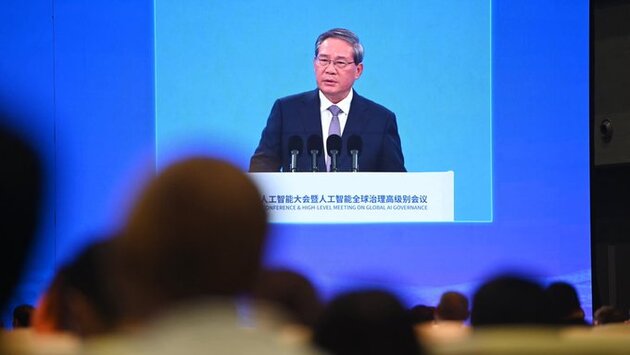
A new call for global AI cooperation highlights Beijing’s strategic push for leadership in AI governance. During the World Artificial Intelligence Conference (WAIC) in Shanghai, Chinese Premier Li Qiang emphasized the urgent need for coordinated international oversight, stating that “technological monopolies” and chip supply “bottlenecks” threaten to make AI innovation an exclusive domain of only a few nations and companies. As China proposes global body to govern artificial intelligence, this move signals an effort to counterbalance U.S. influence and push for inclusive, rule-based global AI governance.
Why China Proposes Global Body to Govern Artificial Intelligence
Li Qiang’s remarks stem from mounting frustrations over fragmented AI regulations worldwide. While some countries prioritize ethical considerations, others focus on innovation freedom, creating significant disparities in governance. By proposing a global co-operation body, China aims to bridge these regulatory gaps and foster multilateral standards. This global AI framework, if realized, could help mitigate technological nationalism and prevent AI from being dominated by geopolitical powerhouses.
Chip Shortages and Tech Monopolies Threaten AI Innovation
The Chinese premier underlined how ongoing semiconductor shortages are stalling progress in AI development. These “bottlenecks” not only slow innovation but also deepen dependency on foreign technologies. Meanwhile, existing tech monopolies—largely concentrated in Western nations—risk turning artificial intelligence into a closed ecosystem. China’s proposal highlights its broader ambition: to democratize AI development and governance by ensuring equitable access to foundational technologies and policy-making processes.
Global Reaction and the Race for AI Leadership
As China proposes global body to govern artificial intelligence, the international community is watching closely. While some nations may welcome a multilateral governance structure, others, particularly the U.S. and its allies, might view this as an attempt by Beijing to reshape the AI rulebook in its favor. Nonetheless, China’s stance has stirred debate on the need for collective oversight, especially as AI systems grow more powerful and globally integrated. With AI transforming everything from military strategy to healthcare, global consensus may no longer be optional—it could become essential.

2.5K articles

1.3K articles

34 articles

28 articles













Comment