Alerts

-
6 minutes, 8 seconds
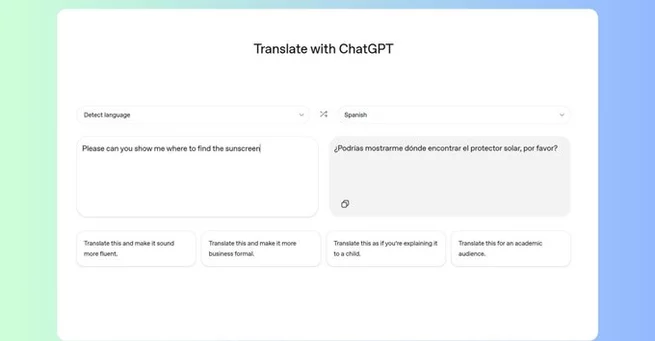
ChatGPT Translate is OpenAI’s latest attempt to redefine how people translate languages online. The new standalone web tool supports more than 50 languages and introduces customizable translation styles, answering a common question many users have asked for years: can AI translations sound more natural, professional, or academic on demand? Positioned as a direct challenger to Google Translate, ChatGPT Translate combines familiar design with AI-driven flexibility that goes beyond basic word-for-word conversion.
At first glance, the interface feels instantly recognizable. Users type or paste text into one box, select source and target languages from dropdown menus, and receive translated results in a second box. That familiarity lowers the learning curve, but the real differences emerge once users explore what the tool can do with tone and context.
Visually, ChatGPT Translate mirrors the clean, side-by-side layout that millions already use daily for quick translations. This intentional familiarity makes it easy for new users to jump in without guidance or tutorials. OpenAI appears to be betting that people want better results, not a radically new workflow.
Where the experience starts to diverge is in how translations can be guided. Instead of accepting a single default output, users can request translations that sound “more fluent,” “business formal,” or “academic.” These presets reflect ChatGPT’s conversational AI roots, offering translations that aim to match real-world writing styles rather than literal phrasing alone.
One of the biggest limitations of traditional translation tools has always been tone. A sentence translated correctly can still feel awkward, robotic, or inappropriate for its audience. ChatGPT Translate directly addresses this issue by allowing users to influence how the final text reads.
For professionals, this could mean drafting emails or reports that sound polished without manual editing. Students and researchers may benefit from academic-style translations that preserve nuance. Casual users can request smoother, more natural phrasing that feels closer to how a native speaker might write. This level of control positions ChatGPT Translate as a writing assistant as much as a translation tool.
Despite its promise, ChatGPT Translate does not yet match the full feature set of more established translation platforms. While the homepage suggests support for text, images, and voice, real-world usage tells a more limited story. Desktop users can only translate text, with no option to upload images or documents.
Mobile browser users gain access to voice input through their device microphone, which adds convenience for quick spoken translations. However, image-based translation remains unavailable across all versions. This gap may matter to travelers, students, and professionals who rely on translating signs, screenshots, or scanned documents.
Another notable difference is the absence of a dedicated mobile app. Unlike long-established translation services that offer native apps across platforms, ChatGPT Translate currently exists only as a web-based tool. This limits offline use and may slow adoption among users who prefer app-based experiences.
OpenAI has not confirmed whether an app is planned or which AI model powers the translation engine. That silence leaves room for speculation but also signals that the company may be testing demand before committing to a broader rollout.
Translation itself is not new to ChatGPT. The chatbot has handled multilingual requests for years, often delivering more context-aware results than traditional tools. ChatGPT Translate simply packages those capabilities into a focused, distraction-free interface.
This move reflects a broader strategy of turning popular ChatGPT features into dedicated products. By separating translation from the general chatbot, OpenAI can refine the experience, gather targeted feedback, and compete more directly in the language tools market.
ChatGPT Translate’s arrival signals a shift in expectations for translation tools. Accuracy alone is no longer enough; users want translations that sound human, fit their purpose, and require minimal editing. While the tool still lacks some practical features, its emphasis on tone and style could reshape how people think about AI-powered translation.
If OpenAI expands support for images, documents, and dedicated apps, ChatGPT Translate could become a serious everyday alternative. For now, it stands as a clear message that AI translation is evolving from simple conversion toward intelligent, context-aware communication.









Comment