Alerts

-
4 minutes, 37 seconds
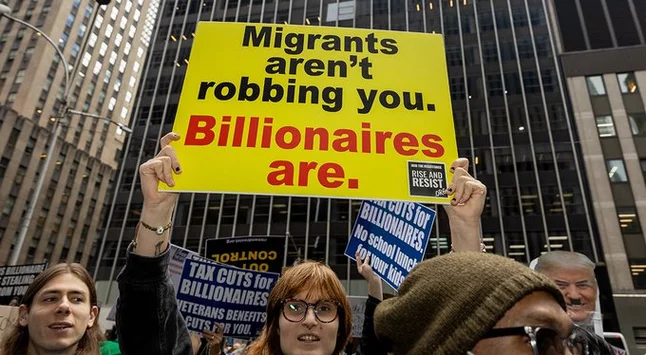
A staggering 11.8 billion hours are spent every day consuming content on social media platforms founded by some of the world’s wealthiest billionaires. That’s equivalent to more than one million years of human attention lost daily. Recent reports reveal that just six billionaires control nine of the ten largest social media networks, giving them unparalleled influence over global information and public opinion.
This concentration of power raises urgent questions about political freedom, misinformation, and the role of artificial intelligence in shaping online discourse.
The report highlights that billionaires are 4,000 times more likely to hold political office than ordinary citizens. Many experts and observers believe that the ultra-wealthy often use their fortune to sway elections or secure favorable legislation. When billionaires buy influence over governments, media, or public platforms, their actions can undermine democratic systems and fairness.
Oxfam’s annual report, Resisting the Rule of the Rich: Protecting Freedom from Billionaire Power, warns that the concentration of wealth and power in the hands of a few jeopardizes the political and civil rights of the broader population. It emphasizes that billionaire-driven influence isn’t just about luxurious lifestyles—it shapes the future of societies.
The dominance of billionaire-owned platforms extends beyond politics. Today, nine of the world’s ten top social media companies are controlled by six billionaires. This unprecedented control gives them the ability to shape narratives, amplify certain viewpoints, and monetize attention in ways that often prioritize profit over truth.
Algorithms designed to maximize engagement can inadvertently promote misinformation or extremist content. Combined with the rise of AI-generated material, these platforms are reshaping public discourse and influencing perceptions on a massive scale.
While billionaires accumulate wealth in the hundreds of billions, ordinary users continue to spend billions of hours online, often unknowingly feeding the very systems that consolidate power. The report underscores that this concentration of influence is not only a threat to democratic institutions but also to societal fairness, freedom of expression, and unbiased access to information.
The global reach of these platforms means that billions of people worldwide are affected daily, whether they realize it or not. From news consumption to social interaction, the digital landscape is increasingly defined by a small group of ultra-wealthy individuals.
Experts argue that addressing this imbalance requires stricter transparency, better regulation of algorithms, and limits on the political influence of the ultra-rich. Without checks and balances, the risk is clear: social media could increasingly serve billionaire interests rather than the public good.
As AI technology continues to advance, the role of wealthy individuals in shaping online information will only grow. Policymakers, tech leaders, and civil society must consider how to safeguard political freedom and ensure equitable access to reliable information for everyone.
The revelation that people spend over 11 billion hours daily on platforms controlled by a handful of billionaires is a wake-up call. It highlights how wealth concentration extends beyond material possessions into the very structure of society, politics, and information flow. As public attention remains the most valuable currency online, understanding who controls it—and how—has never been more critical.









Comment