technology designed directly with Disabled users. Launched quietly during the 40th anniversary of Apple’s accessibility initiatives, the accessory addresses common queries about better grip support, easier mobility use, and ergonomic iPhone handling. With users seeking tools that improve independence and daily device interaction, this new design puts disability-led innovation front and center.
How Assistive Technology Shapes the Grip’s Design
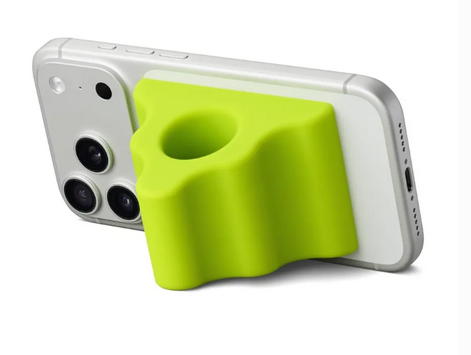
Unlike typical phone grips, the Hikawa accessory was co-designed with people who have dexterity, grip, and mobility disabilities. Its stabilizing handle, soft silicone texture, two-angle stand, and easy MagSafe snap-on system all reflect assistive technology principles built for fatigue reduction and one-handed or no-handed use. These features support users with hypermobility, paralysis, joint instability, or chronic pain, offering a more secure and accessible iPhone experience.
Why the iPhone Is Already a Leader in Assistive Technology
Apple’s annual updates — from Braille Access to Live Captions, Magnifier, Head Tracking, and Accessibility Reader — have made the iPhone one of the world’s most widely used pieces of assistive technology. For millions of Disabled users, it functions as a communication device, safety tool, mobility aid, and health companion. The Hikawa Grip strengthens this ecosystem by improving the physical interaction between user and device, something advocates have long emphasized as equally crucial as software accessibility.
Is Disability-Led Design the Future of Assistive Technology?
Artist Bailey Hikawa’s sculptural aesthetic merges art with access, proving adaptive tools can be functional and visually expressive. Apple’s collaboration demonstrates how disability-led design creates better experiences for everyone — improving usability, ergonomics, and device stability across the board. As companies shift toward more inclusive product development, the Hikawa Grip signals how assistive technology can be beautiful, intuitive, and empowering, not clinical or hidden.













Comment