
-
5 minutes, 6 seconds
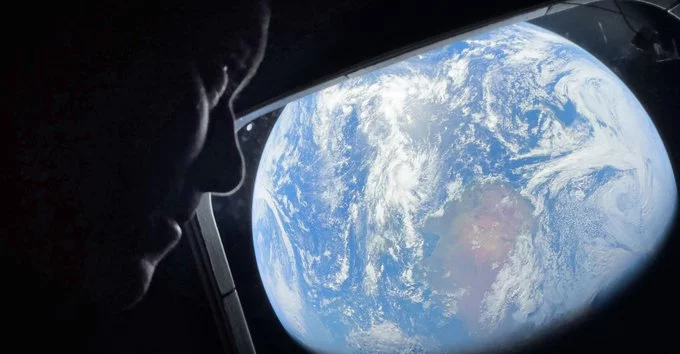
Artemis II is making headlines as astronauts travel farther from Earth than any human mission since 1970. The mission, led by NASA, surpasses the record set by Apollo 13, marking a major milestone in modern space exploration. As the Orion spacecraft loops around the Moon, many are asking: how far are they going, and why does it matter? The answer lies in humanity’s renewed push to return to deep space—and eventually land on Mars.
The original distance record was set during the Apollo era when Apollo 13 astronauts reached approximately 400,000 kilometers from Earth. That mission became famous for its emergency return, but it also quietly set a benchmark for human spaceflight distance. Artemis II now exceeds that milestone as its crew ventures deeper into space aboard the Orion spacecraft.
Unlike Apollo 13, this mission is not facing a crisis but instead demonstrating advanced capabilities. Orion’s trajectory is carefully planned to push boundaries while ensuring astronaut safety. The spacecraft travels in a wide arc around the Moon, allowing it to reach a greater distance before returning home. This achievement highlights how far technology has evolved since the Apollo missions.
Breaking a distance record might sound symbolic, but it has real implications for future missions. Traveling farther from Earth tests critical systems like life support, navigation, and communication. These systems must function flawlessly as missions become longer and more complex.
Artemis II serves as a proving ground for future lunar and Mars exploration. Engineers are collecting valuable data on how equipment performs in deep space conditions. Astronauts are also gaining experience operating far from Earth, where immediate assistance is impossible. Each milestone builds confidence for upcoming missions that aim to land humans on the Moon again.
At the center of this achievement is the Orion spacecraft, designed specifically for long-duration missions beyond low Earth orbit. Orion includes advanced shielding to protect astronauts from radiation, a major challenge in deep space travel. Its life support systems are built to sustain crews for extended periods, ensuring safety even during unexpected delays.
The spacecraft also features cutting-edge navigation and propulsion systems. These allow it to travel farther and more efficiently than earlier spacecraft. Compared to Apollo-era technology, Orion represents a significant leap forward. Its successful performance during Artemis II is a strong indicator that future missions will be even more ambitious.
Artemis II is not just about breaking records—it is part of a broader strategy to return humans to the Moon. The Artemis program aims to establish a sustainable presence on the lunar surface. This includes building infrastructure that can support long-term exploration and scientific research.
Future missions will build on Artemis II’s success. Artemis III is expected to land astronauts on the Moon, marking the first human landing there in decades. These efforts are also laying the groundwork for missions to Mars. By testing systems and pushing limits now, NASA is preparing for even greater challenges ahead.
This record-setting journey signals a turning point in space exploration. For decades, human missions remained close to Earth, limited to low orbit operations. Artemis II changes that narrative by pushing humanity back into deep space.
Public interest in space travel is growing as milestones like this capture global attention. The mission inspires a new generation of scientists, engineers, and explorers. It also reinforces the idea that human space exploration is entering a bold new phase. With each achievement, the dream of reaching farther into the universe becomes more realistic.

2.5K articles

1.3K articles

34 articles

28 articles














Comment