
Alerts
-
6 minutes, 2 seconds
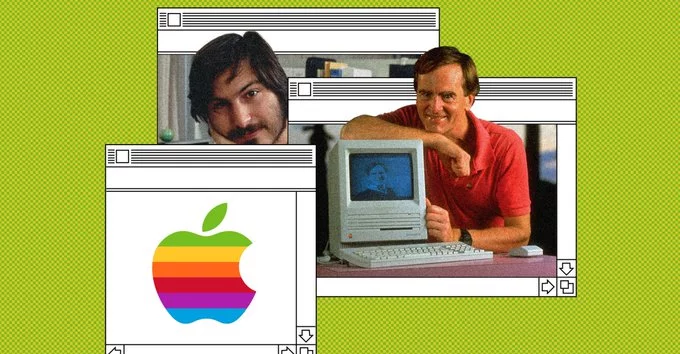
Apple’s 1990s era often raises one big question: what really happened between Steve Jobs leaving and returning to save the company? The answer is a fascinating mix of bold innovation, confusing product decisions, and near-collapse. While Steve Jobs was absent, Apple experimented wildly—producing both groundbreaking ideas and strange missteps that shaped its future. This turbulent decade ultimately set the stage for one of the greatest comebacks in tech history.
When Steve Jobs exited Apple Inc. in 1985, the company entered unfamiliar territory. Leadership shifted, priorities changed, and Apple began chasing multiple directions at once. Without a clear guiding vision, the brand struggled to maintain its identity in a rapidly evolving tech landscape.
During this period, Apple attempted to compete aggressively with Microsoft and the growing Windows ecosystem. However, instead of focusing on a few strong products, Apple flooded the market with numerous variations. This created confusion among consumers and weakened its competitive edge.
Even so, the absence of Jobs didn’t mean the absence of creativity. Apple engineers continued to innovate, often pushing boundaries ahead of their time. Unfortunately, many of these ideas lacked the strategic execution needed to succeed commercially.
Despite its struggles, Apple’s 90s era wasn’t devoid of success. The company introduced technologies and concepts that would later influence modern computing. Many of these innovations reflected Apple’s commitment to user-friendly design and integrated ecosystems.
One standout example was the early development of personal digital assistants (PDAs), which hinted at the future of mobile computing. Though not widely successful at the time, these devices laid the groundwork for later breakthroughs. Apple also refined its approach to design, experimenting with hardware and software integration in ways competitors hadn’t yet mastered.
This era demonstrated that even in uncertainty, Apple’s DNA of innovation remained intact. The seeds planted during these years would eventually grow into the company’s defining products in the 2000s and beyond.
For every innovative step forward, Apple also took a few puzzling steps back. The 1990s saw a series of product launches that confused customers and diluted the brand. From overlapping product lines to unclear naming conventions, Apple struggled to communicate its value effectively.
Some devices were simply ahead of their time, while others failed due to poor execution or lack of market demand. The company’s strategy often felt scattered, as it attempted to cover too many segments simultaneously. This lack of focus made it difficult for Apple to build momentum in any single category.
These failures, however, were not meaningless. They provided valuable lessons about simplicity, branding, and user experience—principles that would later define Apple’s success.
By the mid-1990s, Apple’s challenges had reached a critical point. Declining market share, financial losses, and internal confusion pushed the company to the brink of collapse. Competitors were gaining ground, and Apple’s once-strong reputation was fading fast.
The absence of a clear product strategy and cohesive leadership left the company vulnerable. Customers and developers began to lose confidence, further accelerating its decline. It became increasingly clear that Apple needed a dramatic shift to survive.
This period marked one of the most precarious moments in Apple’s history, setting the stage for a pivotal turning point.
Apple’s fortunes began to change when Steve Jobs returned in 1997. His comeback is often remembered as a turning point that redefined the company’s trajectory. Jobs streamlined Apple’s product lineup, refocused its vision, and emphasized design and user experience.
Under his leadership, Apple moved away from its chaotic approach and embraced simplicity and clarity. This transformation laid the foundation for iconic products and a renewed brand identity. The lessons learned during the turbulent 90s became the blueprint for Apple’s future success.
Ultimately, the decade between Jobs’ departure and return wasn’t just a period of struggle—it was a crucial chapter in Apple’s evolution. It proved that even the most uncertain times can lead to extraordinary reinvention.










Comment