
Alerts
-
7 minutes, 29 seconds
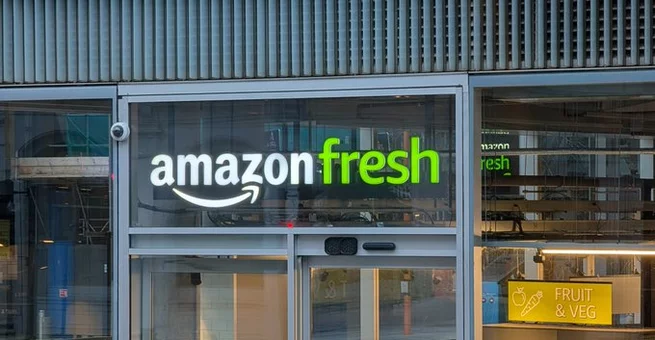
Amazon shutters physical Go and Fresh stores, marking a significant change in how the company approaches brick-and-mortar grocery retail. Shoppers wondering whether these cashierless and Amazon-branded grocery locations will survive now have a clear answer. Physical Amazon Go and Amazon Fresh stores are being closed or converted, while online grocery ordering remains active. The move reflects a broader strategy focused on delivery speed, brand consolidation, and a renewed push behind Whole Foods Market.
Amazon confirmed that most Amazon Go and Amazon Fresh locations will shut their doors, ending an ambitious experiment in tech-first grocery shopping. Some existing stores will be converted into Whole Foods Market locations, while others will close permanently. Customers will no longer be able to shop in physical stores under the Amazon Fresh or Amazon Go names.
Despite the closures, Amazon Fresh as an online grocery service will continue to operate. Customers can still order groceries for delivery, including same-day options in select cities. This signals that Amazon is not leaving the grocery business, but rather reshaping how shoppers interact with it.
The decision to close physical Go and Fresh stores highlights a strategic recalibration rather than a retreat. Amazon has spent years testing cashierless technology, smaller-format grocery stores, and hybrid retail models. While innovative, these concepts faced challenges around operating costs, customer adoption, and long-term scalability.
By consolidating under a more familiar grocery brand, Amazon appears to be prioritizing efficiency and customer trust. Whole Foods Market already has a loyal customer base and established supply chains, making expansion more predictable. The shift also allows Amazon to streamline its grocery operations under fewer banners.
As Amazon shutters physical Go and Fresh stores, it is doubling down on Whole Foods Market growth. The company plans to open more than 100 new Whole Foods locations over the next few years. In addition, smaller convenience-style Whole Foods Market Daily Shop stores are expected to roll out before the end of the year.
This expansion suggests Amazon sees greater long-term value in enhancing an existing brand rather than maintaining multiple experimental formats. Whole Foods offers a balance between physical retail presence and digital integration, especially for pickup and delivery services.
Alongside store closures, Amazon is expanding same-day delivery for groceries and household essentials. More cities are expected to gain access to faster delivery options over the coming year. This aligns with changing consumer habits, where convenience and speed often matter more than in-store experiences.
Same-day delivery also plays to Amazon’s logistical strengths. By investing in fulfillment infrastructure instead of physical storefronts, the company can reach more customers without the overhead of running additional stores. This approach supports mobile-first shopping behavior and keeps Amazon competitive in urban and suburban markets alike.
Another key development tied to this shift is the expansion of Amazon’s unified private-label grocery brand. The company now offers over 1,000 grocery items under a single brand umbrella, with plans to grow the lineup throughout 2026. These products are positioned as affordable staples designed for everyday shopping.
The expansion of private-label goods gives Amazon more control over pricing, supply chains, and margins. It also complements online grocery delivery, where brand familiarity and value pricing can influence repeat purchases. This move reinforces Amazon’s focus on scale and long-term profitability.
The grocery overhaul comes alongside notable leadership changes within Amazon’s grocery division. A senior executive previously responsible for Amazon Fresh grocery operations recently announced their departure from the company. While leadership changes are common during restructures, the timing underscores the significance of Amazon’s strategic reset.
Such transitions often indicate a new phase of decision-making, with fresh priorities and performance benchmarks. For Amazon, that phase appears centered on fewer physical experiments and stronger execution across delivery and established retail brands.
Even as Amazon shutters physical Go and Fresh stores, it is not abandoning physical retail entirely. The company continues to test new grocery store concepts in select locations. These experimental stores blend traditional shopping with Amazon’s broader ecosystem, allowing customers to purchase groceries alongside other Amazon products.
Additionally, plans for a large-format retail concept resembling a one-stop shopping center have received local approval. These tests suggest Amazon remains interested in physical retail, but only where it can clearly support customer demand and operational efficiency.
For shoppers, the closures may feel like the end of a futuristic retail idea that promised frictionless shopping. However, the tradeoff is broader access to faster delivery and more Whole Foods locations. Customers who preferred in-person Amazon Fresh stores will need to adjust, but online grocery options remain robust.
From an industry perspective, Amazon’s decision reflects a larger trend toward consolidation and convenience-driven retail. Grocery businesses are increasingly prioritizing delivery, private-label products, and trusted brands. Amazon’s latest move shows that even the biggest tech-driven retailers must adapt when experiments don’t scale as planned.
As Amazon shutters physical Go and Fresh stores, the company is signaling a clearer, more focused grocery strategy—one built around delivery speed, brand strength, and long-term sustainability rather than constant retail experimentation.










Comment