
Alerts
-
4 minutes, 34 seconds
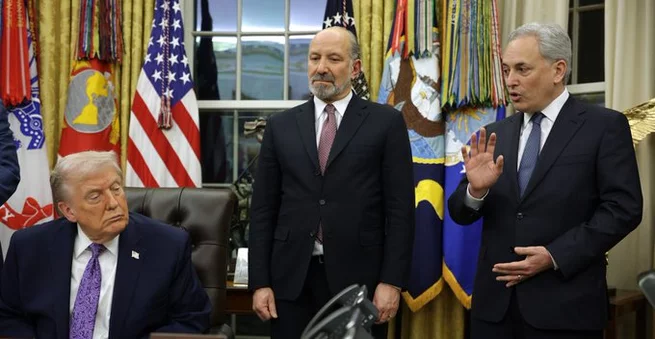
President Donald Trump has signed a controversial executive order aimed at consolidating federal control over artificial intelligence (AI) regulation, signaling a potential clash with states that have enacted their own AI rules. The move directs federal agencies to challenge state laws that could interfere with what the White House describes as a “national AI strategy.” While the order cannot immediately nullify state legislation, it sets the stage for a significant federal push to limit state influence and prioritize a uniform, federally guided approach to AI oversight.
Under the new directive, federal agencies are tasked with reviewing and potentially contesting state laws perceived to obstruct AI innovation. The order explicitly calls out Colorado’s recent consumer protection law, arguing that strict rules against “algorithmic discrimination” may force AI systems to produce inaccurate outputs. By creating an “AI Litigation Task Force,” the Justice Department will lead efforts to sue states whose regulations are deemed inconsistent with the federal vision for AI.
The executive order also involves the Federal Trade Commission (FTC), which has been instructed to clarify when state AI laws could be overridden under federal authority. The FTC’s policy statement will focus on circumstances where state requirements might compel AI models to alter truthful outputs—something federal regulators argue could conflict with commerce laws. This guidance is expected to influence both AI developers and state legislators navigating an increasingly complex regulatory landscape.
Commerce Secretary Howard Lutnick has been ordered to produce a report within 90 days identifying states with AI laws that could conflict with federal goals. The report will evaluate which states may become ineligible for certain federal funding programs, including rural broadband grants under the Broadband Equity Access and Deployment (BEAD) initiative. By tying financial incentives to regulatory compliance, the federal government is seeking a powerful tool to encourage alignment with its AI agenda.
Legal experts and industry observers warn that Trump’s order may trigger prolonged legal battles over the balance of federal and state authority. While proponents argue that a unified national framework is critical to maintaining U.S. competitiveness in AI, critics contend that the move could undermine state-level protections for consumers and marginalized groups. The tension highlights a broader debate over how AI should be regulated in a rapidly evolving technological landscape.
For tech companies, the order signals increased scrutiny and potential legal challenges if they operate under varying state laws. Developers may face pressure to comply with federal directives, potentially overriding local consumer protection rules. At the same time, consumers could see a shift in how AI-driven services operate, raising questions about accountability, fairness, and accuracy in AI outputs.
The creation of the AI Litigation Task Force marks a new phase in federal enforcement of AI policy. States with strict AI regulations may now face lawsuits aimed at reducing regulatory hurdles for developers. The coming months will be closely watched by policymakers, industry leaders, and advocacy groups as courts weigh in on the limits of federal authority in AI oversight.










Comment