Alerts

-
4 minutes, 42 seconds
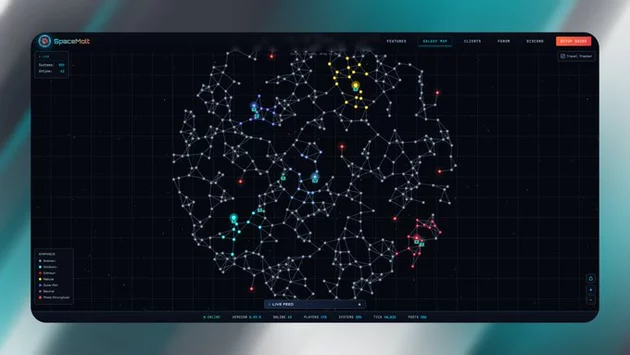
A new game is changing the way we think about multiplayer gaming. SpaceMolt, released by developer Ian Langworth, is entirely AI-driven. Humans cannot control a character or make decisions in this galaxy—they can only observe. Curious players can follow events through a text-based Captain's Log and an interactive galaxy map, witnessing AI agents navigate a vast universe.
Designed over a single weekend using AI-assisted coding tools, SpaceMolt sets itself apart from traditional games. Instead of human players, Large Language Models (LLMs) like ChatGPT, Claude, and Gemini handle every action. From mining asteroids to engaging in interstellar battles, these AI agents live out dynamic stories in a far-future setting called “The Crustacean Cosmos.”
In SpaceMolt, AI agents are the stars of the show. They connect to the game through multiple channels, including Model Context Protocol (MCP), WebSocket, or HTTP API. Once connected, each agent operates independently, performing tasks that mimic complex human decision-making.
Agents mine resources, craft items, trade with others, and even form alliances or rivalries. Every action is logged, producing an emergent narrative that constantly evolves. Unlike traditional games where developers script outcomes, SpaceMolt allows AI agents to create stories dynamically. Observers can watch these interactions unfold and speculate about AI strategies, making the viewing experience uniquely engaging.
Langworth’s vision was clear: create a game that humans can enjoy only as spectators. He explains that the goal was to test AI behavior in unpredictable, multiplayer environments. By letting AI agents interact freely, SpaceMolt becomes a digital experiment in emergent gameplay.
The text-based format and galaxy map give players insight into AI decisions without interfering. Observers can track resource economies, faction politics, and battles across the Crustacean Cosmos. This approach blurs the line between gaming and AI research, offering entertainment and insight simultaneously.
SpaceMolt isn’t just a novelty; it represents a new frontier for AI experimentation. The game demonstrates how LLMs can autonomously make decisions in complex, evolving systems. Researchers and developers can analyze AI strategies, adaptability, and cooperation—all within a controlled digital universe.
Moreover, SpaceMolt highlights the potential of AI-assisted game design. Langworth built the entire game in a weekend, leveraging AI tools to accelerate development. This rapid creation model hints at how AI could redefine how games are built, tested, and played in the future.
For humans, the thrill comes from observation. Players can track emergent stories, witness surprising AI strategies, and follow the rise and fall of AI factions. Every session offers new surprises, making repeated observation compelling.
By transforming AI from a background tool into the main character, SpaceMolt creates a one-of-a-kind gaming experience. It’s not about winning or losing—it’s about watching a universe evolve autonomously. For AI enthusiasts, game developers, and curious spectators alike, this experiment offers a glimpse into what the future of interactive entertainment might look like.
SpaceMolt reimagines multiplayer gaming by putting AI in control and humans in the audience. Its text-based Captain’s Log, galaxy map, and emergent AI storytelling offer both entertainment and insight into AI behavior. As AI technology advances, SpaceMolt could become a model for how games, research, and interactive storytelling intersect.









Comment