
Alerts
-
5 minutes, 23 seconds
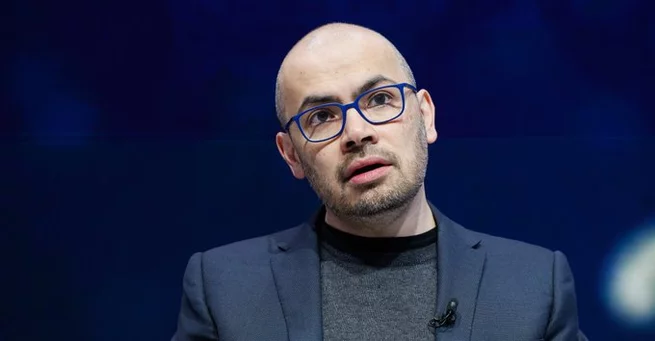
The World Economic Forum (WEF) in Davos, Switzerland, turned into a battleground for AI giants this week. Leaders from DeepMind, OpenAI, and Anthropic used the global stage to launch subtle — and not-so-subtle — digs at one another, highlighting a fierce competition for influence and public trust. With AI rapidly reshaping industries, these companies are not only racing for technological supremacy but also for reputational dominance.
During a panel session on Tuesday, DeepMind CEO Demis Hassabis shared his perspective on OpenAI’s plan to test ads in ChatGPT. “It’s interesting they’ve gone for that so early,” Hassabis said. “Maybe they feel they need to make more revenue.” The comment sparked a wave of speculation among analysts, framing monetization strategies as a visible marker of where each lab stands in the AI race.
Hassabis’s remarks also hinted at a broader debate over the ethics of AI commercialization, especially as billions of users interact with these tools daily. While DeepMind has largely stayed focused on research and long-term impact, competitors are visibly pursuing revenue streams and rapid adoption.
The tension escalated on Wednesday when Anthropic CEO Dario Amodei addressed journalists at The Wall Street Journal House. “We don’t need to monetize a billion free users because we’re in some death race with some other large player,” he said, drawing a clear contrast to OpenAI’s approach.
Amodei also previewed a forthcoming essay highlighting the potential downsides of AI, a dark counterpart to his optimistic “Machines of Loving Grace” essay from last year. Beyond company strategy, he criticized U.S. tech policy, comparing the sale of Nvidia GPUs to China to “selling nuclear weapons to North Korea.” His comments underscored the intersection of AI development, geopolitics, and ethical responsibility, themes that dominated discussions throughout Davos.
OpenAI’s answer to its rivals’ critiques came from Chris Lehane, the company’s head of policy and a seasoned political strategist. Known as a “master of disaster” during his time in the Clinton White House, Lehane is leveraging his political acumen to defend OpenAI’s moves. While DeepMind and Anthropic focused on philosophical and strategic critiques, Lehane framed OpenAI’s approach as a balanced blend of innovation and accessibility.
His public statements emphasized the need for responsible deployment alongside rapid growth, signaling that OpenAI intends to navigate this high-stakes landscape with both caution and ambition.
What unfolded at Davos illustrates a new dimension of the AI race: reputation warfare. Beyond technical breakthroughs and product launches, AI labs are now fighting for public perception, policy influence, and ethical credibility. Every statement, interview, and panel discussion is a strategic move in a broader narrative war, shaping how governments, investors, and users perceive each company.
For tech observers, the spectacle offers insight into how AI will evolve, not just as a tool, but as a social and political force. As competition heats up, the reputational stakes may prove as high as the technological ones, defining which companies will dominate the next era of artificial intelligence.
Davos 2026 confirms that the AI race is about more than algorithms or user numbers. It’s a multi-layered battle over strategy, ethics, and influence. DeepMind, OpenAI, and Anthropic are leveraging global stages to position themselves not only as leaders in innovation but as stewards of AI’s future. How the public, policymakers, and investors respond to this reputational chess game could shape the trajectory of AI for years to come.










Comment