Alerts

-
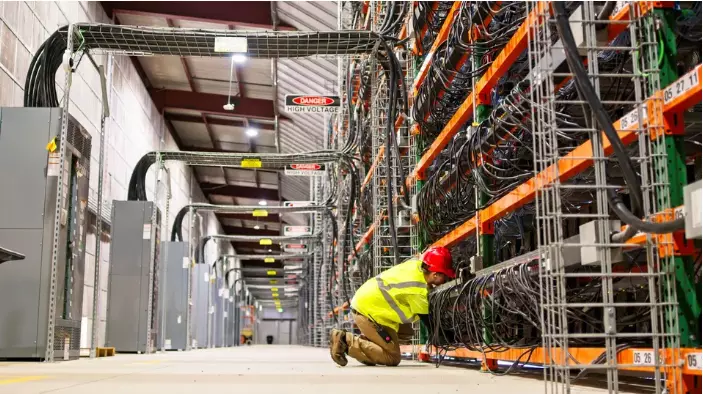
When people talk about the AI job boom, the conversation usually turns to software engineers, data scientists, and machine learning experts. But the data tells a different story. Over the next several years, the most significant job growth tied to artificial intelligence may not be in front of a computer screen—but on a construction site.
Consider the numbers. OpenAI is projected to create roughly 35,000 new jobs through 2032, according to industry forecasts. On the surface, that sounds like a windfall for the tech sector. However, the vast majority of those positions are construction roles. The company is also expected to add 2,500 long-term operational positions, but the immediate surge in hiring is for the physical builders of the AI infrastructure.
This pattern is repeating across the country. Generac recently announced a $250 million investment in its factory expansion, a move driven by surging data center orders. The company expects to add 1,000 employees to its workforce as demand for backup power solutions grows. Similarly, Micron has committed to a $10 billion investment in a new research campus designed to host hundreds of researchers and serve as a hub for conferences and programs with key players in the semiconductor industry.
The Trump administration has signaled its intent to position the United States as the global leader in the AI arms race. These private-sector investments are aligning with that national goal. The scale of growth is substantial: according to Grand View Research, the U.S. data center market is projected to more than double in revenue from $126 billion in 2025 to $276 billion by 2033.
This surge represents the largely unanticipated side of the AI job revolution. The World Economic Forum previously predicted that the AI revolution would generate a net increase of 78 million jobs globally. What is becoming increasingly clear is that a growing share of those roles—the positions benefiting most from the AI boom—are not the white-collar knowledge work professions many expected to thrive.
The careers seeing the most tangible benefit are blue-collar jobs—roles that are based on a physical floor rather than a digital screen, as Challenger, Gray & Christmas describes them. This sentiment is echoed inside major tech companies. In an interview earlier this year, Brian Ong, Google’s VP of recruiting, noted that the company is heavily promoting its data center jobs, particularly for entry-level professionals.
This marks a significant flip in the AI economy. Blue-collar workers—professionals who often enter their careers through technical training, hands-on experience, and at most an associate degree—are now seeing their skills soar in demand. And this is not a short-term trend; industry experts suggest this demand is likely to last for at least the next decade.
To understand why blue-collar workers are suddenly in high demand, it helps to look at what actually powers artificial intelligence. Behind the sophisticated language models and the ambitious pursuit of artificial general intelligence lies something far less glamorous: physical infrastructure.
Data centers, semiconductor chips, and compute-intensive memory are the backbone of the AI economy. Without them, the chatbots and digital tools that millions of people rely on daily would simply stop functioning. Building and maintaining that backbone requires a massive workforce—one that extends far beyond the tech sector.
Here is exactly what is behind this blue-collar job rebound:
The result is a job market where practical skills and hands-on expertise are becoming just as valuable as advanced degrees. For workers willing to pursue technical training and build experience in these trades, the AI economy presents a significant opportunity—one that is only expected to grow as the nation continues its push toward AI leadership.
At first glance, the immediate beneficiaries of the current AI boom appear to be power and energy companies, construction firms, and semiconductor manufacturers such as Nvidia and Micron. Big Tech players are also reaping significant rewards as central market participants in this expansion.
However, the opportunity extends far beyond large technology corporations. Professionals who have traditionally had limited access to knowledge-work roles—particularly blue-collar workers—are discovering that the AI surge has created enormous demand for their practical, hands-on skills.
The AI job boom within the skilled trades sector is proving especially attractive for several compelling reasons. Here are the core incentives driving interest:
What is also interesting is the shifting attitude among younger generations. Gen Z is showing increased interest in blue-collar work, driven partly by its accessibility and relative immunity to the layoffs that have become so prevalent in the tech and business services sectors. Additionally, many of these roles support causes that resonate with younger workers, such as renewable energy and climate change initiatives.
The numbers support this trend. According to a Resume Genius survey of 1,000 U.S. jobseekers conducted in March of this year, approximately 30% of Gen Z respondents and 20% of Millennials have seriously considered moving into skilled trades and blue-collar work.
So, with all of these factors in play, how can you position yourself to take advantage of this growing opportunity? The pathways are clearer than you might think, and the next section will outline the practical steps you can take to enter this rewarding and expanding job market.
Breaking into the artificial intelligence workforce requires more than just sending out applications. To secure one of these competitive positions, you need a strategic approach that starts with self-assessment and ends with a targeted application that showcases your specific value.
The first step is to determine which type of AI role aligns with your personal preferences and career ambitions. Not all positions in this sector are the same, and understanding the day-to-day reality of each is crucial.
If you are drawn to hands-on, technical work, data center roles can be an excellent entry point. These positions often offer competitive pay and clear pathways for advancement. However, it is important to be realistic about the demands of the job. Many of these roles involve long hours in physically demanding environments, so you should be prepared for the strain that comes with sustained manual and technical labor.
If you prefer a less physically intensive career path, consider roles such as:
These positions allow you to work within the AI infrastructure ecosystem while focusing on oversight, coordination, and strategic planning rather than physical maintenance.
Once you have identified your target role, analyze its specific hard-skill requirements. Employers in this space look for candidates who possess a working knowledge of the core technologies and systems that power AI operations.
Depending on the position, you may need familiarity with:
For candidates without direct industry experience, gaining hands-on training is a proven way to improve your employment prospects. Local colleges and trade schools frequently offer programs in these technical areas. Completing coursework or certification programs at these institutions can give you a significant advantage when applying to major technology or semiconductor companies.
To keep your job search on track, establish concrete goals for your professional development. Decide on a realistic timeline for completing your hands-on training and earning any relevant certifications. It is also helpful to define the target salary you want to achieve, so you can evaluate offers against a clear benchmark.
With a clear plan in place, you can use the current high demand for AI talent to your advantage. When you apply, make sure your resume and application materials are tailored to highlight the qualities employers value most. Emphasize your attention to detail, any hands-on experience you have gained, and the certifications you have earned along the way. A focused application that speaks directly to the requirements of the role will position you as a strong candidate in this growing field.

8.4K articles

1.6K articles

34 articles

28 articles













Comment