Alerts

-
8 minutes, 22 seconds
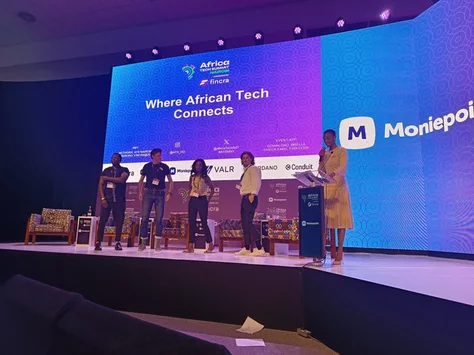
African tech talent is expanding faster than many organizations can adapt. Developers across the continent are gaining global recognition, landing remote roles, and contributing to major products. Yet one question keeps surfacing in industry discussions: why does productivity still lag behind potential? The answer isn’t talent shortages anymore—it’s infrastructure, developer experience, and internal systems that haven’t kept pace with the speed of growth.
The narrative around African developers is shifting. Conversations that once focused on scarcity are now centered on sustainability and scale. Leaders across the tech ecosystem increasingly agree that the next chapter isn’t about discovering talent. It’s about building environments where that talent can thrive consistently.
For years, the global perception of African tech revolved around untapped potential. Today, that perception has evolved into recognition. Developers across Africa are contributing to distributed teams, leading remote engineering squads, and launching their own startups. This shift has changed the questions companies are asking when expanding into global talent markets.
Instead of asking whether skilled developers exist, organizations are now evaluating how to retain and empower them. The rapid growth of remote collaboration has removed geographic barriers, but it has exposed operational gaps. These gaps are often invisible at first, yet they compound over time. Small inefficiencies quickly turn into productivity bottlenecks.
The shift from scarcity to scalability is forcing companies to rethink long-held assumptions. Hiring is no longer the biggest challenge. Enabling sustained output is.
Developer experience has quietly become the defining factor in global team success. It’s no longer a buzzword—it’s a measurable driver of productivity. When documentation is outdated or workflows are fragmented, teams lose momentum. When collaboration tools aren’t optimized for distributed environments, friction becomes unavoidable.
This friction rarely shows up in dashboards immediately. Instead, it surfaces in missed deadlines, delayed releases, and reduced innovation. Over time, these subtle issues shape outcomes more than raw talent ever could. Teams with strong systems consistently outperform those relying solely on skilled individuals.
For African tech talent, this reality is especially important. Many developers are already operating in remote-first environments. Without strong internal systems, even the most capable engineers struggle to reach peak performance.
Behind every high-performing engineering team lies invisible infrastructure. Clear documentation, reliable support structures, and thoughtful tooling choices all play a role. When these elements are missing, productivity slows—even if talent remains strong.
One of the most common issues is outdated documentation. Fast-growing companies often prioritize shipping products over maintaining knowledge bases. This creates confusion, especially for distributed teams onboarding across time zones. Developers spend valuable time searching for answers instead of building solutions.
Support systems also matter more than many organizations realize. Teams that assume physical proximity often overlook the needs of remote developers. Without accessible mentorship, clear escalation paths, and asynchronous communication channels, collaboration suffers.
The rise of distributed teams has made internal inefficiencies impossible to ignore. Remote work amplifies every weakness in organizational design. Processes that once worked in centralized offices now struggle under global conditions. This is where many companies discover that hiring globally requires operating globally.
Time zone differences introduce delays that compound quickly. Misaligned workflows create bottlenecks in product development cycles. Even simple tasks like code reviews can slow down if systems aren’t optimized for asynchronous work.
African tech talent often operates at the center of this shift. Developers across the continent are contributing to global teams, making them early witnesses to both the opportunities and the limitations of distributed work models. Their experiences are shaping how companies rethink collaboration.
Many organizations still view hiring as the ultimate milestone. Once positions are filled, they assume success will follow naturally. But the global talent landscape has changed that equation. Access to skilled developers is no longer the main differentiator—execution is.
When companies fail to invest in internal systems, they risk underutilizing the very talent they worked hard to acquire. This leads to frustration on both sides. Developers feel constrained, while organizations struggle to translate headcount into meaningful output.
The implication is clear: talent alone doesn’t guarantee results. Systems determine whether that talent can deliver impact consistently. Without strong foundations, growth becomes difficult to sustain.
The future of African tech may hinge less on talent pipelines and more on ecosystem maturity. As the continent continues to produce world-class developers, the focus is shifting toward enabling structures. This includes better tooling, stronger mentorship networks, and more intentional organizational design.
Companies that prioritize developer experience are likely to lead the next wave of innovation. By investing in systems that support distributed collaboration, they unlock the full potential of global teams. This creates a virtuous cycle where productivity attracts more opportunities, which in turn fuels further growth.
African developers are already proving they can compete on a global stage. The next challenge is ensuring that the environments around them evolve just as quickly.
The broader tech industry is entering a moment of recalibration. The rapid expansion of global talent has exposed weaknesses in how organizations operate. For African tech talent, this shift represents both a challenge and an opportunity.
Organizations willing to rethink workflows, invest in infrastructure, and prioritize developer experience will gain a significant advantage. Those that cling to outdated models risk falling behind, regardless of how strong their hiring pipelines appear.
As conversations around global teams continue to evolve, one message is becoming impossible to ignore: the future of innovation depends not just on who you hire, but on how well you enable them to succeed. African tech talent has already proven its strength. Now the world must build systems worthy of it.










Comment