
Alerts
-
6 minutes, 1 second
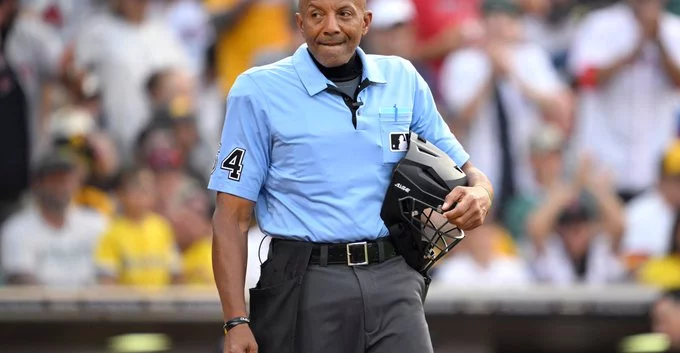
Questions about umpire accuracy in baseball are no longer just fan debates—they’re now backed by data. The ABS Challenge System is shining a spotlight on missed calls, and one name has quickly become central to the conversation: CB Bucknor. Recent games have highlighted growing concerns about consistency behind the plate, raising fresh discussions about accountability and the future of officiating in Major League Baseball.
The system, designed to allow teams to challenge ball and strike calls, has introduced a new layer of transparency. Fans, players, and analysts can now see exactly where umpires get it right—or wrong. While this technology aims to improve fairness, it is also exposing patterns that were previously harder to quantify.
CB Bucknor has long been one of the most debated figures among baseball umpires, but recent events have intensified scrutiny. During a matchup between the Tampa Bay Rays and the Milwaukee Brewers, Bucknor was struck by a foul ball and had to leave the game. While injuries are an unfortunate risk of the job, this incident capped off a week already filled with criticism over questionable calls.
The timing couldn’t have been worse. With the ABS Challenge System actively tracking performance, every missed call becomes part of a visible record. For Bucknor, that has meant increased attention from both media and fans, many of whom are questioning his consistency more openly than ever before.
The ABS Challenge System allows players to challenge specific ball and strike calls in real time. Using advanced tracking technology, the system quickly determines whether the original call was correct. Each team gets a limited number of challenges, making strategy an important part of the process.
This innovation is part of a broader push toward integrating technology into baseball. While it doesn’t fully replace human umpires, it adds a layer of verification that can correct mistakes on the spot. The result is a more transparent game, but also one where errors are harder to ignore.
The introduction of ABS has reignited a long-standing debate: should baseball rely more on automated systems? Supporters argue that technology ensures fairness and eliminates human bias. Critics, however, believe that the human element is essential to the sport’s identity.
What’s different now is the level of evidence available. Instead of relying on opinions, fans can point to specific moments where calls were overturned. This has made discussions more data-driven—and, in some cases, more intense.
For umpires like Bucknor, this shift represents a significant change. Performance is no longer judged solely by internal reviews but also by public perception shaped through visible data.
Players are quickly adapting to the new system, using challenges strategically to gain an edge. For pitchers and hitters, accurate strike zones can significantly affect performance, making ABS a valuable tool. Managers are also becoming more involved, carefully deciding when to challenge a call.
Fans, meanwhile, are experiencing a new level of engagement. Watching challenges unfold in real time adds excitement and drama to the game. At the same time, it fuels online discussions, especially when controversial umpires are involved.
This increased visibility is changing how the sport is consumed. Every call now has the potential to become a talking point, extending the conversation beyond the field.
The ABS Challenge System is more than just a technological upgrade—it’s a turning point for baseball. By introducing measurable accountability, it is reshaping expectations for umpires and raising the standard for accuracy.
For CB Bucknor, the current spotlight may fade, but the broader implications will remain. Umpires across the league will need to adapt to a world where every call can be verified instantly. This could lead to improved performance overall, but also increased pressure.
As baseball continues to evolve, one thing is clear: transparency is here to stay. Whether that ultimately leads to fully automated officiating or a refined hybrid system remains to be seen. What’s certain is that the game is entering a new era—one where technology and tradition must find a balance.










Comment