Alerts

-
4 minutes, 46 seconds
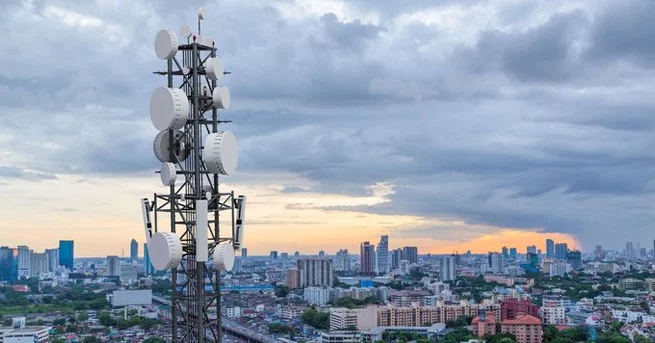
In 2025, Africa’s telecom sector hit a crossroads: networks spanned nearly 88% of the population, yet fewer than 30% actively used mobile internet. Why? Because while 5G towers lit up city skylines and fibre cables snaked through urban centers, everyday users still couldn’t afford smartphones or data plans that matched real-world incomes. The result? A year defined not by scarcity of signal—but by a widening gap between infrastructure and actual access.
Coverage doesn’t equal usage—and 2025 made that painfully clear. According to GSMA, only 416 million Africans were online via mobile by September, despite near-ubiquitous 3G+ coverage. High device costs, patchy digital literacy, and inflation-battered household budgets kept hundreds of millions offline. Operators poured billions into fibre backhaul and 5G deployment, but without affordable handsets or intuitive data plans, that investment struggled to translate into real user growth.
With traditional voice and SMS revenues crumbling under the weight of WhatsApp and free calling apps, telecom giants turned to data—and price—to compete. Nigeria, Kenya, South Africa, and Ghana saw a barrage of bundled offers, app-specific data deals, and fintech integrations. MTN, Airtel, and Vodacom leaned hard into segmentation, pairing mobile plans with mobile money, streaming credits, and even fixed-wireless home internet—anything to keep subscribers locked in as disposable income shrank.
Nowhere was the pricing-pressure more visible than Nigeria. In January 2025, regulators approved a 50% hike in baseline telecom tariffs—the first in over a decade. Instantly, the minimum cost of 1GB jumped from ₦1,000 to ₦1,400, with actual retail bundles soaring even higher. MTN and Airtel raised prices within days, drawing public backlash and forcing MTN to publicly apologize. By mid-year, the average cost of 1GB had climbed to ₦430–₦450, squeezing low-income users just as inflation peaked.
Meanwhile, South Africa revived a long-simmering consumer rights battle: should prepaid data expire? Lawmakers pushed to extend validity to three years—mirroring voucher protections under the Consumer Protection Act—arguing short expiry windows punished the poor. But MTN and Vodacom pushed back, warning that eliminating expiry could destabilize pricing models and ironically raise costs for the very users lawmakers sought to protect. The standoff underscored a deeper truth: in 2025, telecom policy was as much about economics as it was about equity.
Beneath the mobile drama, fibre quietly rewrote Africa’s backbone. Coastal corridors saw exponential growth in subsea cable landings, while metro fibre reached deeper into secondary cities. But outside urban cores, last-mile economics remained brutal. Fixed broadband still served less than 5% of households, and many “fibre-connected” neighborhoods lacked affordable retail ISPs. Fibre’s promise was real—but its reach remained tightly tethered to income and geography.
The collision of 5G ambition, fibre rollout, and pricing pressure in 2025 exposed a hard truth: infrastructure alone won’t bridge Africa’s digital divide. Sustainable growth now demands smarter subsidies for entry-level smartphones, regulatory frameworks that balance innovation with affordability, and services tailored to local spending patterns. As investors eye 2026, the lesson is clear—the next frontier isn’t coverage. It’s usability.










Comment