
Alerts
-
10 minutes, 26 seconds
After the death of her mother, actress Nicole Kidman revealed she’s training to be a Death Doula. Her announcement didn’t just spark curiosity—it triggered a measurable surge in career interest. According to an analysis of Google Trends data by EduBirdie, searches for “what is a Death Doula” jumped more than 1,000% in a single week.
Even more telling, the spike quickly shifted from general curiosity to practical career questions, with searches for “Death Doula salary,” “Death Doula training near me,” and “Death Doula certification”—all climbing sharply.
According to experts, that kind of rapid search behavior often signals the early stages of a broader labor market trend—one where cultural visibility intersects with unmet human needs. In this case, the need is profound: how we die, and who helps us through it.
According to TributeWell, the role of a Death Doula has moved from the edges of American end-of-life care into genuine mainstream recognition within a single decade. They report membership in the National End-of-Life Doula Alliance (NEDA) grew from approximately 260 in 2019 to over 1,600 by 2024, a more than five-fold increase in five years. Plus, training organizations report they have certified roughly 8,000 Doulas worldwide since their founding.
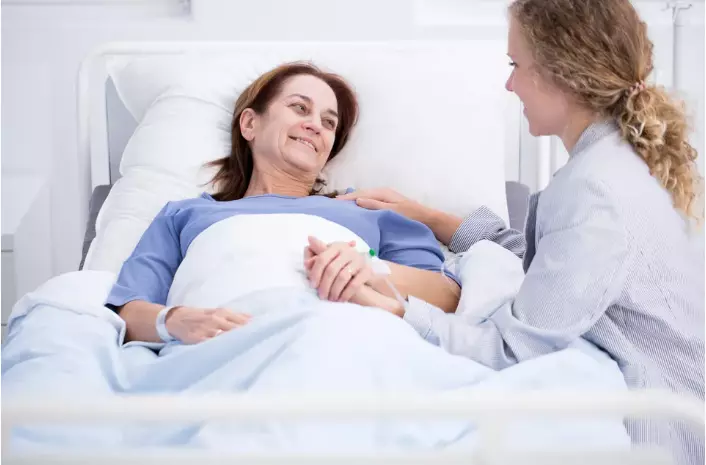
A Death Doula—sometimes called an end-of-life Doula—is a non-medical professional who provides emotional, spiritual and practical support to people who are dying, as well as their families.
Unlike doctors, nurses or hospice workers, Death Doulas don’t provide clinical care. They focus on presence, comfort and meaning. Becoming a Death Doula isn’t for everyone, and it takes a certain amount of grit or career resilience.
That includes helping individuals process fear, facilitating conversations about legacy and unfinished business, assisting with advance directives or simply sitting bedside so no one dies alone.
Some Doulas help plan vigil rituals or memorial elements, while others support families in navigating grief both before and after death. Danielle Thornton, a certified Death Doula and chaplain, says the growing interest reflects a deeper cultural shift.
“As death is the basic human fear, people are afraid to talk about it,” she explains. “Families are often not prepared emotionally. And this period becomes both physically difficult and lonely.”
Thornton points out that while hospitals and hospice programs often include chaplains who provide spiritual care, their role is structured within medical systems. Death Doulas, by contrast, operate more flexibly and personally.
“There is often confusion between chaplain support and Death Doula support,” she says. “Since there is no licensure or required training for Death Doulas, each individual will have different skill sets and offerings. It’s important to ensure you find a Doula that is compatible with your personal needs.”
The lack of formal regulation is both a strength and a complication. It allows for personalized, holistic care—but also means standards can vary widely.
The spike in career interest isn’t happening in a vacuum. Experts say that several converging forces are driving the rise of Death Doulas.
The aging population in the U.S. means more families are navigating end-of-life care simultaneously. As longevity increases, so does the complexity—and duration—of dying.
Research published in the National Institute of Health highlights the growing global role of end-of-life Doulas as part of a broader movement toward more personalized dying experiences. Conversations about death, once taboo, are becoming more open. From advance care planning to “death cafes,” people are increasingly seeking agency and meaning at the end of life.
Health care employees are burning out. Families often report that medical environments, while essential, can feel rushed and impersonal. Death Doulas fill a gap by offering time, attention and continuity.
Covid-19 forced millions to confront mortality more directly—often in isolation. That experience exposed how unprepared many systems are to handle the emotional dimensions of dying.
Thornton emphasizes that even when loved ones are present, the experience can still feel overwhelming. “Most people want to share their life stories and wisdom, feel less lonely, and know that their life and death matters,” she says. “A Death Doula is someone who can advocate for you, providing an attentive presence.”
The role of a Death Doula varies widely depending on the client, but most Death Doulas operate across three phases:
Helping clients clarify wishes around care, environment, rituals and legacy. This might include writing letters, recording memories or organizing practical details.
Providing bedside presence, guiding breathing or relaxation techniques, supporting family members and helping interpret what’s happening physically and emotionally.
As outlined by IEDA, the emphasis is on emotional intelligence, communication and presence. Assisting families with immediate grief processing, coordinating rituals or simply being present in the hours and days after death. Some Doulas also collaborate with hospice teams, therapists or spiritual leaders, creating an integrated support system.
Unlike nursing or social work, there is no universal licensing requirement. Training programs vary from short intensives to multi-month certifications, often covering the dying process, communication skills, cultural considerations and grief support. Training costs anywhere from a few hundred to several thousand dollars, making the field relatively accessible compared to other healthcare-adjacent roles.
If you’re interested in becoming a Death Doula, the 5-5-5 rule can help you decide. With rising interest, one of the most common questions is whether this work is financially sustainable. The answer is nuanced. Most Death Doulas are independent practitioners who set their own rates rather than earning a fixed salary.
According to industry summaries drawing on platforms like ZipRecruiter, average annual earnings for Death Doulas hover around $45,000 to $50,000, though this varies widely. Some sources estimate hourly rates ranging from $25 to over $100, depending on experience and services offered.
Many Doulas package their services, charging anywhere from $500 to $3,000 or more for extended end-of-life support. Income depends heavily on geography, client base and whether the work is part-time or full-time. Some practitioners supplement their income with related services such as grief coaching, advance care planning or teaching.
While it can become a sustainable career, it is not typically a high-income-maximizing profession. For many, the draw is purpose, flexibility and the opportunity to provide deeply meaningful support.
The surge in interest following Kidman’s announcement reflects a broader shift in how people think about control, dignity and connection at the end of life. It’s less about a trendy job title—and more about filling a longstanding gap in care.
In a world increasingly defined by speed, productivity and digital distance, the role of a Death Doula is almost radical in its simplicity: to slow down, to sit with discomfort and to bear witness.
And that may be exactly why it’s gaining traction. As Thornton puts it, “Death should be normalized as a part of life. It’s something we will all experience—no one is exempt.”
The growing interest is partly a career trend, but it’s also a deeper recognition that how we support one another at the end may be one of the most important and human services of all.










Comment