
Alerts
-
4 minutes, 4 seconds
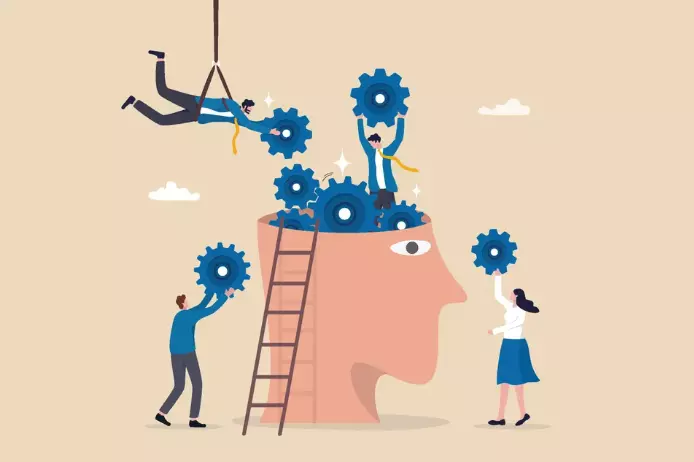
The skills that helped leaders succeed five years ago may no longer be enough to keep them effective. Artificial intelligence is reshaping job responsibilities, organizational complexity is increasing, and expectations of leaders continue to evolve. Yet many organizations still treat leadership development as a one-time investment, even as the demands of leadership change.
Microsoft’s 2025 Work Trend Index found that 82% of leaders believe their organizations have reached a pivotal moment requiring a rethink of core strategy and operations. At the same time, 80% of employees report lacking the time or energy to complete their work. Together, these findings underscore the pressure on leaders to adapt while employees are already stretched.
Leadership effectiveness is not a permanent achievement. Capabilities and habits can become outdated or insufficient as workplaces change. Sustaining effectiveness therefore means continuing to learn, seeking feedback, and strengthening the skills needed to meet evolving expectations—not assuming past success will automatically carry forward.
As AI becomes part of everyday business, digital fluency is increasingly a basic leadership expectation. Zenger Folkman’s research found that leaders in the bottom 10% for digital skills had overall leadership effectiveness ratings at the 22nd percentile. By contrast, those in the top 10% were rated 17 percentile points above average. Exceptional digital skills may bring a modest advantage, but weak skills carry a much larger penalty.
Microsoft’s 2024 Work Trend Index found that 66% of surveyed leaders would not hire someone without AI skills, and 71% would prefer a less experienced candidate with AI skills over a more experienced candidate without them. These are hiring intentions, not actual outcomes, but they show how quickly expectations are changing.
Leaders do not need to become programmers or technical experts. They should identify tools relevant to their responsibilities and understand their practical uses and effects on the organization, employees, and customers. Their attitude also shapes how employees approach change: dismissing tools without understanding them may discourage experimentation, while curiosity can make learning feel safer.
Ask employees how technology is changing their work, encourage responsible experimentation, and invest time in building your own digital competence. It is also important to acknowledge what you do not know. The greatest risk is assuming yesterday’s expertise means there is no need to keep learning.
As organizations grow more complex, leaders face expanding volumes of information, more communication channels, evolving regulations, and interconnected processes. Technology can make individual tasks easier while raising expectations for speed and availability. Microsoft’s 2023 Work Trend Index found that 68% of surveyed workers lacked sufficient uninterrupted focus time, while 62% struggled with spending too much time searching for information. Employees spent an average of 57% of their time communicating through meetings, email, and chat, compared with 43% creating work products.
More meetings and longer hours are not the answer if leaders become the point through which every task and decision must pass. As responsibilities grow, effectiveness means creating conditions for others to solve problems—not personally overseeing every detail.
Delegation is not merely a way to reduce a leader’s workload; it helps manage complexity and develop others. By simplifying work and sharing ownership, leaders can prevent bottlenecks and help work move forward efficiently.
Relationship-building may be underestimated, yet research from Zenger Folkman shows a striking association with overall leadership effectiveness. Leaders in the bottom quartile for building relationships averaged the 19th percentile in effectiveness, while those in the top quartile averaged the 82nd percentile—a 63-percentile-point difference. This relationship is correlational; it does not prove that relationship-building alone causes greater effectiveness.
Stronger relationship-building skills were also associated with higher ratings across all 19 leadership competencies measured, including communication, inspiring others, setting stretch goals, strategic perspective and technical expertise. Trust helps explain why relationships connect to so many capabilities: employees who trust their leaders are more likely to raise concerns, share ideas and engage in difficult conversations. Strong relationships also support communication, collaboration, accountability and influence, particularly during organizational change.
Relationships need ongoing attention as employees, teams, responsibilities and stakeholders change. Leaders can keep building them by getting to know new employees, maintaining connections across departments, seeking different perspectives and checking in with colleagues. Listening and showing genuine interest in others’ ideas and concerns can strengthen trust and collaboration. Because professional relationships and leadership capabilities can weaken when neglected, both require consistent feedback, practice and development.










Comment