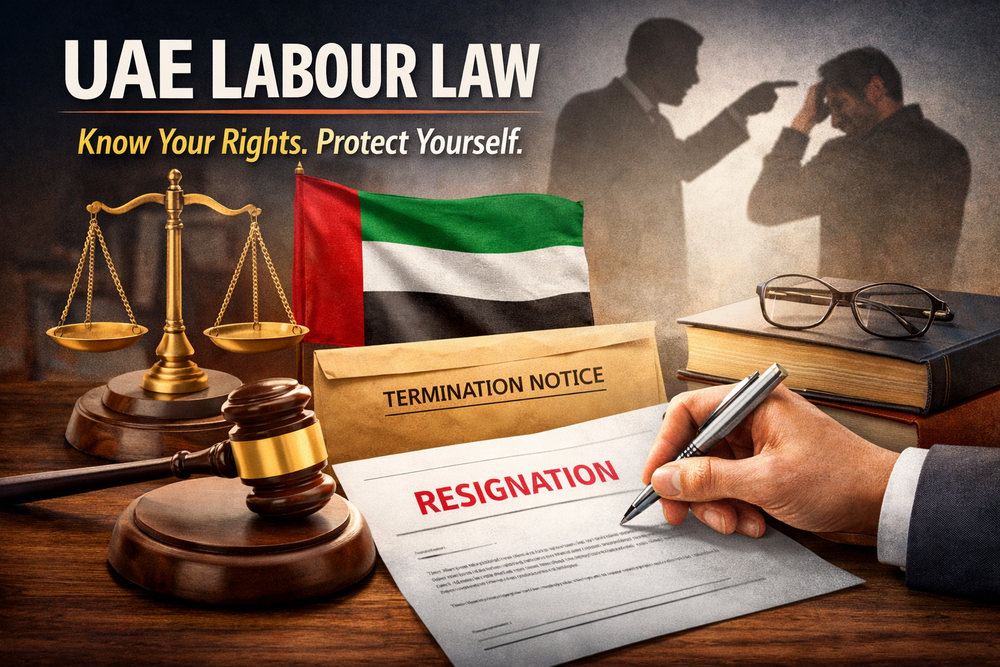
UAE Labour Law protects employees from forced resignation, unfair accusations, and sudden contract changes. Many workers wonder whether they must resign if threatened, or what happens when employers cut salaries or change roles. Legal guidance shows that resignation under pressure can harm an employee’s rights and benefits. Workers are not required to admit wrongdoing without proof. Understanding legal protections is essential before making career decisions. Acting early can help preserve compensation, reputation, and future opportunities.
Employees facing accusations or pressure to resign should proceed cautiously. Resigning under threat can affect gratuity, legal standing, and financial entitlements. Employers must follow proper procedures if they believe misconduct has occurred. Without formal investigation or evidence, forcing resignation may weaken the employer’s position. Written admissions of wrongdoing can later be used against employees. Legal channels exist to address such disputes.
Workplace conflicts sometimes escalate into allegations that lack proper proof. In such cases, employees are not obligated to accept blame or sign statements admitting violations. If an employer truly has evidence, authorities would typically be involved through formal processes. Filing a labour complaint can help protect legal rights and clarify the situation. This approach creates an official record of the dispute. It also prevents coercion from shaping the outcome.
End-of-service gratuity and other benefits depend on employment terms and exit circumstances. Voluntary resignation can change how final settlements are calculated. If resignation includes an admission of fault, it may reduce compensation or limit claims. Employees should understand how decisions made under pressure could impact finances. Seeking clarification before signing documents is critical. Careful steps protect long-term interests.
Employers cannot unilaterally downgrade roles or reduce salaries without valid agreement. Significant changes to job responsibilities or pay may be considered a breach of contract. Employees have the right to reject such conditions and request resolution. If forced to choose between acceptance and resignation, legal remedies may be available. Documentation of communication strengthens an employee’s case. Transparency is key to fair workplace practices.
When employers impose unfair conditions, the situation may qualify as arbitrary dismissal. Employees who leave under these circumstances may still claim dues and compensation. Legal precedent supports workers who resign as a response to unjust treatment. Filing a labour complaint allows authorities to review the employer’s actions. This process can lead to recovery of financial rights. Acting promptly improves the chances of a fair resolution.
Reporting workplace disputes through official channels ensures accountability. Labour authorities provide guidance, mediation, and dispute resolution mechanisms. Employees can present evidence, contracts, and communication records. This structured process helps determine whether rights were violated. It also discourages coercive employment practices. Early action strengthens legal protection.
The law aims to balance employer authority with employee protection. Clear procedures exist for handling disputes, contract changes, and allegations. Workers are encouraged to understand their rights before making decisions under pressure. Employers benefit from transparency and compliance with labour standards. Respecting legal frameworks reduces conflict and uncertainty. Awareness remains the strongest defense against unfair workplace practices.


Array