For years, communication topped the list of the world’s most in-demand workplace skills. But in 2026, that era has shifted. According to Cornerstone’s 2026 Skills Economy Report, demand for AI and machine learning has surged by +245%, overtaking communication for the first time in a decade. Yet what’s even more surprising is what’s rising alongside AI: professional skills. Employers aren’t choosing between technical ability and human ability anymore. In an AI-driven workplace, professional skills 2026 may be the true differentiator between those who thrive and those who fall behind.
AI Is Accelerating the Demand for Human Skills, Not Replacing Them
The rush to adopt artificial intelligence hasn’t erased the need for soft skills—it has amplified it. As organizations integrate AI into workflows, the human side of work becomes more important, not less. Skills like adaptability, teamwork, creativity, and critical thinking are now prerequisites for using AI effectively. In fact, AI is only as powerful as the people guiding it. The workplace is moving toward a future where technical and professional skills are inseparable. Being “work-ready” increasingly means mastering both at once.
Why Professional Skills Are Harder to Teach and Easier to Miss
Cornerstone’s data shows massive growth in demand for traits like enthusiasm (+999%) and working independently (+850%). That spike reflects a deeper truth: professional skills are harder to train than technical ones. Chris Graham, Executive Vice President at National University, explains that leadership, emotional intelligence, and problem-solving are often more innate and difficult to instill through traditional training. Employers can teach software, but shaping mindset and judgment takes far longer. These durable skills don’t expire, and that’s why they’re becoming the currency of the future.
COVID’s Workforce Disruption Created a Soft Skills Gap
Another force driving this demand is generational disruption. Many younger workers entered the workforce during peak COVID, missing the informal professional development that earlier generations gained in offices. Graham notes that these workers weren’t professionally “raised” in the same environment of daily mentorship and exposure. As a result, many candidates arrive without the interpersonal and leadership foundations employers expect. Catching up on these skills is harder than catching up on technical tools. That’s why companies are now urgently searching for employees with strong professional instincts.
Entry-Level Jobs Are Disappearing as AI Becomes the New Beginner
The challenge doesn’t stop with hiring—it’s structural. Cornerstone’s report highlights that 70% of entry-level work is automatable, while only 30% involves complex problem-solving. At the same time, 85% of jobs now require AI experience, creating a paradox for new graduates. The traditional training ground of entry-level roles is drying up in favor of efficiency. AI is increasingly doing the starter tasks, meaning humans must bring higher-level skills earlier in their careers. Entry-level workers are now expected to arrive with advanced professional readiness.
The Most Valuable Professional Skills in 2026
So what exactly will matter most in the coming year? Graham points to leadership, resilience, creativity, emotional intelligence, time management, and critical thinking as essential professional skills 2026. These are the traits that allow employees to lead virtual teams, adapt quickly, and collaborate across changing environments. Workers who can think on their feet and communicate with clarity will remain competitive no matter how fast technology evolves. Employers are no longer hiring for tasks—they’re hiring for human capability. The best candidates will be those who can balance AI fluency with strong interpersonal strength.
Mentorship and Real Practice Are the Fastest Path to Growth
Mastering these skills doesn’t happen through theory alone. Graham urges professionals to build intentional mentor relationships—people who can challenge, guide, and offer feedback throughout your career journey. Many companies are also expanding training for durable skills, with LinkedIn surveys showing over 90% of leaders believe they matter more than ever. Employers are being encouraged to create formal mentorship programs, feedback loops, and “learning labs” where employees can practice real-world scenarios. Professional skill development requires interaction, not isolation.
Professional Skills 2026 Will Define Who Wins in the AI Economy
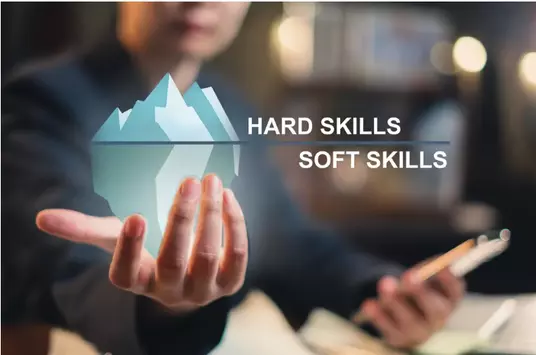
The AI revolution is transforming every career path, but it’s also creating an opportunity for personal agency. Developing both technical literacy and human excellence is one of the clearest ways to stay future-proof. The line between hard skills and soft skills is fading, and employers increasingly want the complete package. In the race to become more AI-capable, the smartest move is not forgetting what makes you irreplaceably human. Professional skills 2026 aren’t just helpful—they’re becoming the foundation of long-term career success.














Comment