
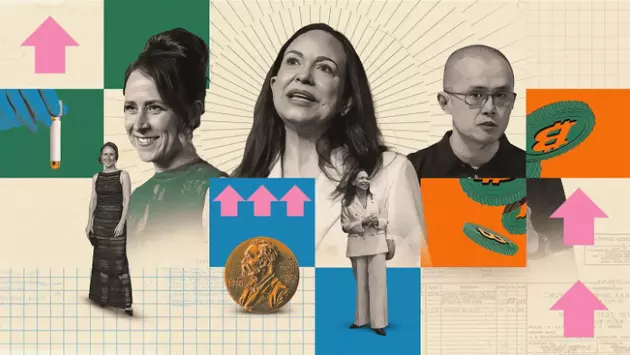
Career comebacks of 2025 prove that professional failure isn’t always final. This year answered one big search question: Can a damaged reputation really be repaired? Across politics, tech, music, and business, several high-profile figures showed that timing, strategy, and public sentiment matter more than ever. Not every attempt succeeded, but the ones that did reshaped industries and headlines alike. From boardrooms to global stages, these reversals weren’t quiet returns—they were headline-grabbing resets. What separates a failed rebound from a successful one often comes down to credibility, capital, and cultural relevance. Here are the most notable comeback stories that defined 2025.
The year also made clear that not every comeback attempt lands. Former New York Governor Andrew Cuomo and ex–New Jersey Governor Jim McGreevy both attempted political returns built on the idea of second chances. Voters, however, weren’t convinced. Cuomo lost decisively in New York City’s mayoral race, while McGreevy fell short in Jersey City’s runoff election. Their losses underscored a broader trend: public forgiveness is selective, and political memory can be long. In 2025, visibility alone was not enough to restore trust. The contrast with successful comebacks was stark.
Telecommunications billionaire Charles Ergen delivered one of the strongest career comebacks of 2025. EchoStar was under regulatory scrutiny, struggling with debt, and facing potential bankruptcy earlier in the year. A pivotal shift came after Ergen engaged with federal regulators and executed a $23 billion sale of spectrum licenses to AT&T. The move transformed investor sentiment almost overnight. Ergen returned as CEO in November, and EchoStar followed with a high-profile partnership with SpaceX. His net worth surged to $14 billion, marking a dramatic reversal few predicted months earlier.
Figma cofounder Dylan Fields experienced years of uncertainty after Adobe’s proposed $20 billion acquisition stalled and ultimately collapsed. Regulatory pressure and antitrust concerns left the design platform in limbo through 2023 and 2024. In 2025, Fields found vindication through the public markets. Figma’s IPO raised $1.2 billion, with shares soaring on debut and restoring confidence in the company’s independence. Once questioned for overreaching, Fields emerged as a proven leader who outlasted regulatory headwinds. The comeback repositioned Figma as one of tech’s most resilient startups.
Musicians Liam and Noel Gallagher pulled off a rare cultural comeback by reuniting Oasis after 15 years apart. Their “Live 25” tour sold out within hours across multiple continents and generated more than $405 million in ticket sales. Streaming numbers surged, driven heavily by Gen Z listeners discovering the band for the first time. The reunion pushed Oasis back to the top of U.K. charts and reintroduced their catalog to a new generation. Rather than chasing reinvention, the band leaned into legacy—and it paid off. In 2025, nostalgia proved to be a powerful business strategy.
For Venezuelan opposition leader Maria Corina Machado, 2025 brought international validation under extraordinary circumstances. Forced into hiding due to political pressure, her campaign for democratic reform continued beyond borders. That persistence earned her the Nobel Peace Prize for promoting democratic rights and peaceful transition. Unable to attend the ceremony initially, her recognition still resonated globally. Machado’s comeback wasn’t about returning to office—it was about reclaiming legitimacy and moral authority. Few career revivals carried as much symbolic weight this year.
Anne Wojcicki faced one of Silicon Valley’s most public reversals when 23andMe filed for bankruptcy after years of financial strain and a major data breach. Removed as CEO, she watched as regulators and consumers pushed back against the company’s proposed sale. In a surprising twist, Wojcicki stepped in to buy the company herself through a nonprofit entity. Approved by a bankruptcy judge, the move put her back in control by mid-2025. Her comeback reframed failure as unfinished business rather than defeat.
Crypto founder Changpeng Zhao, known as CZ, closed out 2025 with a controversial return. Pardoned after serving time and paying billions in fines, Zhao re-entered the industry not as an executive, but as a power investor. Through YZi Labs, he maintained influence across a $10 billion portfolio. His role in key crypto listings signaled that his network remained intact despite legal setbacks. The comeback sparked debate, but it also confirmed crypto’s willingness to separate regulation from relevance. In 2025, Zhao proved that influence can survive even the hardest crashes.
𝗦𝗲𝗺𝗮𝘀𝗼𝗰𝗶𝗮𝗹 𝗶𝘀 𝘄𝗵𝗲𝗿𝗲 𝗽𝗲𝗼𝗽𝗹𝗲 𝗰𝗼𝗻𝗻𝗲𝗰𝘁, 𝗴𝗿𝗼𝘄, 𝗮𝗻𝗱 𝗳𝗶𝗻𝗱 𝗼𝗽𝗽𝗼𝗿𝘁𝘂𝗻𝗶𝘁𝗶𝗲𝘀.
From jobs and gigs to communities, events, and real conversations — we bring people and ideas together in one simple, meaningful space.


Comment